
Notice: The following information is provided for your convenience. ACRI is not directly involved in this research and does not make any medical claims. The same articles may be found through internet searches, such as on PubMed or NIH websites.
Sustained Deep Biochemical Response in Multiple Myeloma Managed with AIC Therapy: A Two-Year Case Report
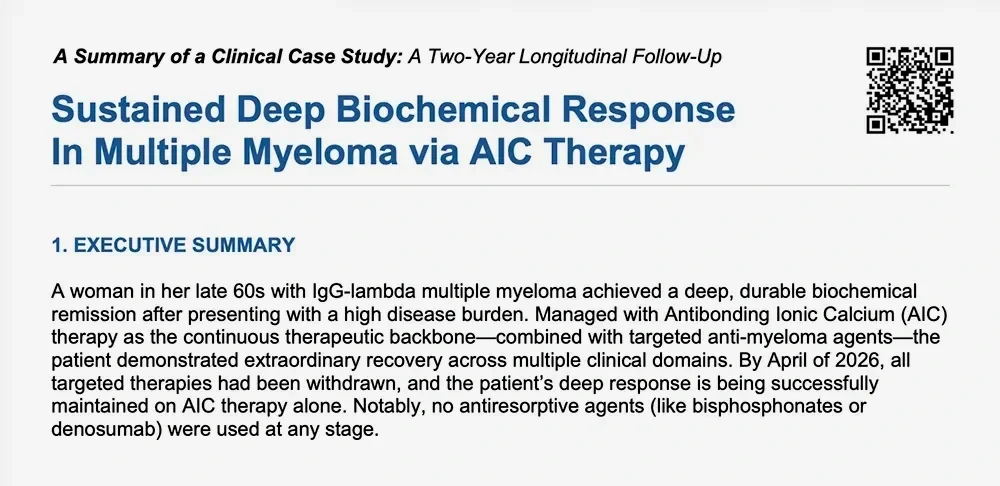
Sustained Deep Biochemical Response in Multiple Myeloma via AIC Therapy
This two-year longitudinal case study describes a woman in her late 60s with IgG-lambda multiple myeloma who achieved a deep and durable biochemical remission through AIC (Antibonding Ionic Calcium) therapy combined with targeted anti-myeloma treatments during periods of high disease burden.
Significant reductions in M-spike, IgG levels, and free light chains were accompanied by normalization of renal function and recovery from anemia. By April 2026, all targeted therapies had been discontinued, and the patient maintained a stable low-disease state on AIC therapy alone, without the use of antiresorptive agents.
The case highlights the importance of early recognition of skeletal manifestations, comprehensive response monitoring, and the potential role of AIC therapy as a long-term therapeutic backbone in multiple myeloma management.
Reflections from AACR 2025: AIC Gains International Attention in the Fight Against Myeloma
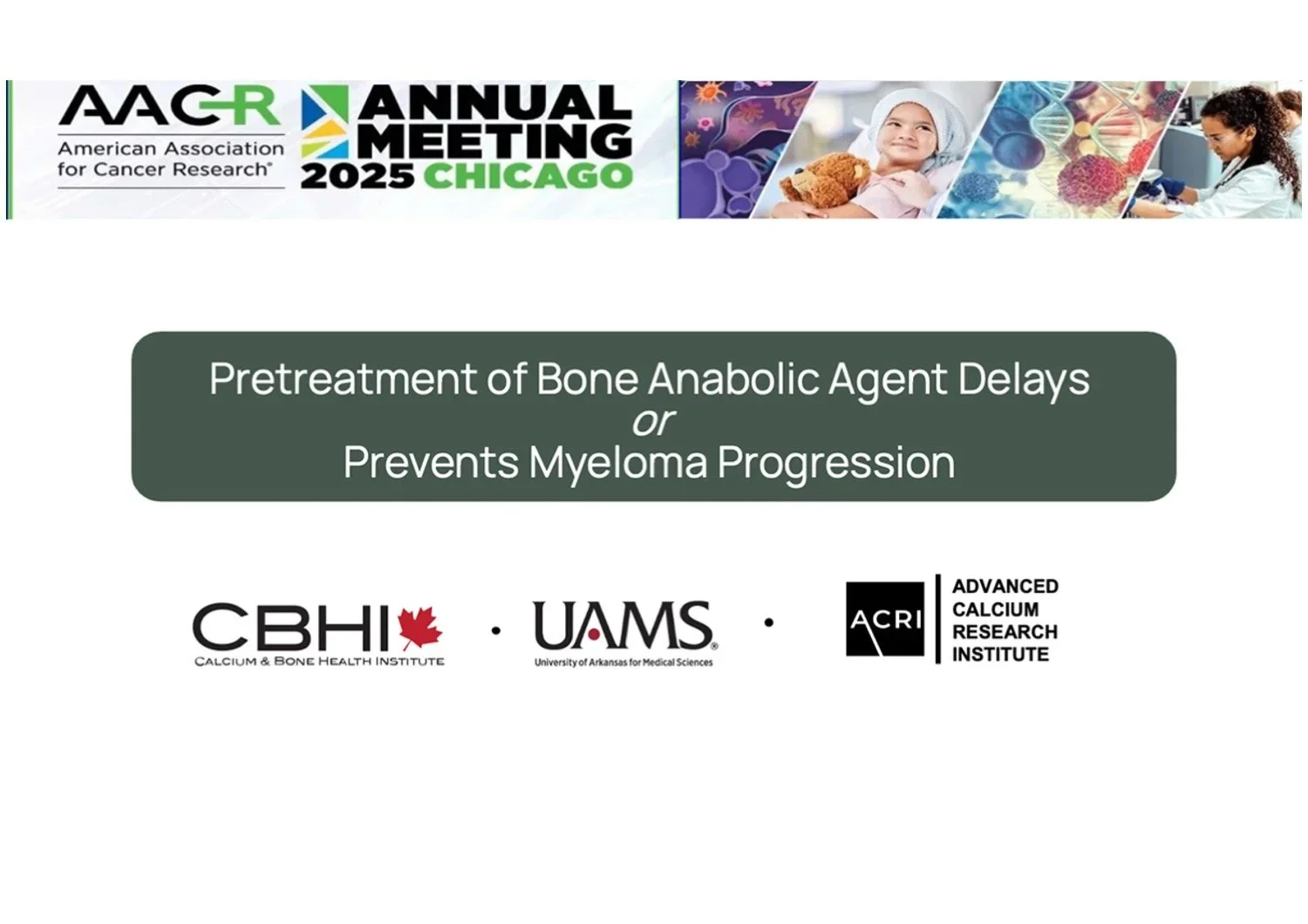
Conference Observations – AACR 2025
After attending the American Association for Cancer Research (AACR) 2025 Meeting in Chicago, I observed both the remarkable progress and ongoing limitations in cancer research. Despite over 20,000 attendees and more than 5,000 research presentations, the fundamental challenge remains: late-stage cancer survival rates are still limited, even after decades of scientific advancement.
Since its founding in 1907, AACR has led global cancer research efforts. Innovations have evolved from cytotoxic chemotherapy to immune checkpoint inhibitors, yet a definitive cure for cancer remains elusive. Reflections from long-time attendees echoed a growing realism—while progress continues, expectations of a complete cure have become more measured.
A recurring theme at the conference was the need for new paradigms. Rather than pursuing total eradication of cancer cells at the cost of severe toxicity, some experts are exploring strategies focused on disease control and coexistence, aiming to reduce tumor burden while preserving quality of life. Supporting this shift, institutions like Moffitt Cancer Center are investing in mathematical modeling to better understand tumor dynamics and optimize treatment strategies.
Encouragingly, there was notable interest in Anti-Orbital Ionic Calcium (AIC). A researcher from MD Anderson Cancer Center described AIC as one of the most intriguing compounds presented. Additionally, researchers from the University of Arkansas for Medical Sciences presented findings on AIC’s role in multiple myeloma.
Clinical Study Demonstrates the Effectiveness of AIC Calcium on Bone Mineral Density: Results from Moffitt Cancer Center
AIC (Anti-Orbital Ionic Calcium) Effect on Bone Mineral Density
We are pleased to share the results of a collaborative clinical investigation between Moffitt Cancer Center, the Calcium & Bone Health Institute (CBHI) and Advanced Calcium Research Institute (ACRI), examining the impact of Anti-Orbital Ionic Calcium (AIC) on bone mineral density in aging populations.
AIC calcium, a formulation designed to deliver bioavailable calcium ions without dependence on stomach acid or vitamin D, was evaluated in a 135-subject clinical cohort with varying degrees of bone health status—ranging from normal to osteopenia and osteoporosis. Key findings include:
Mean bone mineral density increased by 9.4% across the entire cohort.
Patients with osteopenia and osteoporosis showed statistically significant improvements (p=0.0001).
Male participants demonstrated greater average gains compared to female participants.
Improvements were observed across age groups and BMI categories, with overweight and obese participants showing the highest increases.
The T-score and Z-score distributions before and after AIC administration were analyzed using standard DEXA scans, and Speed of Sound (SOS) metrics further confirmed enhanced bone quality.
These findings support AIC calcium as a promising non-pharmacological intervention for bone health, with particular relevance to oncology patients, aging populations, and individuals with metabolic bone disorders.
Anti-Orbital Ionic Calcium (AIC) demonstrates strong potential as a therapeutic agent for osteoporosis
AIC: A Novel Therapetuic Approach for Reversing Osteoporosis
This study evaluates the protective effects of Anti-Orbital Ionic Calcium (AIC) on bone loss using an ovariectomy-induced (OVX) mouse model of postmenopausal osteoporosis.
Over a 13-week oral administration period, AIC demonstrated significant benefits across multiple biological and structural indicators of bone health.
Researchers from Sungkyunkwan University and other institutions investigated the potential of a substance called AIC to mitigate osteoporosis using an ovariectomized (OVX) mouse model. The study demonstrated that AIC administration significantly improved bone mineral density and skeletal microstructure, effectively counteracting the bone loss typically caused by estrogen deficiency. On a cellular level, the treatment suppressed the expression of genes associated with osteoclast differentiation, such as TRAP and NFATc1, which are responsible for bone resorption. Furthermore, the researchers analyzed serum biochemical indicators and found that AIC helped stabilize markers of bone turnover without causing significant adverse effects on body weight or major organ health.
AIC treatment improved bone mineral density that had declined following OVX, indicating a restorative effect on skeletal strength. Serum biochemical markers—including bone alkaline phosphatase (BALP), osteocalcin, CTX, and P1NP—were favorably regulated, reflecting healthier bone turnover and reduced bone resorption. Gene expression analysis further showed that AIC suppressed key osteoclast-related genes, suggesting a molecular mechanism that limits excessive bone breakdown. Importantly, AIC did not cause adverse changes in overall body weight or major organ weights, supporting its safety profile in this model.
Overall, the findings highlight AIC as a promising therapeutic candidate for defending against bone density loss and improving osteoporosis outcomes, with benefits observed at both physiological and molecular levels.
AIC Supplementation Significantly Enhances Bone Mineral Density in an Asian Population: An Eight-Month Clinical Study
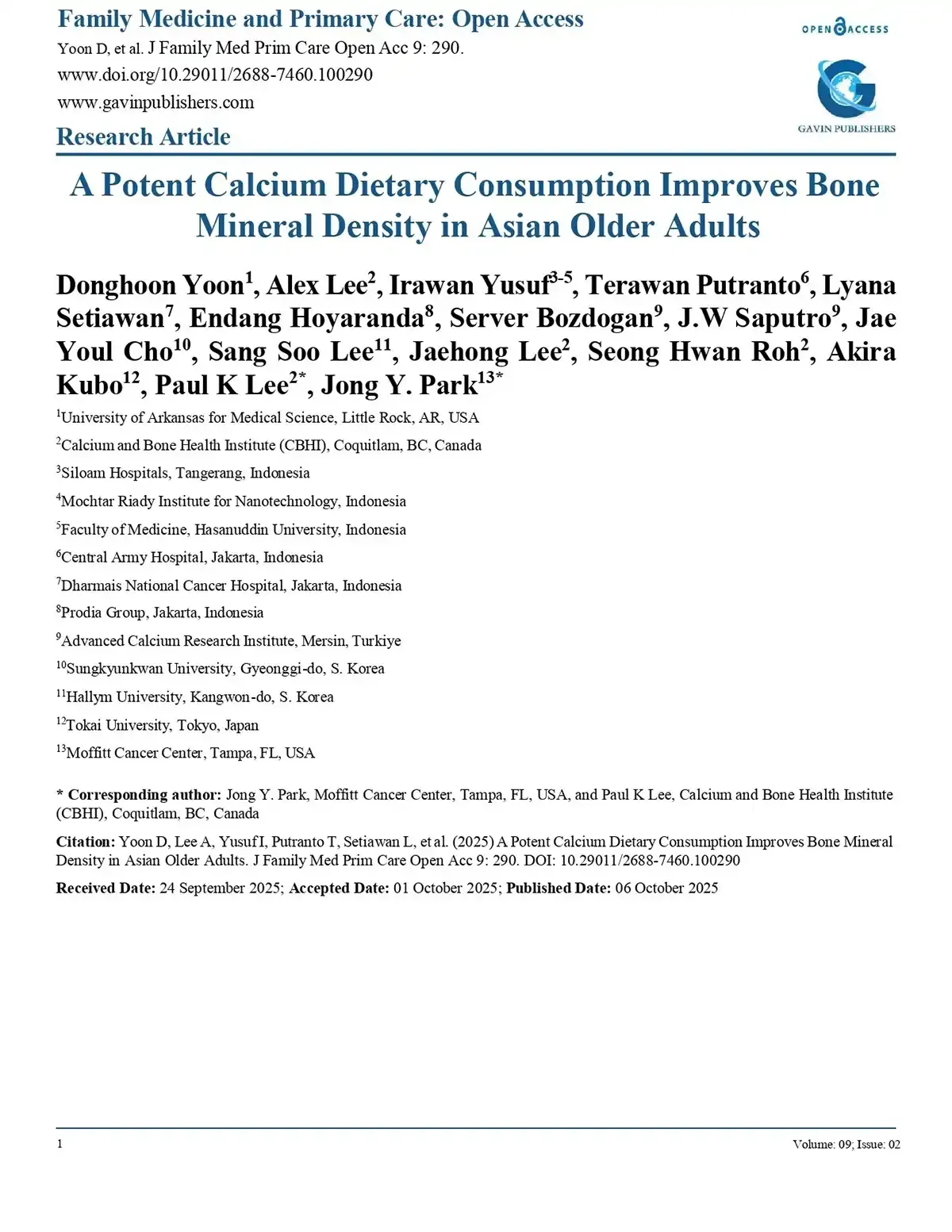
A Potent Calcium Dietary Consumption Improves Bone Mineral Density in Asian Older Adults
A recent clinical investigation demonstrates that Anti-Orbital Ionic Calcium Carbonate (AIC), a highly bioavailable form of calcium, significantly improves bone mineral density (BMD) in Asian older adults—a population known to have higher rates of osteoporosis and lower baseline calcium intake.
In this study of 82 participants, individuals were classified as normal, osteopenic, or osteoporotic and received daily AIC supplementation for approximately eight months. Bone health was assessed using ultrasound-derived metrics, including T-score, BMD, and speed of sound (SOS) at the distal radius.
AIC produced consistent and meaningful improvements across all groups:
T-scores improved markedly (from –2.0 to –0.85, p<0.0001).
BMD increased significantly (0.95 to 1.10 g/cm², p<0.0001).
SOS values improved, indicating better bone quality (p<0.0001).
65% of osteopenic individuals returned to normal bone density, and
64% of osteoporotic participants improved to the osteopenic range.Notably, 12% of patients with osteoporosis achieved normal bone density.
These benefits were observed regardless of age or sex, with particularly strong effects in men and in participants with more severe baseline bone loss. Importantly, AIC demonstrated a favorable safety profile with no major adverse events reported.
Given its enhanced bioavailability and ability to support bone formation without reliance on vitamin D, AIC represents a promising nutritional strategy for improving bone strength and reducing fracture risk. Larger randomized trials are recommended, but current evidence supports AIC as a valuable option for individuals seeking to improve bone health and counteract osteoporosis progression.