Listen to this issue
This newsletter reveals how overlooked calcium dynamics—not the stem cells themselves—often determine whether a regenerative protocol succeeds, stalls, or silently fails.
Why Do Some Stem Cell Therapies Work Like Magic—While Others Quietly Fall Apart?
If calcium dynamics are ignored in stem cell protocols, the therapeutic response may remain inconsistent, not because the cells failed, but because their environment was misread. Calcium plays a crucial role in regulating stem cell behavior, influencing whether cells enter proliferation, remain quiescent, or begin to differentiate. Mesenchymal stem cells are highly responsive to changes in extracellular calcium levels, which influence their expansion and readiness for repair. In the hematopoietic niche, calcium gradients—mediated by calcium-sensing receptors—govern migration and lineage commitment. Neural stem cells adjust their fate in response to intracellular calcium oscillations, which regulate activation thresholds and influence their regenerative potential in neurodegenerative conditions.
Store-operated calcium entry (SOCE), which involves STIM and Orai proteins, plays a crucial role in maintaining intracellular calcium balance, particularly in pluripotent and multipotent stem cell populations. This flow of calcium initiates transcriptional changes through regulators such as NFAT, aligning environmental cues with stem cell identity and function. Modulation of calcium influx—whether through pharmacological agents or even electromagnetic fields—has been shown to steer stem cell fate decisions toward specific lineages . In oncology, disruptions in calcium signaling correlate with the persistence of cancer stem cells and therapy resistance. Across regenerative and pathological states, the ability to sense, buffer, and direct calcium signals becomes a foundational element in determining whether stem cell-based interventions succeed or stall.
Subtle imbalances in intracellular calcium handling—often overlooked—can distort the environmental signals that guide stem cell integration, especially in compromised or inflamed tissues. Restoring calcium signaling fidelity enables lineage cues to be transmitted with greater precision, thereby reducing erratic differentiation and enhancing therapeutic stability. In protocols where stem cell function has proven inconsistent, addressing underlying calcium overload or impaired ionic gradients may quietly shift the outcome without altering the cells themselves.
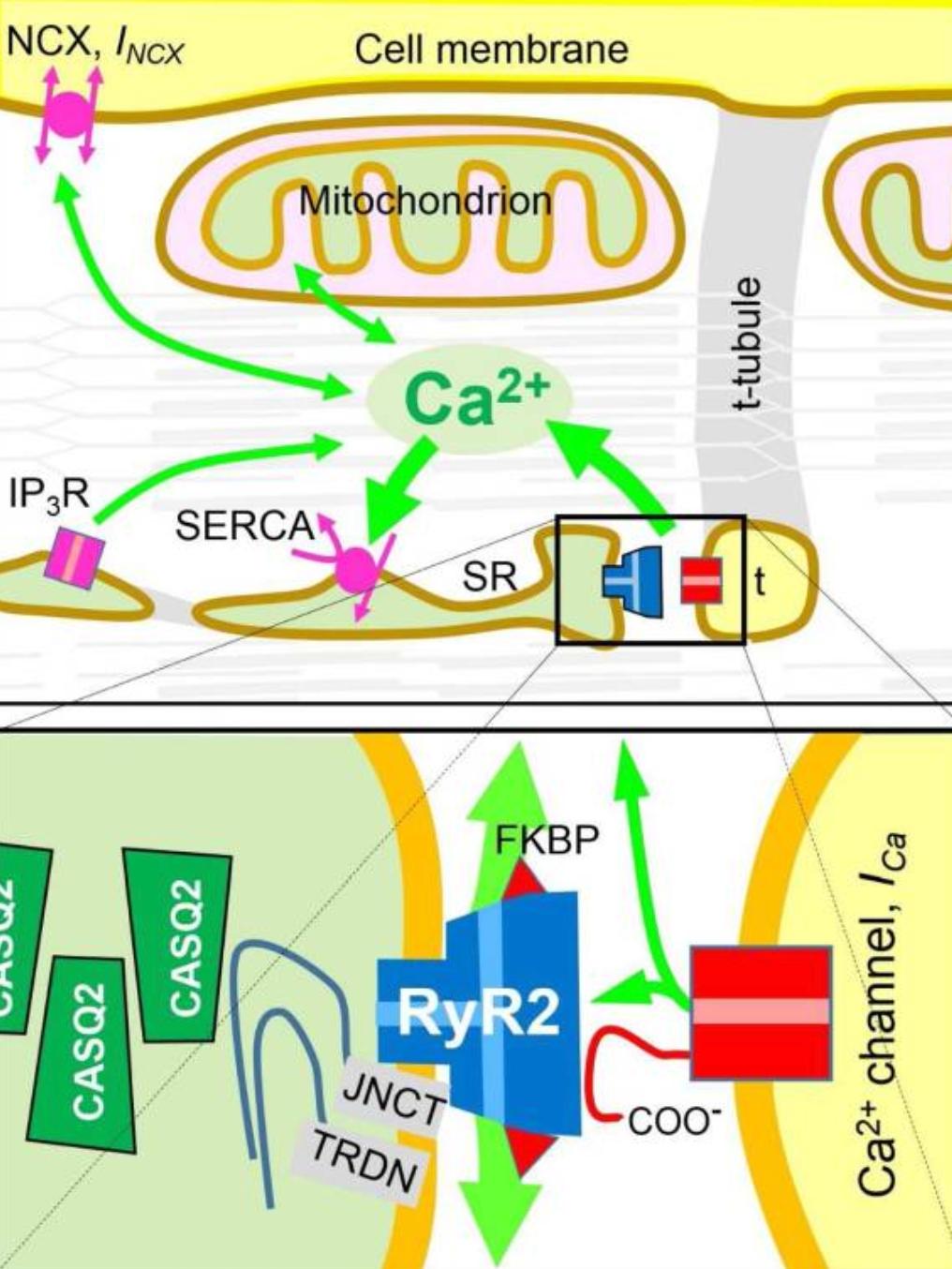
This figure illustrates how calcium signaling regulates contraction and relaxation in heart muscle cells. In the top panel, calcium moves between the cell membrane, internal stores, mitochondria, and surrounding channels to coordinate each heartbeat. These flows activate and reset the contraction of muscle fibers. The lower panel focuses on the dyadic junction, a specialized interface where the sarcoplasmic reticulum and T-tubules meet. Here, calcium release is tightly regulated by a group of proteins, including calcium channels and binding partners, which control the timing and volume. This structure ensures calcium signaling remains synchronized, allowing the heart to beat efficiently under changing physiological demands.
Zhang XH, Morad M. Calcium signaling in human stem cell-derived cardiomyocytes: Evidence from normal subjects and CPVT afflicted patients. Cell Calcium . 2016;59(2-3):98-107. doi:10.1016/j.ceca.2015.12.002
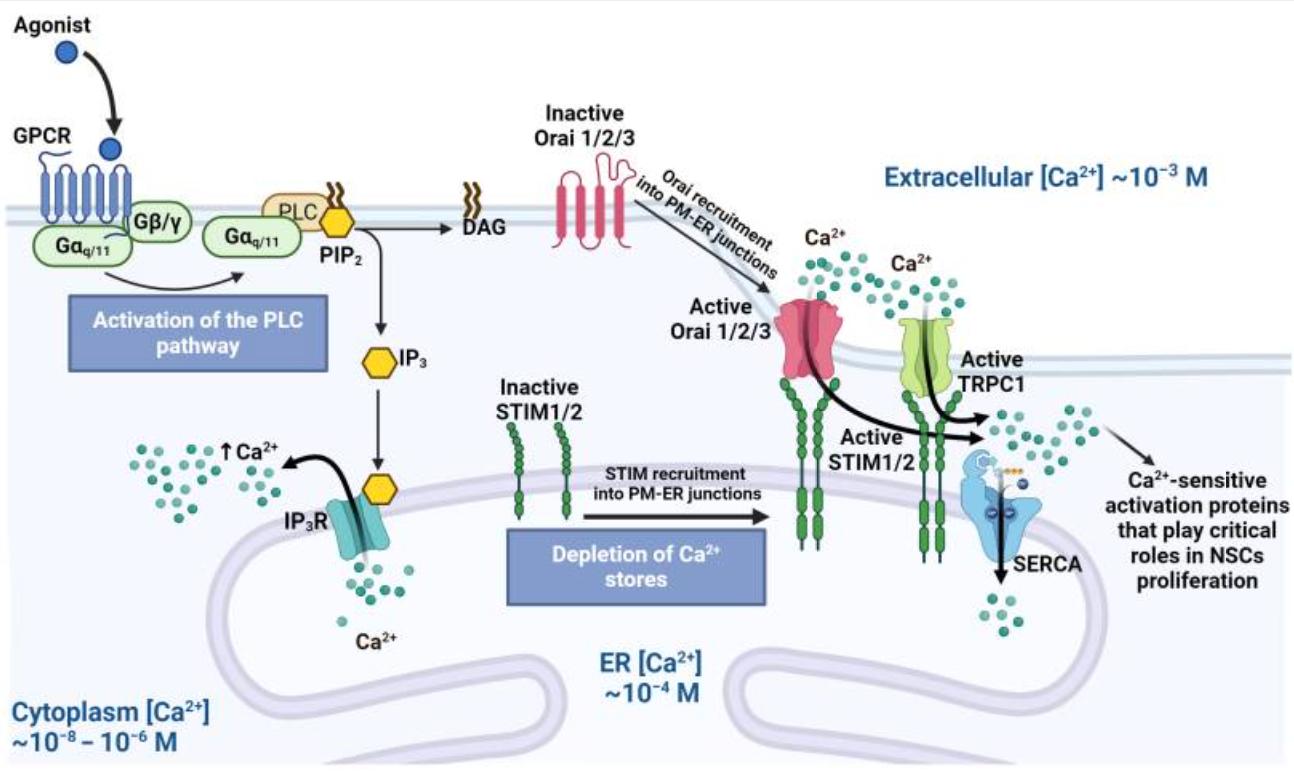
This figure explains how calcium entry in neural stem cells is initiated through ligand binding at G-protein-coupled receptors (GαqPCR), triggering phospholipase C and the release of Ca²⁺ from the endoplasmic reticulum. As ER calcium stores drop, STIM proteins detect the depletion and relocate to activate calcium channels—specifically Orai and TRPC1—at the plasma membrane. This allows extracellular calcium to flow in, refill ER stores via the SERCA pump, and activate calcium-binding proteins involved in neural stem cell proliferation. The sequence highlights the tight link between upstream membrane signaling and ER calcium sensing in regulating stem cell activation potential. For naturopathic clinicians, this highlights the importance of interventions that enhance receptor sensitivity, ER calcium buffering, and maintain clean intracellular calcium transitions to improve outcomes in neuroregenerative therapies. Created using BioRender.com.
Díaz-Piña DA, Rivera-Ramírez N, García-López G, Díaz NF, Molina-Hernández A. Calcium and Neural Stem Cell Proliferation. Int J Mol Sci . 2024;25(7):4073. Published 2024 Apr 6. doi:10.3390/ijms25074073
Reconditioning The Microenvironment
Restoring ionic calcium gradients through AIC therapy reactivates the endoplasmic reticulum’s calcium-buffered control over STIM-Orai-mediated calcium influx, which is essential for proper transcriptional programming in multipotent stem cells. When intracellular calcium accumulation is reduced, NFAT and CREB signaling normalize, allowing stem cells to interpret environmental cues correctly and exit stalled or erratic differentiation loops. This correction stabilizes SOCE dynamics, which directly governs lineage fidelity, mitochondrial readiness, and tissue-specific morphogenesis. In inflamed or fibrotic tissues where calcium buffering is distorted, AIC clears residual calcification at the cellular level, allowing stem cell integration to proceed without misfiring. Rather than altering the cell, AIC therapy reconditions the signaling terrain, making it more legible, more responsive, and ultimately more therapeutically aligned.
Advanced Clinical Tips
- Restoration of calcium signaling in the cellular environment can improve stem cell expansion and migration, especially in soft tissue and joint repair protocols. Small adjustments in systemic calcium levels may noticeably enhance treatment response.
- Stem cells prepared for cardiac support integrate more effectively when calcium regulation is addressed beforehand, particularly in patients with sluggish or irregular heart energy. Targeted nutritional or energetic strategies that improve calcium rhythm can reduce post-treatment instability.
- In cases where bone repair is slow, restoring ionic calcium signaling, not just supplying calcium, can accelerate stem cell commitment to bone-building pathways. This often helps when structural healing lags despite adequate cell counts.
- Older patients receiving stem cell support often respond better when intracellular calcium levels are stabilized first. Without this step, cell renewal tends to plateau early regardless of dose.
- In patients with unresolved inflammation or tumor-like activity, regulating calcium flow can lower the persistence of stem-like cells that resist treatment. This may increase therapy precision in chronic or relapse-prone cases.
Clinical Pattern Decode
Unexpected Hematopoietic Engraftment Failure Post-Stem Cell Therapy
Some patients undergoing stem cell therapy exhibit suboptimal hematopoietic engraftment, despite optimal cell viability and transplantation techniques.
This phenomenon is directly linked to disruptions in calcium signaling pathways. Calcium ions (Ca²⁺) play a crucial role in the homing and engraftment of hematopoietic stem cells (HSCs) within the bone marrow niche. Specifically, the calcium-sensing receptor (CaSR) on hematopoietic stem cells (HSCs) detects extracellular calcium gradients, guiding their migration and anchorage within the endosteal niche. Impaired CaSR function or altered calcium gradients can impede this process, resulting in inadequate engraftment.
Assessing and modulating calcium signaling pathways, particularly the functionality of CaSR, can enhance HSC engraftment efficiency. Interventions aimed at restoring optimal calcium gradients may improve patient outcomes in stem cell therapies.
Conclusion
Stem cells do not operate in isolation—they interpret their environment through calcium-mediated signals that determine whether they act, wait, or fail. When those signals are misaligned, even the most viable cells can drift from their therapeutic purpose. AIC therapy doesn't stimulate stem cells directly; it restores the signaling infrastructure they depend on to respond coherently. By clearing intracellular calcification and recalibrating calcium entry dynamics, AIC creates a setting where lineage commitment becomes accurate and durable. In tissues burdened by inflammation, fibrosis, or energetic collapse, this shift in cellular “readability” can mean the difference between integration and rejection. The intervention is subtle, but the difference it makes is structural, systemic, and deeply encoded in the biology of regeneration itself.
Bring calcium signaling into your practice.
Practitioners can request a consultation to discuss AIC therapy and how these mechanisms apply to specific cases.
Newsletter content is educational and contributed by participating healthcare practitioners. These statements have not been evaluated by the FDA and are not intended to diagnose, treat, cure, or prevent any disease.