Listen to this issue
This newsletter reveals how overlooked calcium imbalances shape the persistent biology of Long COVID.
Executive Summary
AIC therapy supports recovery in Long COVID by restoring calcium-guided mitochondrial function. Long COVID symptoms often reflect disrupted calcium regulation, not just post-viral fatigue. Cellular markers in real patients confirmed measurable improvement after AIC therapy was introduced.
Calcium signaling links energy collapse to immune imbalance
Long COVID often presents as a mix of deep fatigue, cognitive dullness, and immune irritation that lingers. Beneath these symptoms, a disruption in the behavior of calcium within cells, particularly in the mitochondria, appears to be occurring. Calcium typically plays a guiding role in energy production and inflammatory control. When that signaling becomes unstable, cells struggle to produce energy efficiently, and inflammation tends to persist. This may help explain why some individuals feel as though they never fully recover, even after the initial infection has passed.
The shift seems more likely when there’s already limited metabolic reserve. Individuals with chronic low-grade inflammation, reduced physical fitness, or other mitochondrial stressors may be more susceptible to imbalances in this system. Energy production shifts away from normal oxidative pathways, and the usual cleanup systems lose their edge. In fact, calcium imbalances have also been observed at the clinical level. Hypocalcemia affects up to 87% of individuals with COVID-19 and often continues after recovery, requiring consistent monitoring and correction. Ionized calcium imbalances are directly associated with systemic inflammation, coagulopathy, and immune dysfunction, contributing to symptoms such as fatigue, muscle cramps, and arrhythmias in patients recovering from COVID-19.
Therefore, restoring calcium balance is crucial for mitigating these complications and enhancing cellular recovery in long COVID care. Calcium is no longer able to regulate these mitochondrial processes effectively, which contributes to the ongoing dysfunction. What emerges is not just a temporary energy dip, but a long-standing pattern of cellular disorganization.
These internal shifts can also be seen in the blood. Molecules like succinate tend to rise while citric acid levels fall, reflecting impaired mitochondrial cycling. Platelet activity becomes more erratic, possibly contributing to the microclotting observed in some cases. Mitochondria that are no longer handling calcium properly may be at the center of these changes. This is where AIC therapy becomes highly relevant. By restoring ionic calcium balance at the cellular level, AIC helps reset mitochondrial energy flow, reduces oxidative burden, and supports the return to metabolic flexibility. In the context of Long COVID, this mechanism offers a direct path toward recovery by targeting the root of the dysfunction rather than masking its symptoms.
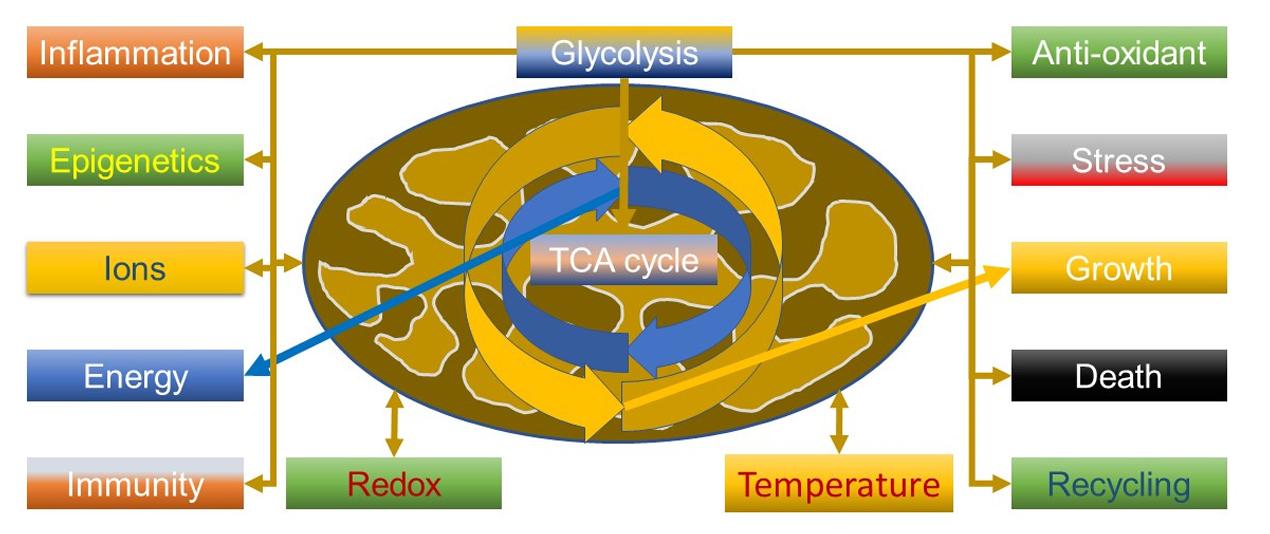
This figure explains that mitochondria are not only energy producers but also key regulators of calcium levels and oxidative stress within the cell. This figure shows how the mitochondrion sits at the center of multiple systems, including the Krebs cycle, inflammation control, and redox signaling. Calcium plays a central role in how mitochondria guide both energy and immune activity. The text highlights how succinate, a byproduct of the Krebs cycle, influences inflammation and viral defense, demonstrating the tight connection between metabolism and immunity . These functions suggest that when mitochondrial calcium handling is disrupted, energy loss and inflammation can follow.
Nunn AVW, Guy GW, Brysch W, Bell JD. Understanding Long COVID: Mitochondrial Health and Adaptation-Old Pathways, New Problems. Biomedicines . 2022;10(12):3113. Published 2022 Dec 2. doi:10.3390/biomedicines10123113
Long COVID Reframed: It’s Not Fatigue, It’s Calcium Disarray
- A collapse of intracellular calcium weakens mitochondria, leading to chronic fatigue and impaired tissue repair.
- Ionized calcium loss disrupts heart rhythm, immunity, cognition, and detoxification balance.
- Mitochondrial calcium flow controls inflammatory resolution—yet it's rarely targeted in treatment plans.
- Restoring calcium signaling supports recovery when antiviral, adaptogen, or detox protocols stall.
Tracking Cellular Recovery in Practice
This cellular story is also supported by recent patient observations. In a small group of COVID-19 cases monitored during AIC therapy, laboratory markers closely aligned with this underlying calcium disruption. Serum Amyloid A (SAA) levels, which reflect inflammatory burden, began high but consistently declined during the course of AIC therapy. Procalcitonin and C-reactive protein followed similar downward patterns, suggesting a steady resolution of immune stress. While lymphocyte percentages showed a mild decrease over time, white blood cell counts remained stable or slightly increased, and every patient tested negative on follow-up nucleic acid testing. The combined trajectory of these markers supports the notion that restoring calcium signaling can help restore the immune system's balance, particularly when mitochondrial organization is compromised.
Conclusion
The deeper patterns observed in Long COVID suggest a breakdown in calcium signaling that disrupts how cells produce energy, regulate inflammation, and maintain recovery cycles. This isn't just a post-viral aftershock but a physiological state where mitochondrial structure and ionic coordination fall out of alignment.
AIC therapy works by helping the cell reestablish this coordination, improving energy flow and immune steadiness from within. In observed cases, inflammatory markers gradually settled while functional recovery became more sustained. Rather than masking symptoms, this approach targets the original cellular imbalance that allows dysfunction to persist. It offers a path that respects the body's internal healing design and supports a more complete return to physiological stability.
Bring calcium signaling into your practice.
Practitioners can request a consultation to discuss AIC therapy and how these mechanisms apply to specific cases.
Newsletter content is educational and contributed by participating healthcare practitioners. These statements have not been evaluated by the FDA and are not intended to diagnose, treat, cure, or prevent any disease.