Calcium As Pain-Off Switch
This newsletter reveals how disrupted ionic calcium signaling is not just involved in pain—but often the hidden force sustaining it—and how restoring balance may unlock lasting relief in pain conditions.
Calcium isn’t just present in pain pathways—it’s actively shaping them at every level. Pain starts when calcium channels in nociceptors open, allowing an ion surge that triggers action potentials and sets pain in motion. At the spinal cord, this calcium influx causes sensory neurons to release pain transmitters like substance P and CGRP, pushing the signal one step further. But calcium does more than carry messages—it shapes how neurons behave. In conditions like hyperalgesia, it raises their sensitivity and firing rate, making pain signals more intense and longer-lasting.
When tissue is injured, calcium rushes into damaged cells and surrounding neurons, setting off both repair and inflammatory responses. It draws in annexins to patch up membranes and directs immune cells and fibroblasts to the injury site. Evolution didn’t build this from scratch—it repurposed calcium’s old stress-response tools to create a fast-reacting pain system. That system, once protective, now often drives chronic pain. In long-standing pain conditions, calcium regulation breaks down, leaving neurons stuck in a hyperactive state. From keratinocyte repair to gene expression rewiring in spinal neurons, calcium decides how pain is registered, remembered, and sustained. Restoring proper calcium signaling doesn’t just interrupt pain—it resets how the nervous system processes and holds onto it.
To see how deep this regulation runs, we have to zoom in on the details—how calcium shapes the nervous system from the inside out. This mechanism isn’t limited to setting pain in motion; it fine-tunes pain intensity, timing, and persistence through specific calcium channel subtypes like CaV2.2 and CaV2.1 in dorsal horn neurons. These channels influence not only whether pain is felt but also how sharply and for how long. The same surge of calcium that releases neurotransmitters also tweaks receptor sensitivity on the other side of the synapse, laying the groundwork for central sensitization. In microglia, calcium drives the release of inflammatory cytokines, tightening the link between neuroinflammation and neuropathic pain.
Meanwhile, calcium-sensitive enzymes like calpain and CaMKII modify ion channels and gene activity, reinforcing chronic pain at the molecular level. Wound healing itself—fibroblast migration, matrix remodeling, immune coordination—is driven by calcium waves that also affect pain outcomes. Even voltage-gated calcium channels in skin cells contribute to pain through their role in restoring the barrier. When internal calcium stores like the endoplasmic reticulum go off balance, neurons become erratic, more reactive, and harder to calm. This cellular turbulence becomes a kind of ionic memory—pain that lingers without a clear cause. By rebalancing this calcium machinery, we’re not just treating symptoms—we're restoring the nervous system’s ability to judge and respond to injury in a healthy way.
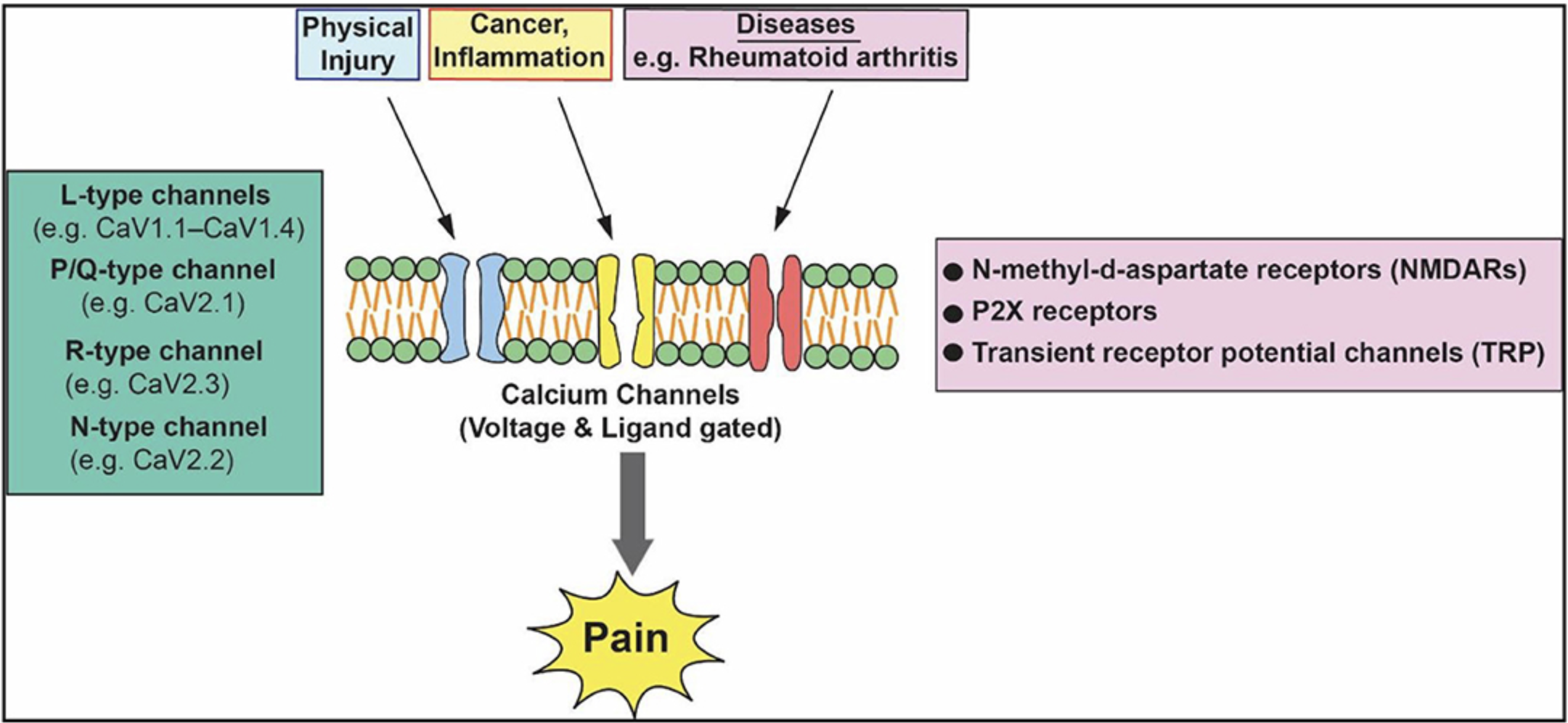
This figure illustrates the key role played by different calcium channels in the transmission of pain signals. Pain-mediating substances like serotonin, bradykinin, substance P, and prostaglandin E2 facilitate calcium entry into nerve cells through voltage-gated calcium channels, causing significant rises in intracellular calcium levels. These elevated calcium levels enhance neural activity, intensifying the pain signals communicated to the central nervous system. Over extended periods, sustained increases in calcium influx can alter how calcium channels function and their overall expression, potentially leading to chronic pain conditions. Additionally, calcium channels regulate crucial neuronal activities, including neurotransmitter release, activation of calcium-dependent enzymes, and gene transcription, collectively influencing the nerve's long-term sensitivity.
https://pmc.ncbi.nlm.nih.gov/articles/PMC9423735/
Calcium, the Missing Link to Pain
AIC Therapy offers a targeted approach to restoring the disrupted calcium dynamics commonly seen in chronic pain states. By stabilizing membrane-bound calcium signaling, AIC helps reduce the hyperexcitability of nociceptors—a key driver behind exaggerated pain responses such as hyperalgesia. It also supports the normalization of presynaptic calcium activity in dorsal horn neurons, helping to regulate the excessive release of pain mediators like substance P and CGRP. At the synaptic level, AIC contributes to rebalancing calcium-dependent receptor sensitivity, which can interrupt central sensitization and prevent the amplification of pain signals. Additionally, by supporting the proper function of calcium-sensitive enzymes such as CaMKII and calpain, it disrupts the molecular feedback loops that reinforce chronic pain at the transcriptional level. AIC’s regulation of calcium flux in damaged tissues may further enhance membrane repair, immune coordination, and fibroblast activity—facilitating tissue healing while reducing the prolonged inflammatory signals that sustain pain. Altogether, restoring physiological calcium signaling with AIC addresses not only the symptoms but also the underlying ionic disarray that perpetuates chronic pain.
Advanced Clinical Tips
- In stroke cases with one-sided pain, don’t overlook ionic calcium loss on the affected side — it can quietly amplify neuropathic sensitivity.
- When Cav2.2 calcium channels stay open, they don’t just carry pain — they help the nervous system memorize it.
- Inflammation drives calcium deep into spinal neurons, reshaping gene activity that keeps pain hypersensitivity alive.
- Muscle cramps that persist despite magnesium often trace back to low ionized calcium — even if serum calcium looks fine.
- CRPS pain often sticks because calcium-activated enzymes like CaMK2 rewire the brain’s pain map.
- In fibromyalgia, the real calcium issue may be inside the cells — where lower intracellular calcium silently raises pain sensitivity.
Case Reference
A 42-year-old female with long-standing degenerative arthritis came in, barely able to hold a coffee cup — she had quit golf, struggled with simple tasks, and found no relief with conventional medication. After consistent AIC Therapy support, her swelling and pain eased dramatically. She regained grip strength, started moving with ease, and recently shared: “I’m back on the golf course — pain-free and full of energy.
Conclusion
Pain-mediating compounds like substance P and bradykinin open calcium channels in neurons, sharply increasing intracellular calcium and heightening pain transmission. In stroke cases with unilateral pain, even subtle ionic calcium loss on the affected side may worsen neuropathic sensitivity beneath the surface. One patient with severe arthritis-related hand pain, previously unable to lift a cup or play golf, experienced a full return to function and energy following AIC Therapy. Excess calcium influx doesn’t just carry pain — it reshapes neural sensitivity, enzyme activity, and synaptic plasticity, creating a system that overremembers discomfort. In CRPS, for example, calcium-driven enzymes like CaMK2 help embed pain deeper into the nervous system’s wiring. These insights reinforce that restoring balanced calcium signaling isn't just symptom management — it’s a way to re-tune the nervous system’s pain response from the inside out.
Bring calcium signaling into your practice.
Practitioners can request a consultation to discuss AIC therapy and how these mechanisms apply to specific cases.
Newsletter content is educational and contributed by participating healthcare practitioners. These statements have not been evaluated by the FDA and are not intended to diagnose, treat, cure, or prevent any disease.