(Part 2 of 3)
Series on What Keeps Teeth and Gums Alive
Part Two of this newsletter will focus on its role in dental implants, bone remodeling, and the prevention of peri-implant resorption while maintaining gingival tissue integrity. Part Three will cover calcium’s impact on gum recession and highlight its role in enamel remineralization, salivary pH balance, and gingival tissue repair.
The Role of Calcium in Dental Implant and Bone Remodeling
Successful dental implantation relies on the continuous remodeling of alveolar bone, a process heavily influenced by calcium availability. Once an implant is placed, bone cells initiate a mineralization sequence, integrating the implant into the bone through a dynamic cycle of resorption and formation. This ongoing adaptation maintains structural resilience against mechanical stress; however, bone breakdown can exceed regeneration without sufficient calcium, leading to weakened support and potential implant instability. In cases of severe bone loss, intervention through bone grafting may be required before implantation, increasing treatment complexity.
Beyond its role in osseointegration, ionic calcium is vital in maintaining peri-implant tissue health. Peri-implantitis, a leading cause of implant failure, arises when inflammatory processes trigger excessive bone resorption. Ionic calcium modulates immune responses by regulating cytokine activity, helping prevent chronic inflammation that compromises bone integrity. Additionally, it supports soft tissue healing by stimulating fibroblast and keratinocyte function, ensuring proper mucosal barrier formation. Without adequate ionic calcium, the healing process slows, peri-implant inflammation worsens, and long-term implant survival becomes uncertain.
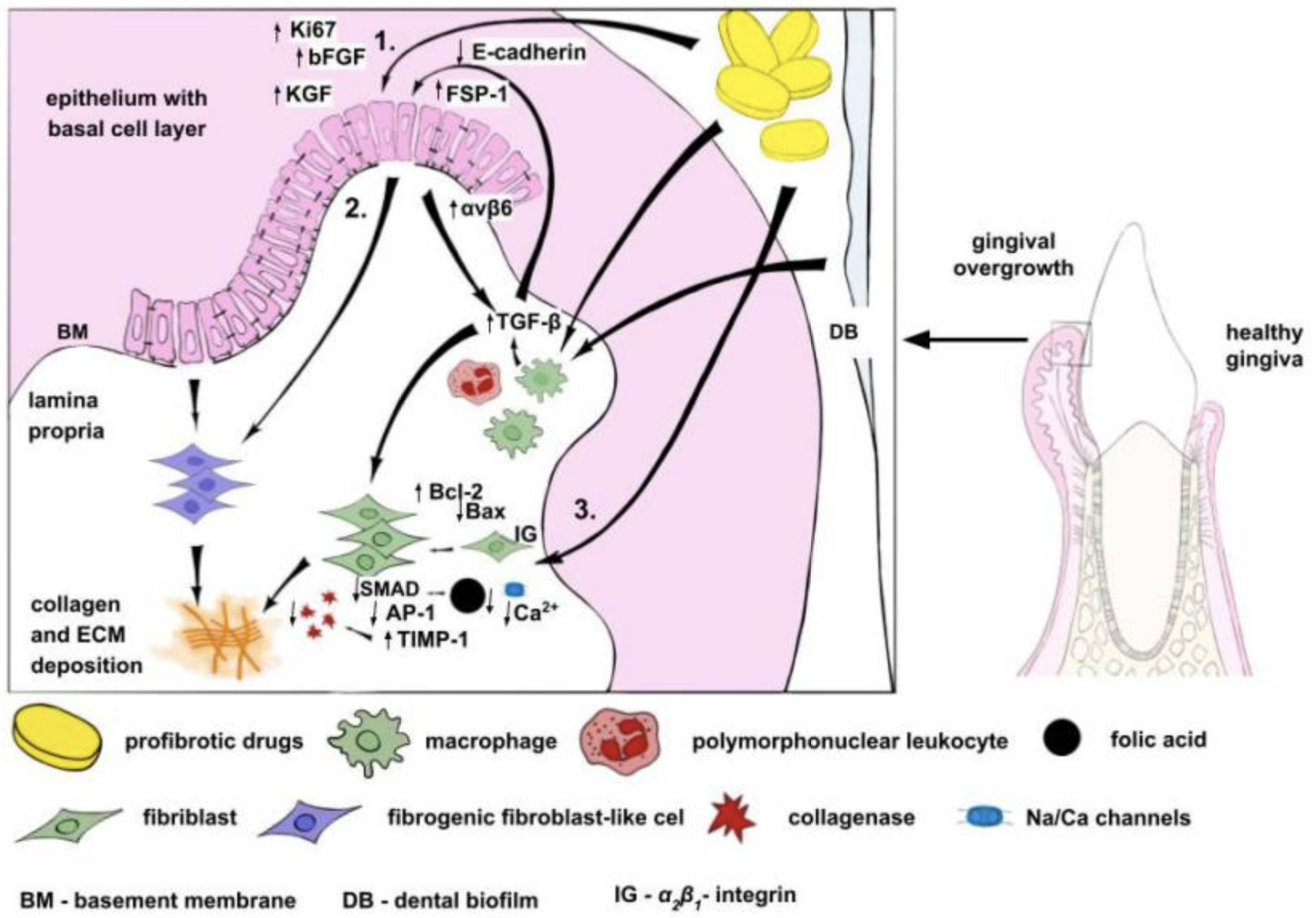
This figure demonstrates the process of drug-induced gingival overgrowth, highlighting the relationship between calcium and gingival tissue changes. Certain drugs interfere with calcium balance by affecting sodium and calcium channels or targeting specific enzymes, leading to decreased intracellular calcium levels. This reduction in calcium lowers folic acid availability, which disrupts the breakdown of collagen and increases the buildup of the extracellular matrix, making the gingiva thicker and more fibrotic. At the same time, a key signaling molecule, transforming growth factor-beta (TGF-β), induces phenotypic changes in gingival cells, making them resemble connective tissue cells. This transformation enhances their capacity to synthesize structural components and resist normal cell turnover. As a result, the gums overgrow, losing their normal structure and balance due to disrupted calcium regulation and excessive tissue accumulation.
Calcium’s Role in Gingival Tissue Integrity
Gingival tissue integrity relies on calcium to regulate extracellular matrix composition, collagen formation, and immune defense mechanisms. As a structural regulator, calcium ensures proper collagen cross-linking, reinforcing the gingival framework to withstand mechanical stress and bacterial invasion. Fibroblasts require calcium to synthesize and maintain the connective tissue network, while epithelial cell adhesion relies on calcium-dependent junctions to create a barrier against external pathogens.
Ionic calcium modulates inflammatory signaling, preventing excessive tissue degradation in response to bacterial biofilms and mechanical irritation. Its role in angiogenesis enhances blood supply to gingival tissues, optimizing oxygenation and nutrient delivery for sustained tissue health. Insufficient ionic calcium disrupts these protective mechanisms, increasing the risk of inflammatory conditions such as periodontitis and gingival overgrowth.
AIC therapy stabilizes calcium homeostasis, promoting a balanced environment for bone and gingival tissue regeneration. It enhances collagen synthesis, reinforces epithelial adhesion, and accelerates post-surgical healing, ensuring a stronger peri-implant foundation and reducing the risk of implant failure. Through its targeted effects on calcium metabolism, AIC therapy provides a comprehensive strategy for preserving hard and soft tissue health, maximizing long-term dental stability.
Case Reference:
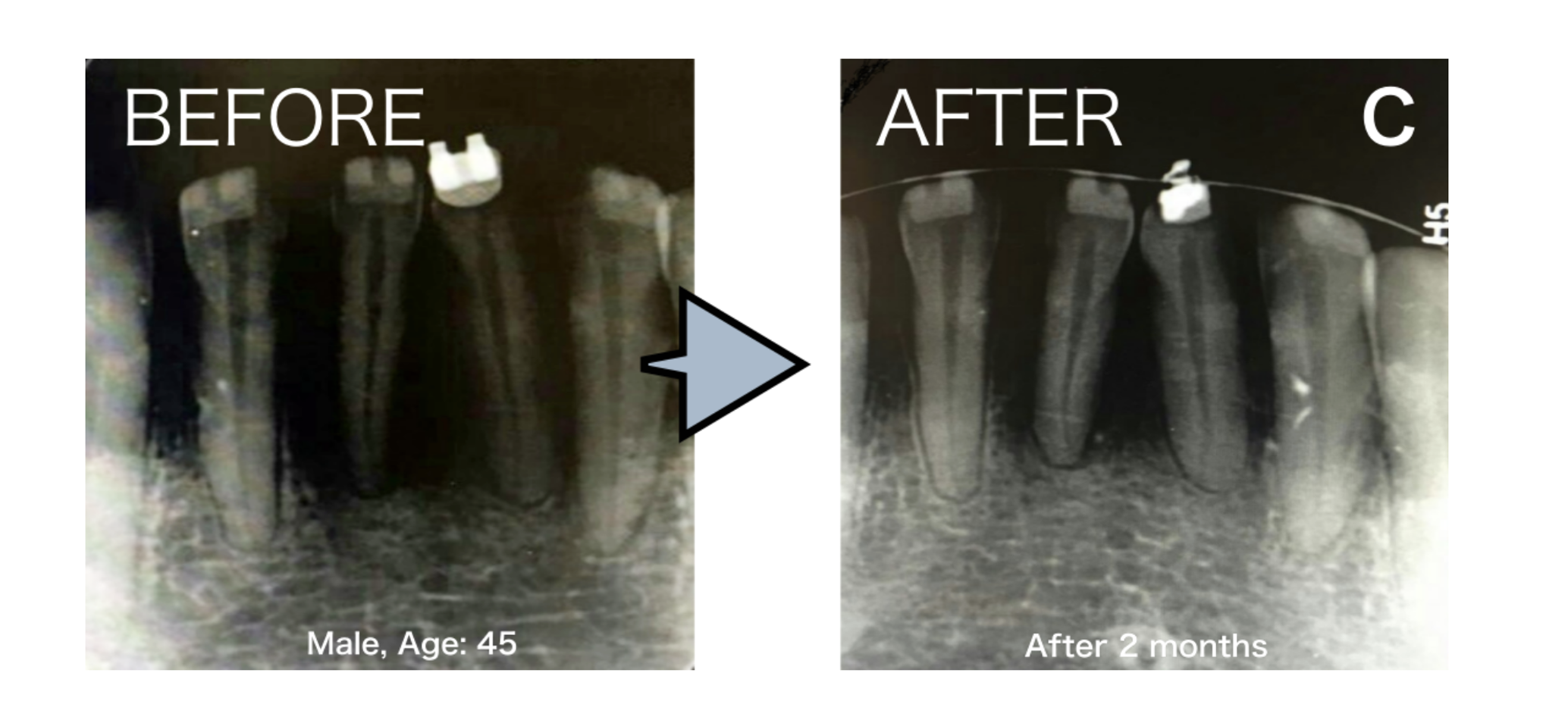
A 45-year-old male with severe alveolar bone loss presented with progressive dental instability and gingival deterioration. Pre-treatment radiographic imaging revealed advanced bone resorption, raising concerns regarding the long-term retention of his teeth. A targeted therapeutic approach incorporating AIC therapy was initiated to support bone metabolism and periodontal health. After two months, follow-up imaging showed notable bone density and structural support improvements, accompanied by enhanced gingival integrity. These findings demonstrate the potential of AIC therapy in promoting alveolar bone remodeling and enhancing periodontal resilience, contributing to improved structural support and gingival health.
Common Myths About Dental Problems
1. Bone Loss Only Happens With Age. Bone loss can occur at any age due to inflammation, diet, or missing teeth.
2. Lost Bone Can’t Be Saved. Bone loss can be slowed or stopped with proper care.
3. Gum Disease Only Affects the Gums. Gum disease weakens the underlying bone, which can lead to loose teeth or implant failure if left untreated.
4. A Missing Tooth Won’t Affect Bone. When a tooth is missing, the surrounding bone gradually shrinks over time.
Conclusion
Calcium regulation is essential for implant stability and periodontal health, directly influencing bone remodeling, collagen integrity, and immune response. When calcium homeostasis is disrupted, bone resorption accelerates, weakening the structural foundation required for successful osseointegration. Gingival tissue also becomes more vulnerable, with increased inflammation, impaired healing, and greater susceptibility to fibrosis. However, clinical evidence demonstrates that AIC therapy prevents demineralization and promotes natural bone regeneration, reversing alveolar bone loss and enhancing gingival resilience. By stabilizing calcium metabolism, AIC supports collagen synthesis, reinforces epithelial adhesion, and accelerates post-surgical healing, ultimately improving long-term implant success. A proactive approach to calcium balance maintains dental stability and ensures the long-term integrity of both hard and soft tissues in the oral environment.
Bring calcium signaling into your practice.
Practitioners can request a consultation to discuss AIC therapy and how these mechanisms apply to specific cases.
Newsletter content is educational and contributed by participating healthcare practitioners. These statements have not been evaluated by the FDA and are not intended to diagnose, treat, cure, or prevent any disease.