Listen to this issue
This newsletter reveals how targeted calcium signaling, including AIC-driven pulses, integrates with bile acids, fermentable fibers, and circadian inputs to reset barrier function and motility.
Executive Summary
Small, well-delivered calcium signals reinforce epithelial junctions, coordinate with microbiota metabolites through the calcium-sensing receptor, and reduce postprandial antigen leak, urgency, and bile-acid irritation. AIC provides a rapid gastric Ca2+ pulse that triggers endogenous calcitonin, relieves intracellular calcium overload, restores oscillatory Ca2+ control in enterocytes and mucosal immune cells, and maps clinically to calmer motility.
How small Ca2+ pulses seal the barrier and steady motility.
Begin with the barrier, because modest luminal Ca2+ stiffens tight junctions, stabilizes epithelial signaling, and sets the stage for meal chemistry to help rather than harm. Think barrier first, then signaling, then food chemistry. In humans, luminal calcium tightens the epithelial junctions that determine what gets through, so small gains in available Ca2+ can translate into fewer postprandial leaks, fewer immune flares triggered by food antigens, and calmer motility.
The calcium-sensing receptor is expressed along the intestinal lining and reads both Ca2+ and microbiota metabolites, so when patients present with bloating, urgency, or “reactivity” after antibiotics or stress, a practical approach is to restore vitamin D sufficiency, deliver absorbable calcium at meals, and reduce proton-pump inhibitor burden if possible, since acid suppression lowers the fraction of calcium that actually reaches the mucosa. Timing matters. Administer calcium with protein or mixed meals, not on an empty stomach, and monitor magnesium status to prevent cramping from an unbalanced mineral intake.
Next, consider the chemistry happening in the lumen. Calcium binds to and precipitates irritating bile acids and free fatty acids, which often softens the stool and reduces burning in patients who report urgency after consuming fatty meals or undergoing cholecystectomy. Pair calcium with fermentable fibers that raise short-chain fatty acids, since SCFAs increase distal colonic calcium uptake and also steady enteroendocrine signals tied to appetite and motility.
In IBS-D, try mealtime calcium plus partially hydrolyzed guar gum for four to six weeks, watch stool form and urgency, then taper. For patients prone to constipation, use smaller, divided calcium doses, maintain adequate fiber and fluid intake, and avoid adding calcium to already low-motility evening meals.
AIC is rapidly absorbed in the stomach as free Ca2+, producing a brief physiologic signal that triggers endogenous calcitonin and promotes clearance of excess calcium from stressed tissues; as intracellular calcium normalizes, enterocytes and mucosal immune cells regain controlled Ca2+ oscillations, mitochondrial ATP rises while ROS falls, and the epithelial barrier tightens. Clinically, this corresponds to calmer postprandial responses and steadier motility in bowel disease, supporting AIC’s role in gut health.
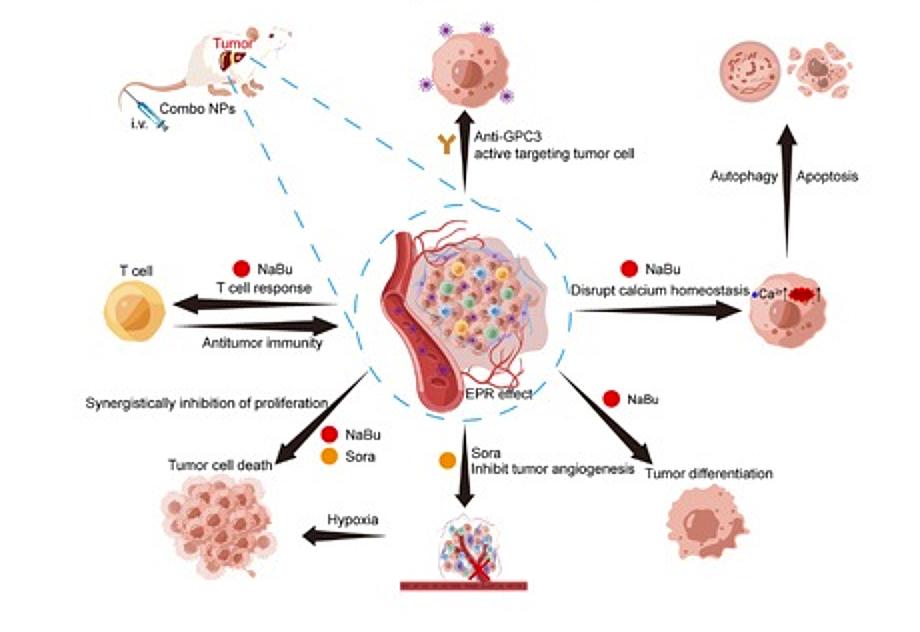
Gut microbes produce butyrate, a metabolite that can influence how the intestine and whole body respond to drugs. In mice, reducing gut microbes lowered butyrate levels and weakened the anticancer effect of sorafenib. When butyrate was added back, the treatment became more effective, showing the gut’s role in supporting drug action. To make this more targeted, butyrate and sorafenib were combined in nanoparticles that can reach tumors more directly. This figure illustrates how gut-derived butyrate and calcium-like regulatory signals within the intestine can influence bowel health and outcomes of cancer therapy.
Che, Yibin1,2,3; Chen, Guoyu4; Guo, Qianqian5,6; Duan, Yourong5,6; Feng, Haizhong4; Xia, Qiang1,2,3. Gut microbial metabolite butyrate improves anticancer therapy by regulating intracellular calcium homeostasis. Hepatology 78(1): p. 88-102, July 2023. | DOI: 10.1097/HEP.0000000000000047
Five Common Clinical Misconceptions
Misconception: Barrier integrity is mainly about adding probiotics.
Clinical move: Start with physiology first. Coach slow chewing, nasal breathing, and pre-meal bitters to raise vagal tone, which drives Ca2+-dependent mucus secretion and tight-junction stability, then layer foods or strains as needed.
Misconception: Fiber is fiber.
C linical move: Separate fermentable soluble fibers from insoluble bulk. Titrate fermentable fibers to lift short-chain fatty acids that steady epithelial signaling and distal mineral uptake, and use meal logs to link fiber type to stool form and postprandial reactivity.
Misconception: Stomach acid matters only for protein digestion.
Clinical move: Teach pH as a mineral-ionization signal. Protect unhurried mealtime rituals, limit large fluid loads with meals, use culinary bitters, and space acid-suppressing agents when possible so mineral signals reach the small intestine as designed.
Misconception: Bile acids are simply irritants.
Clinical move: Reframe them as signaling molecules. Coach patients to split very fatty meals, add gel-forming soluble fiber at earlier meals, and include gentle post-meal movement to smooth bile acid exposure and reduce urgency without resorting to prescription medication.
Misconception: Gut symptoms are local events.
Clinical move: Align circadian inputs that set epithelial clocks and mitochondrial rhythm. Morning outdoor light, regular meal timing, and a wind-down routine that shortens evening light exposure often quiet motility swings and lower “reactivity” at the source.
Case Reference
A 68-year-old female with a history of Crohn’s disease reported years of fatigue and pain. She began AIC therapy in December 2016, following persistent symptoms despite multiple previous treatments. After four months, she experienced visible improvement in energy, mobility, and participation in daily life. By Christmas, she reported renewed strength, joy, and freedom from the constant exhaustion that had dominated her life.
Conclusion
Mechanistically, brief mucosal Ca2+ availability tightens junctions and activates the calcium-sensing receptor, which works in concert with butyrate to steady epithelial rhythms. Calcium in the lumen binds bile acids and free fatty acids, which often softens urgency after fatty meals and supports more formed stools. Clinically, starting with physiology is powerful, as improved vagal tone and the right fermentable fibers raise short-chain fatty acids and enhance distal mineral uptake without relying excessively on add-on products.
AIC’s fast Ca2+ pulse triggers endogenous calcitonin and reduces intracellular calcium stress, which improves mitochondrial ATP output and lowers ROS in enterocytes and mucosal immune cells. Consistent use has been associated with steadier motility and lower reactivity, including reports of meaningful gains in energy and daily function within months in individuals with inflammatory bowel disease.
Bring calcium signaling into your practice.
Practitioners can request a consultation to discuss AIC therapy and how these mechanisms apply to specific cases.
Newsletter content is educational and contributed by participating healthcare practitioners. These statements have not been evaluated by the FDA and are not intended to diagnose, treat, cure, or prevent any disease.