( Part 3 of 3 )
Series on Cellular Approach to Longevity by Calcium
This newsletter series, "Cellular Approach to Longevity by Calcium," delves into calcium’s multidimensional influence on health beyond its traditional role in bone strength. This third part brings it all together, highlighting Calcium’s Role in Systemic Communication and Cellular Resilience. The series highlights how this essential mineral orchestrates body-wide synergy for sustained vitality and healthy aging.
Calcium Signaling in Aging: A Path to Resilience and Longevity
Ionic calcium is central to cellular resilience and systemic communication, facilitating crucial physiological processes across various systems. Within cells, ionic calcium binds to calmodulin, forming a complex that activates kinases like CaMKII, directly regulating the expression of antioxidant enzymes critical for cellular stress responses and enhancing the cell's ability to withstand oxidative damage. In mitochondria, calcium fine-tunes the mitochondrial permeability transition pore (mPTP), preventing unnecessary apoptosis and maintaining energy production during transient or acute stress, such as myocardial ischemia. In the vascular system, calcium activates potassium channels (KCa) in smooth muscle cells, promoting vasodilation and ensuring adequate oxygen delivery during systemic demand. Furthermore, calcium release from the endoplasmic reticulum (ER) governs protein-folding processes, alleviating ER stress and preventing cellular dysfunction—a dysfunction central to the pathogenesis of metabolic disorders like diabetes. Finally, ionic calcium is indispensable for activating osteocalcin in bone, a hormone that regulates systemic insulin sensitivity and energy metabolism, linking bone health and overall cellular resilience.
AIC therapy enhances mitochondrial function and reduces oxidative stress, preventing cellular damage. By restoring calcium signaling, AIC promotes cell survival and helps mitigate inflammation that contributes to tissue degeneration. Additionally, AIC alleviates ER stress, ensuring proper protein folding and preventing the accumulation of misfolded proteins, thereby maintaining cellular integrity. AIC therapy offers a targeted approach to enhancing cellular resilience through these mechanisms, with implications for long-term health across neurological and systemic functions.
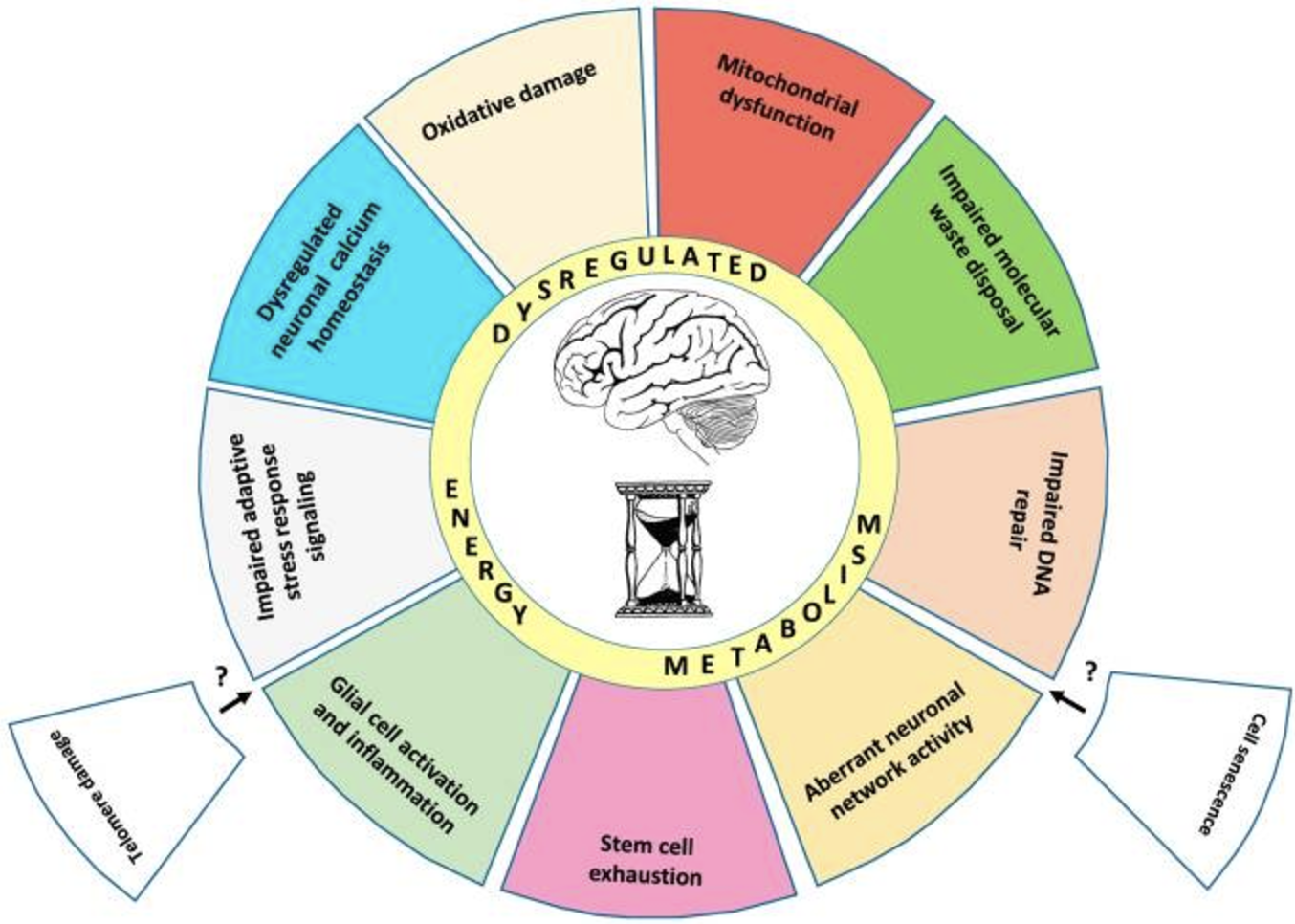
The figure presents the established hallmarks of brain aging, focusing on the core mechanisms involved. There are ten key hallmarks identified in the aging of the brain, with nine of these depicted as colored segments in a circle, resembling slices of a pie. These slices represent the various biological processes that contribute to the aging process in the brain. At the center of this circle, an inner ring is highlighted to signify “dysregulated energy metabolism.” This represents a fundamental factor that drives many other hallmarks, indicating how alterations in cellular energy management play a central role in brain aging. Two slices, representing telomere damage and cell senescence, are also included in the illustration. While these are well-established hallmarks of aging in peripheral tissues like skin or muscle, their exact role in brain aging is not yet fully established, as research in this area is ongoing.
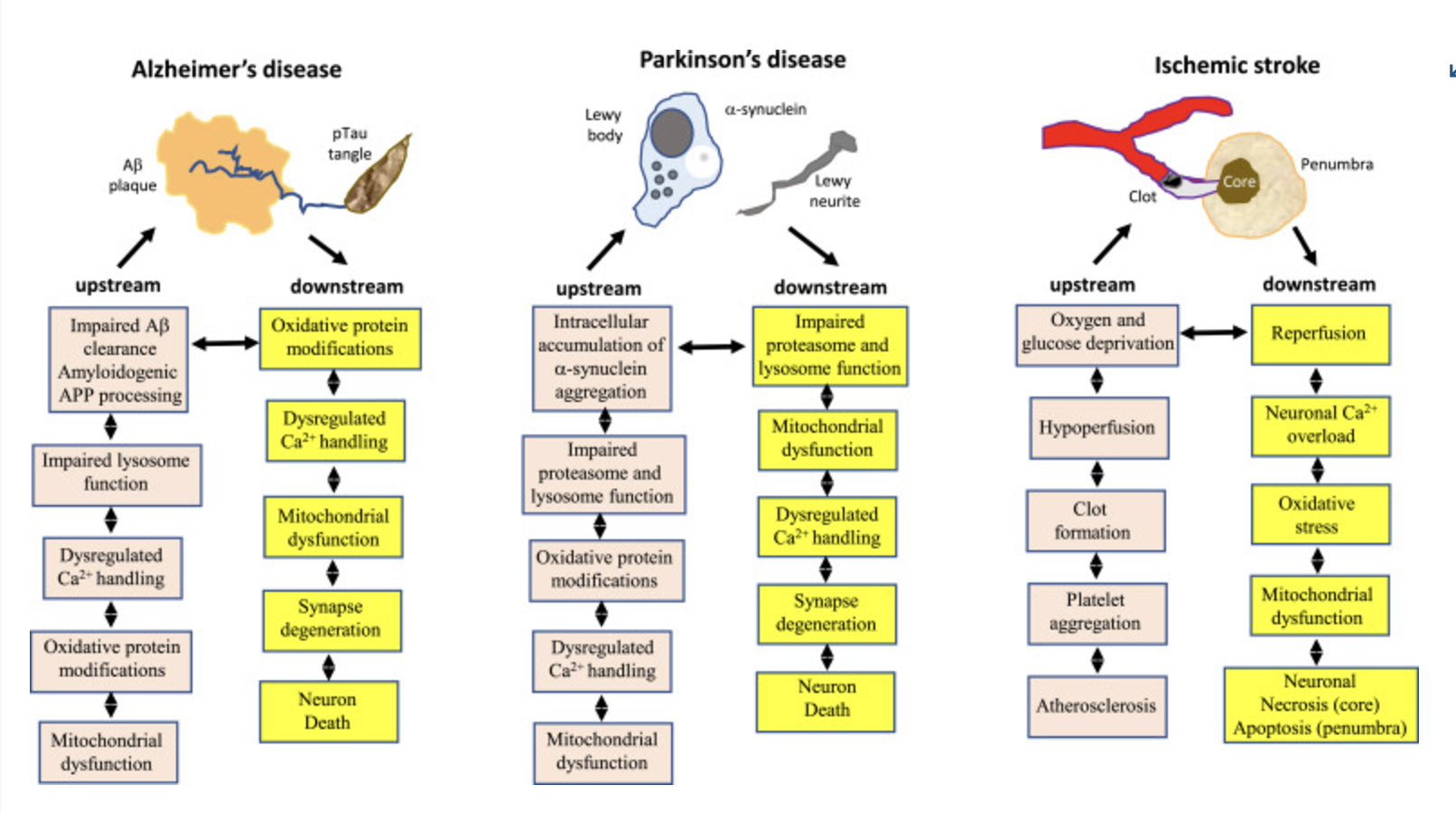
This figure illustrates the bidirectional relationship between hallmarks of brain aging and neurodegenerative disease mechanisms, emphasizing the central role of calcium dysregulation. Aging-related processes, such as oxidative stress, mitochondrial dysfunction, and impaired calcium homeostasis, are shown to act upstream of disease-defining pathologies, including Aβ plaques and pTau neurofibrillary tangles in Alzheimer’s disease (AD) or α-synuclein accumulation in Parkinson’s disease (PD). Conversely, these pathological aggregates exacerbate calcium imbalance and other aging hallmarks, creating a vicious cycle that leads to neuronal dysfunction and death. The figure also highlights how aging weakens the brain's resilience to ischemic events, such as stroke, by promoting atherosclerosis and impairing neuronal recovery mechanisms.
Case Reference
A 59-year-old male from British Columbia, Canada, presented with debilitating symptoms of mitral valve prolapse, characterized by progressive fatigue, chest pain, and exercise intolerance. Once an active sprinter, the patient could not climb stairs or perform mild physical activities. Clinical evaluation confirmed the severity of his condition, with a cardiologist warning that his prognosis was poor. In the winter of 2010, the patient began incorporating AIC therapy into his regimen. Within weeks, he reported improved energy levels, and by spring 2011, he progressed from walking on a treadmill to jogging within two months. Over time, his symptoms resolved entirely. As of 2020, the patient remains asymptomatic, with no recurrence of heart-related issues. This case illustrates the potential of AIC therapy to address systemic calcium signaling disruptions and support recovery in patients with mitral valve prolapse.
Quick Clinical Tips
Exploring Calcium Dysregulation: Unexplained fatigue, muscle cramps, or diminished stress tolerance may point to underlying calcium imbalances that can disrupt systemic communication.
Recognizing Unresolved Inflammation: Delayed wound healing, early vascular stiffness, or persistent inflammatory markers might reflect calcium dynamics worth further consideration in complex cases.
Highlighting Neuromuscular Indicators: Non-traumatic bone tenderness, numbness, tingling, or recurring headaches could suggest disrupted calcium signaling, particularly in metabolic or inflammatory conditions.
Conclusion
AIC therapy addresses calcium signaling disruptions that underlie aging-related cellular and systemic dysfunctions. By enhancing mitochondrial function and alleviating ER stress, AIC protects cells from oxidative damage and maintains protein integrity, supporting resilience against age-related decline. Its ability to decalcify tissues and restore calcium homeostasis reduces inflammation and prevents metabolic and cardiovascular complications. These effects contribute to improved systemic communication and cellular function, which is essential for healthy aging and long-term vitality. Clinical evidence, such as the recovery from mitral valve prolapse, demonstrates AIC's potential to reverse degenerative processes, highlighting its relevance for longevity-focused care. As research progresses, AIC therapy offers an innovative pathway to enhance neurological and systemic health, ensuring a more robust aging process.
Bring calcium signaling into your practice.
Practitioners can request a consultation to discuss AIC therapy and how these mechanisms apply to specific cases.
Newsletter content is educational and contributed by participating healthcare practitioners. These statements have not been evaluated by the FDA and are not intended to diagnose, treat, cure, or prevent any disease.