( Part 1 of 3 )
Series on Cellular Approach to Longevity by Calcium
This newsletter series, "Cellular Approach to Longevity by Calcium," delves into calcium’s multidimensional influence on health beyond its traditional role in bone strength. The first part explores Calcium: A Key to Cellular Longevity through DNA Repair, Mitochondrial Health, and Telomere Stability. The second part investigates Calcium's Role in Longevity: Optimizing Bone Health, Cellular Signaling, and Inflammation Control. The third part brings it all together, highlighting Calcium’s Role in Systemic Communication and Cellular Resilience. The series highlights how this essential mineral orchestrates body-wide synergy for sustained vitality and healthy aging.
Calcium’s Essential Role in Cellular Longevity: Boosting DNA Repair, Mitochondrial Health, and Telomere Protection.
Recent advancements reveal that calcium’s role in the body extends beyond skeletal support, impacting critical cellular processes essential for longevity and resilience. Calcium influences mechanisms like DNA repair, mitochondrial stability, telomere maintenance, and inflammation modulation—each foundational to sustaining cellular health and functional integrity across the lifespan. By supporting these processes, calcium not only contributes to structural wellness but also enhances cellular resilience and long-term functionality.
At the cellular level, calcium is vital for activating DNA repair enzymes, a function that becomes increasingly crucial as oxidative damage accumulates with age due to environmental and metabolic stressors. Left unrepaired, this oxidative damage accelerates cellular aging, increasing the risk of dysfunction and degenerative diseases. Calcium supports the DNA repair enzymes that identify and correct DNA damage, helping to maintain genetic stability and reduce premature cellular decline.
Beyond DNA repair, calcium plays a key role in regulating autophagy, the cell’s natural “housekeeping” mechanism for clearing out damaged or dysfunctional components. Autophagy is fundamental to cellular health, as it prevents stagnation and cellular aging arising from accumulated waste. With age, cells often lose efficiency in autophagy, leading to cellular senescence—a dormant state where cells no longer divide or function effectively. By supporting autophagy, calcium helps preserve cellular youthfulness and reduces cellular debris that can impair function and accelerate aging.
Calcium is also essential for mitochondrial stability and energy regulation. Mitochondria, which are central to energy production, contribute to aging through increased production of reactive oxygen species (ROS) when dysfunctional. Calcium’s role in mitochondrial health includes optimizing energy production pathways and stabilizing mitochondrial membranes to prevent excess ROS release. This stability is crucial for limiting oxidative stress and reducing the “wear and tear” that drives biological aging.
Calcium’s influence further extends to telomere stability—the protective caps at chromosome ends that shorten with each cell division. Telomere length serves as a cellular age marker; as telomeres shorten, cells lose their ability to divide, leading to aging and eventual cell death. Calcium supports telomerase activity, an enzyme responsible for maintaining telomere length, indirectly extending cellular lifespan and preserving regenerative capacity, especially within bone and connective tissues.
Additionally, calcium plays a central role in modulating inflammatory responses. Chronic, low-grade inflammation accelerates aging by breaking down tissues and impairing cellular functions. Calcium ions regulate signaling pathways that control the release of inflammatory cytokines, minimizing unnecessary inflammation that can compromise bone health, cardiovascular function, and other systems essential for healthy aging. By keeping inflammation in check, calcium helps create cellular environments conducive to longevity and resilience.
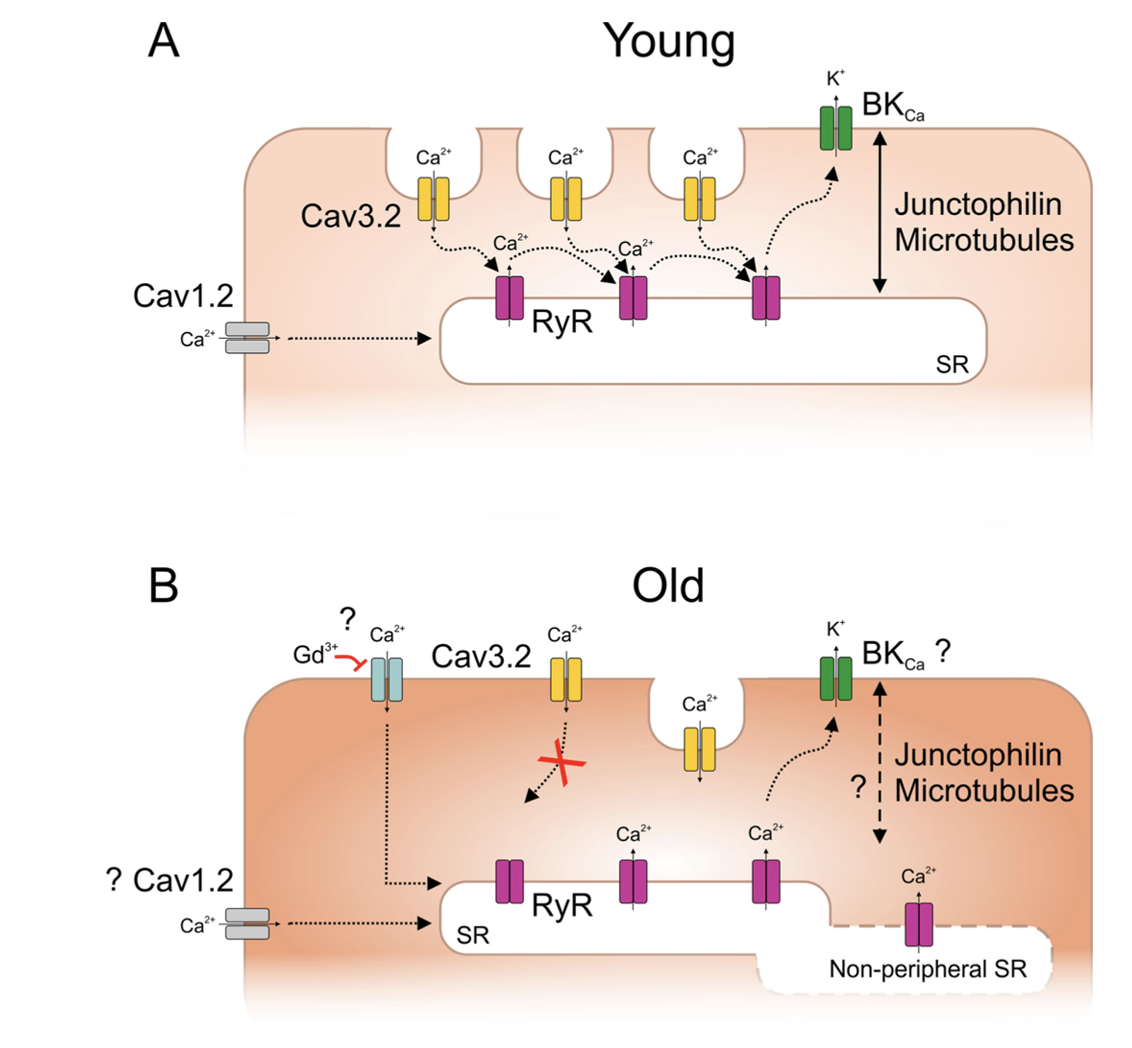
This figure illustrates how aging affects calcium signaling in vascular smooth muscle cells (VSMCs) and impacts vascular function. In young cells (A), calcium influx through Cav3.2 channels triggers localized calcium release via ryanodine receptors (RyRs), activating BKCa_Ca channels and leading to potassium (K+^++) efflux, which promotes hyperpolarization and helps regulate vascular tone. However, in older cells (B), Cav3.2-to-RyR coupling is disrupted, reducing calcium spark activity and compromising BKCa_}Ca channel activation. This breakdown in signaling, along with altered junctophilin and microtubule structures, impairs the feedback mechanisms that generally counteract vasoconstriction, potentially contributing to increased vascular stiffness and hypertension with age.
Cellular Health and Enhancing Lifespan through AIC Therapy.
Calcium’s role in cellular health is essential for longevity, particularly through AIC therapy’s regulatory impact on key longevity genes: FOXO3, SIRT1, and AMPK. AIC therapy triggers the release of endogenous calcitonin, which directs calcium into bone tissue, reduces free calcium in circulation, and decreases cellular oxidative stress. This balanced calcium environment enables FOXO3 to activate DNA repair and autophagy, which are critical defenses against age-related cellular decline. By reducing oxidative burden, AIC enhances FOXO3’s capacity to maintain cellular resilience over time.
AIC therapy also exerts a direct influence on SIRT1 by preventing intracellular calcification and supporting mitochondrial function. AIC’s decalcifying effect removes excess calcium from soft tissues and mitochondria, stabilizing cellular energy production and allowing SIRT1 to focus on DNA repair and metabolic regulation. Additionally, AIC binds lactic acid, creating an alkaline environment that minimizes chronic inflammation and alleviates inflammatory stress that would otherwise burden SIRT1’s cellular maintenance functions. This reduction in inflammation allows SIRT1 to prioritize longevity-related cellular maintenance.
AMPK, a key regulator of autophagy and energy balance, also benefits from AIC’s capacity to maintain calcium homeostasis. By preventing unwanted calcification, AIC preserves mitochondrial efficiency, which is essential for AMPK’s activation of autophagy and other longevity-supporting pathways. The stable calcium signaling established by AIC, combined with calcitonin’s role in lowering cellular stress, enables AMPK to direct energy resources toward cellular renewal and resilience.
Through these mechanisms—reducing oxidative stress, preventing calcification, stabilizing mitochondrial function, and lowering inflammation—AIC therapy optimally supports the activity of FOXO3, SIRT1, and AMPK. This reinforcement of DNA repair, autophagy, and metabolic regulation is crucial for enhancing cellular longevity and resilience across the lifespan.
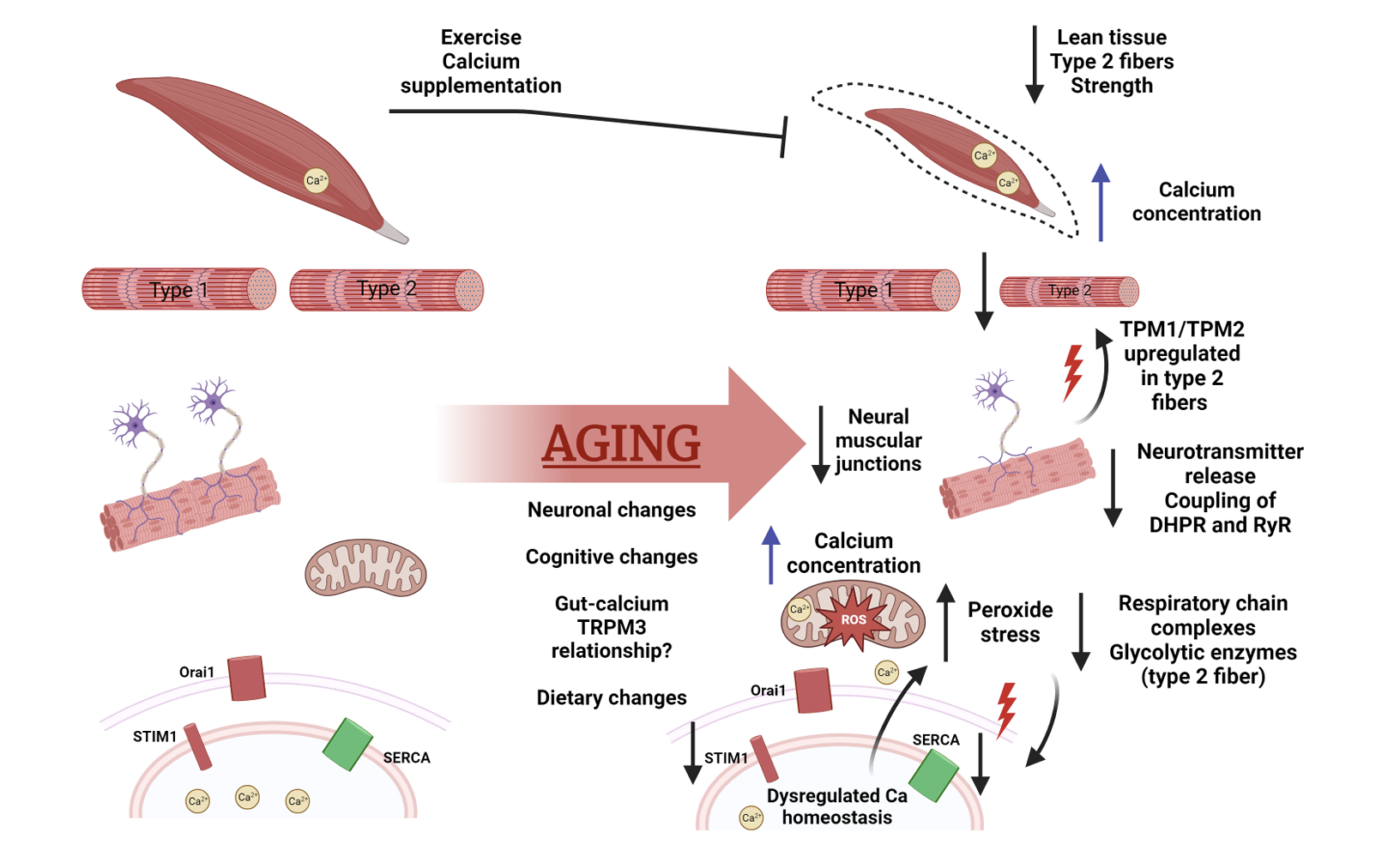
This figure illustrates how aging impacts calcium regulation and muscle health, emphasizing changes in calcium's role at cellular and tissue levels. In young muscle, exercise and calcium supplementation promote type 2 muscle fiber health, neural-muscular junction efficiency, and calcium signaling pathways, preserving muscle strength and lean tissue mass. With aging, calcium dysregulation leads to neural and muscular changes, including reduced neuromuscular junctions, increased mitochondrial oxidative stress, and altered calcium handling proteins like SERCA and STIM1, contributing to muscle atrophy and functional decline. These disruptions in calcium homeostasis are linked to broader physiological effects, such as inflammation, cognitive changes, and increased susceptibility to degenerative diseases.
Case Reflection 1
A 15-year-old male, initially presenting with a height of 153 cm, experienced significant social challenges due to his shorter stature among peers. After prior unsuccessful attempts with various growth interventions, he began AIC Therapy in October 2015. Although the first two months showed no observable changes, starting in January 2016, the patient began a steady growth increase of approximately 1–1.5 cm per month. By August 2016, his height had reached 170 cm, totaling a 17 cm increase over eight months. This case highlights the potential of AIC Therapy in supporting growth velocity in adolescents through enhanced calcium regulation and bone health, warranting further exploration in similar cases of growth delay.
Case Reflection 2
A 61-year-old male with a decade-long history of Meniere’s disease, characterized by chronic tinnitus, severe vertigo, and frequent vomiting, experienced a significant decline in mobility and quality of life, necessitating the use of a walker, limiting his daily activities. After multiple unsuccessful treatments with conventional approaches, the patient began Active Ionic Calcium (AIC) Therapy in winter. Following the initial dose, he experienced an immediate cessation of vertigo and regained stable balance, allowing him to walk independently and resume normal activities. The marked improvement in symptoms, particularly the reduction in dizziness and tinnitus, highlights AIC Therapy’s potential role in stabilizing inner ear function and calcium homeostasis, offering a promising therapeutic option for managing Meniere’s disease symptoms.
Conclusion
Calcium has a broad impact on cellular health, reaching beyond skeletal support to influence critical processes tied to longevity, including DNA repair, mitochondrial stability, and inflammation control. AIC Therapy amplifies these effects by restoring calcium signaling, promoting cellular decalcification, and creating an alkaline environment—each contributing to a cellular environment supportive of resilience and healthy aging.
With age, calcium dysregulation can lead to physiological impairments such as weakened neuromuscular junctions, mitochondrial oxidative stress, and diminished muscle function, accelerating cellular and tissue aging. However, AIC Therapy has shown potential to counteract these age-related changes, with documented benefits ranging from enhanced growth in adolescents to significant symptom relief in Meniere’s disease.
By providing a targeted approach to maintaining calcium homeostasis, AIC Therapy offers a promising pathway for supporting long-term health and vitality. Collectively, these insights underscore calcium’s critical role in managing age-related cellular decline and highlight AIC’s capacity to reinforce foundational mechanisms of longevity.
Bring calcium signaling into your practice.
Practitioners can request a consultation to discuss AIC therapy and how these mechanisms apply to specific cases.
Newsletter content is educational and contributed by participating healthcare practitioners. These statements have not been evaluated by the FDA and are not intended to diagnose, treat, cure, or prevent any disease.