( Part 3 of 3 )
Series on Role of Calcium in Detoxification Pathways
This third part probes ionic calcium’s role into Detoxification related to skin health and anti-aging. Together, the series demonstrates how calcium is a cornerstone in safeguarding the body from oxidative stress and toxic challenges.
The Role of Calcium in Skin Health and Anti-Aging Strategies
Skin health and aging are intricately connected to calcium homeostasis, which plays a vital role in maintaining the skin barrier and supporting detoxification processes. Calcium regulates keratinocyte differentiation, driving the production of proteins such as filaggrin and loricrin, alongside ceramides and other lipids, to strengthen the skin’s water-resistant structure. This robust barrier shields the skin from dehydration, environmental toxins, and oxidative stress—key contributors to aging. Disruptions in calcium signaling compromise this defense, leading to increased transepidermal water loss (TEWL), oxidative damage, and impaired reparative functions.
AIC (antiorbital ionic calcium) restores calcium signaling, enhancing keratinocyte differentiation and lipid synthesis to repair the barrier while activating detoxification pathways to eliminate intracellular waste. It prevents mitochondrial dysfunction, a hallmark of aging, by normalizing intracellular calcium levels and reducing oxidative stress from reactive oxygen species (ROS). AIC further supports skin health by enhancing calcium-dependent antioxidant enzymes like glutathione peroxidase and superoxide dismutase. These enzymes neutralize ROS, reduce lipid peroxidation, and protect the skin’s structural integrity, thereby minimizing wrinkles and preserving elasticity.
By maintaining calcium gradients, AIC activates autophagy, clearing damaged proteins and organelles and promoting keratinocyte turnover to delay cellular senescence. Additionally, AIC boosts ceramide synthesis to reinforce the lipid barrier, which retains moisture and modulates matrix metalloproteinases (MMPs) to safeguard the extracellular matrix and dermal integrity. These multifaceted actions position AIC as a clinically valuable tool in anti-aging protocols, supporting youthful, resilient skin.
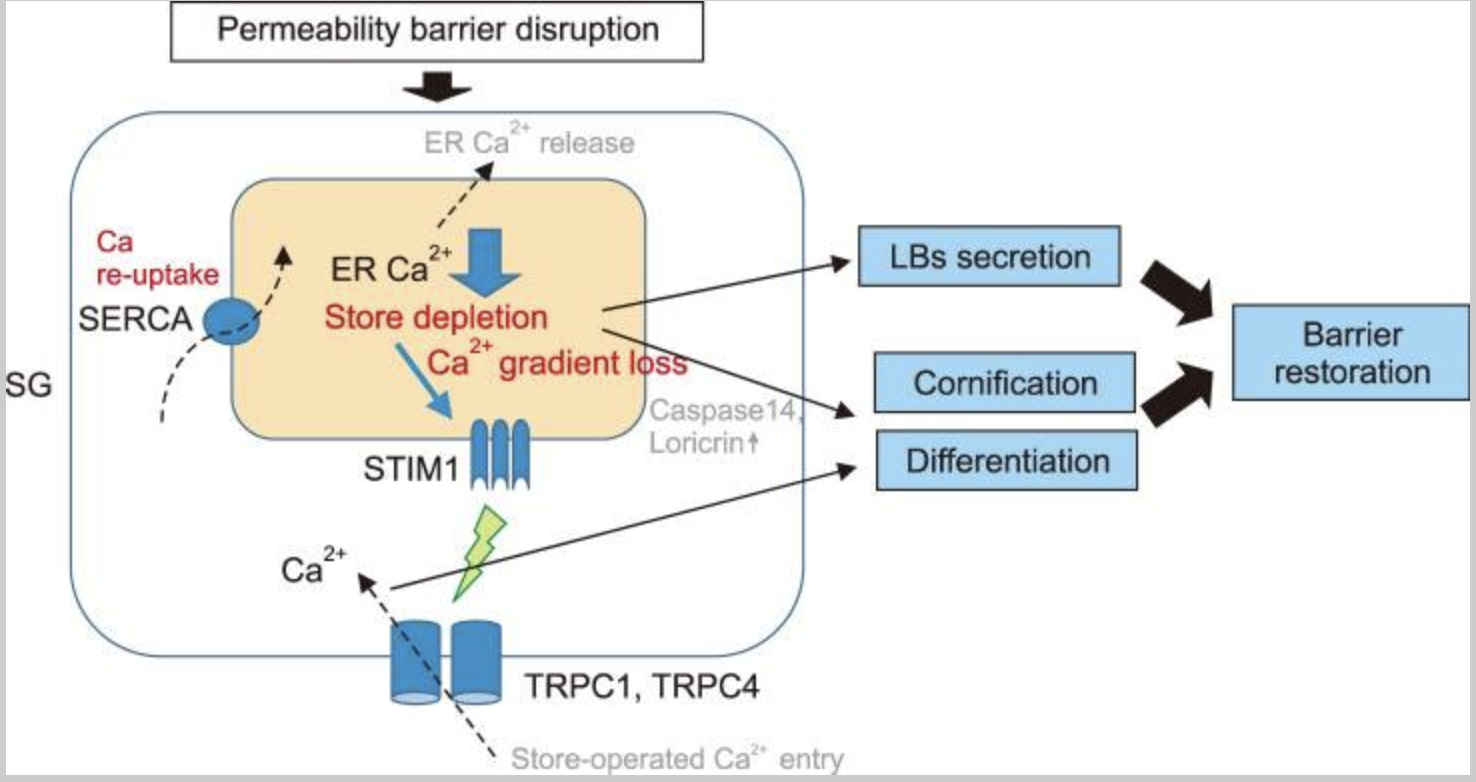
This figure highlights the pivotal role of endoplasmic reticulum (ER) calcium signaling in skin barrier homeostasis. When the skin barrier is disrupted, calcium release from the ER in stratum granulosum (SG) keratinocytes leads to ER calcium depletion and loss of the epidermal calcium gradient. This triggers two essential recovery responses: secretion of lamellar bodies (LBs) to restore the lipid barrier and increased synthesis of structural proteins like caspase-14 and loricrin for the protein barrier. Store-operated calcium entry (SOCE) is activated to replenish ER calcium, where STIM1 detects depletion and facilitates extracellular calcium influx via TRPC1 and TRPC4 channels. This influx restores ER calcium, promotes keratinocyte differentiation, and supports barrier repair. The SERCA enzyme reabsorbs calcium into the ER, preserving storage and epidermal homeostasis. These processes harmonize lipid production, protein synthesis, and cell differentiation to repair and sustain the skin barrier.
https: https://pubmed.ncbi.nlm.nih.gov/29853739
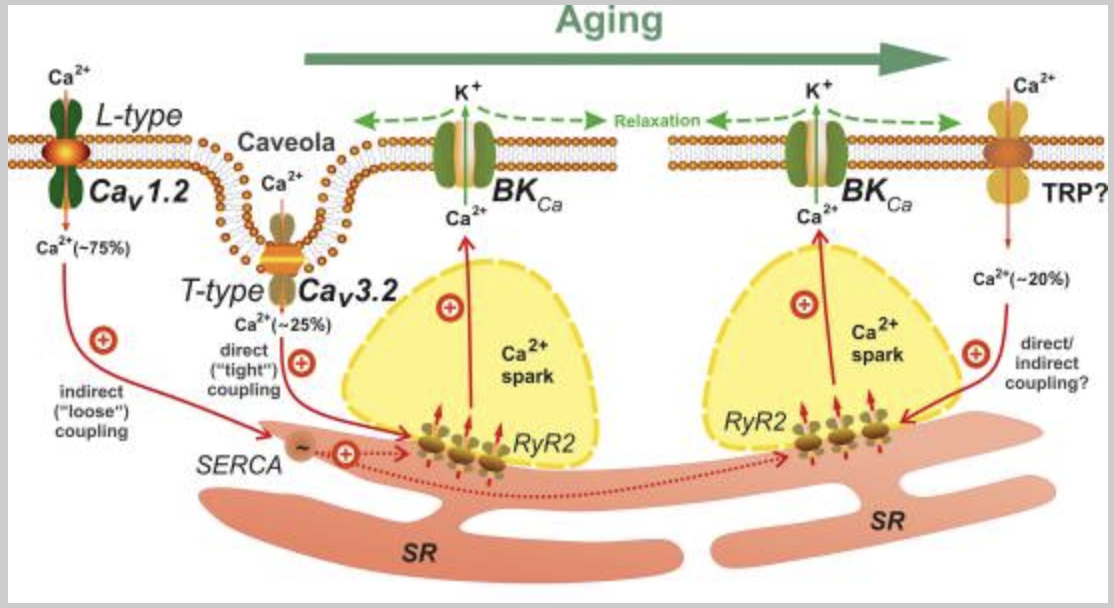
This figure illustrates how calcium signaling regulates calcium sparks in vascular smooth muscle cells (VSMCs) and how aging alters these pathways. Calcium sparks, localized calcium release events via ryanodine receptors (RyRs) in the sarcoplasmic reticulum (SR), activate potassium channels to reduce vasoconstriction and maintain vascular tone. In younger cells, most sparks (~75%) arise from calcium influx through L-type calcium channels, which increase cytosolic calcium and replenish SR stores via calcium pumps. About 25% of sparks are triggered by T-type calcium channels near RyRs in caveolae, ensuring efficient coupling between extracellular calcium and RyR activation. With aging, the T-type pathway is lost, replaced by an alternative gadolinium-sensitive mechanism, possibly involving nonselective TRP channels, contributing ~20% of sparks. These age-related shifts in calcium influx pathways affect calcium store regulation and may contribute to vascular dysfunction.
Restoring Skin Immunity and Renewal Through Cellular Signaling
Beyond its effects on keratinocytes, calcium signaling is essential for regulating immune function within the skin. Langerhans cells, the epidermis’s resident immune cells, depend on calcium-dependent pathways to engulf cellular debris and initiate detoxification during tissue repair. When these pathways are disrupted, the immune system’s ability to clear toxic byproducts diminishes, resulting in chronic inflammation and delayed wound healing.
AIC restores calcium homeostasis in immune cells by binding to calcium-sensing receptors (CaSR), stabilizing intracellular calcium levels critical for mitochondrial function and producing anti-inflammatory cytokines. It enhances the communication between keratinocytes and Langerhans cells, ensuring a coordinated detoxification response and promoting efficient skin renewal. By stabilizing calcium gradients, AIC supports activating immune and epithelial repair pathways, addressing oxidative stress and inflammation while mitigating aging-related skin damage. This integrative approach positions AIC as a powerful tool for resilience against environmental and physiological stressors.
Case Spotlight: Calcium Homeostasis in Skin Health
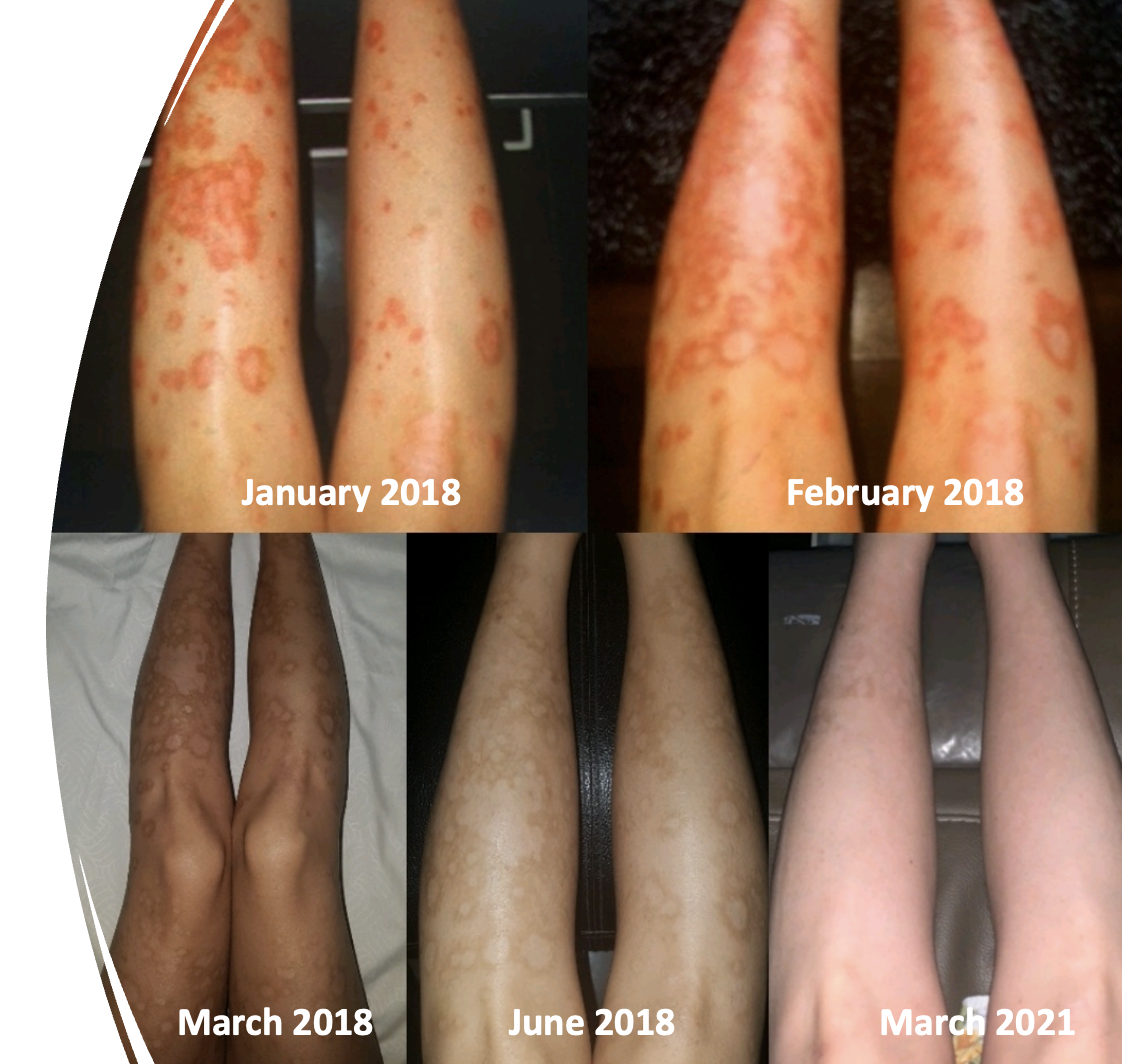
In a previous newsletter, we discussed a case of a 25-year-old woman diagnosed with psoriasis who experienced significant improvement after addressing calcium homeostasis. Revisiting this case, her rapid healing response during the first week of treatment highlights the role of calcium signaling in enhancing keratinocyte differentiation and lipid barrier repair. This reinforces how calcium modulation can reduce inflammation, promote skin regeneration, and support long-term scar remodeling. Interestingly, a similar mechanism is observed in atopic dermatitis, where barrier dysfunction also stems from impaired calcium homeostasis. This case demonstrates the pivotal role of calcium homeostasis in skin health, not only for repairing the barrier and reducing inflammation but also for its broader implications in detoxification and aging. By drawing connections between psoriasis and other conditions, such as atopic dermatitis, we further understand how calcium-driven processes influence dermatological health, offering targeted strategies to restore balance and promote skin regeneration.
Quick Clinical Tips on Skin Health
- Persistent Dryness or Sensitivity: Check for conditions that disrupt calcium signaling, such as overuse of harsh exfoliants or chronic skin inflammation, as they can impair barrier repair.
- Delayed Wound Healing: Calcium depletion is a factor in impaired keratinocyte turnover or Langerhans cell activity, particularly in inflamed or aged skin.
- Signs of Premature Aging: Evaluate whether oxidative stress might be linked to impaired calcium-dependent antioxidant enzyme activity, especially in patients with fine lines or hyperpigmentation.
Conclusion
Calcium bridges the essential processes of barrier repair, detoxification, and protection against oxidative stress. Its role in keratinocyte differentiation and lipid synthesis strengthens the epidermal barrier, safeguarding the skin against dehydration and environmental insults. At the same time, calcium’s regulation of immune cell activity supports detoxification and promotes efficient tissue renewal.
By harmonizing cellular responses such as lamellar body secretion, protein synthesis, and antioxidant defense, calcium ensures the skin’s resilience to environmental challenges and the effects of aging. The mechanisms highlighted here illustrate how calcium-driven pathways integrate seamlessly to preserve skin function, offering a comprehensive approach to managing chronic conditions and aging-related changes. This unifying perspective underscores calcium’s precision in addressing skin health with both care and efficacy.
Bring calcium signaling into your practice.
Practitioners can request a consultation to discuss AIC therapy and how these mechanisms apply to specific cases.
Newsletter content is educational and contributed by participating healthcare practitioners. These statements have not been evaluated by the FDA and are not intended to diagnose, treat, cure, or prevent any disease.