( Part 3 of 3 )
A Series on Why Stronger Bone Leads to Healthier Life
This newsletter series explores three vital functions of bones that go far beyond their structural role. The third part highlights bones' contribution to systemic pH balance and acid-base regulation.
Bones as Buffers: How Skeletal Structures Regulate Blood pH
Bones contribute to more than just structural support; they are crucial in regulating the body's acid-base balance. Even slight changes in blood pH can disrupt vital bodily functions and impair organ health. In acidic conditions, bones release calcium salts, such as calcium carbonate and calcium phosphate, to neutralize excess hydrogen ions in the blood. This action prevents metabolic acidosis, which is essential for maintaining cellular stability. Osteoclasts become more active in an acidic environment, releasing calcium and other minerals to stabilize pH levels. Although this buffering helps in the short term, a constant demand for calcium due to acidity can weaken bones by depleting their mineral content. Acidic conditions also inhibit osteoblasts, the cells responsible for building new bone, further contributing to potential bone loss in chronic acidic states. As kidney function declines with age or during high-protein diets, bones take on more responsibility in balancing pH, increasing the risk of gradual mineral depletion.
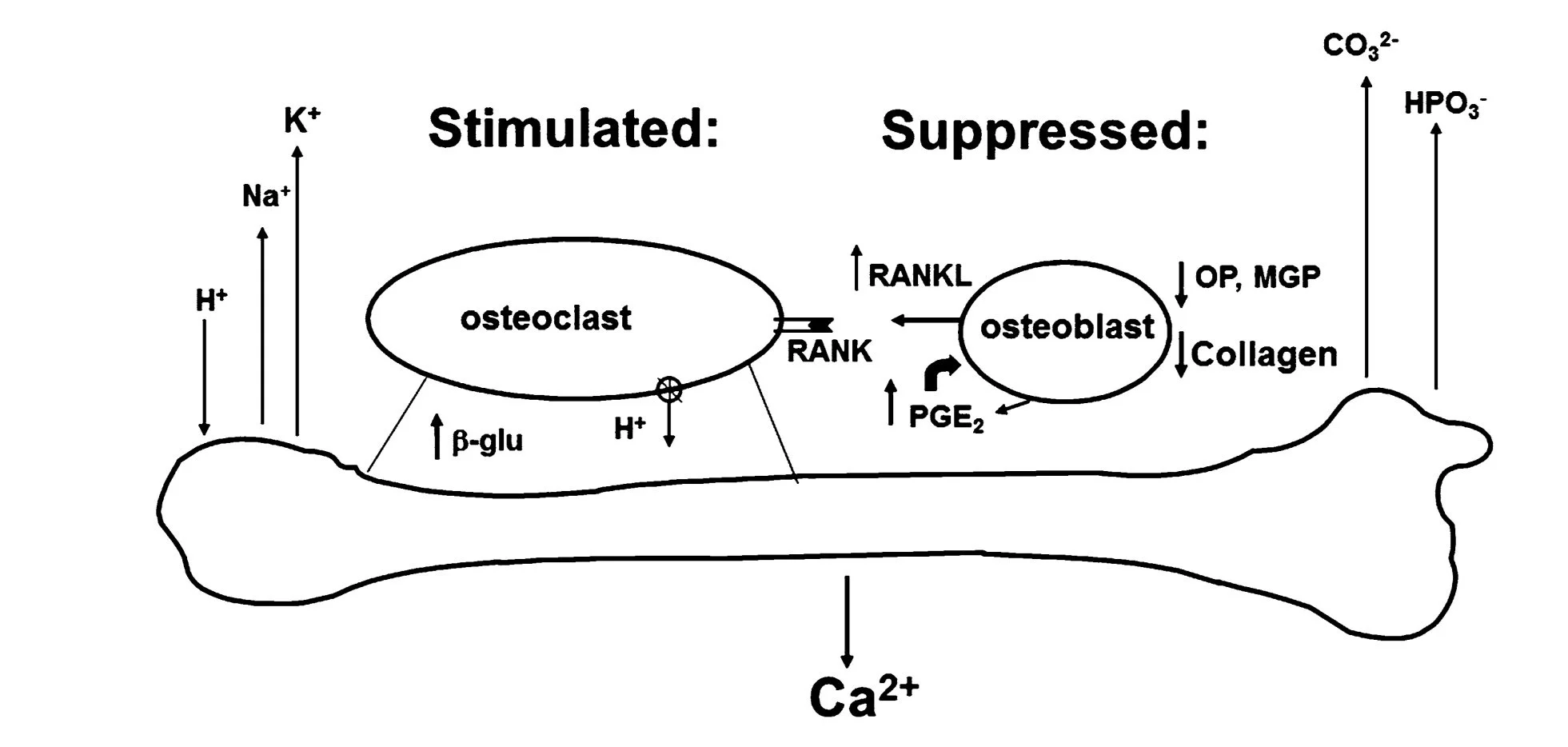
This figure illustrates the effects of metabolic acidosis on bone remodeling. In an acidic environment, osteoclasts are stimulated, leading to increased bone resorption and release of calcium and other buffering ions into the bloodstream. Conversely, osteoblasts, responsible for bone formation, are suppressed, reducing the production of key bone matrix proteins like osteopontin, matrix Gla protein, and collagen. Through this mechanism, bones help buffer excess acidity in the body, though prolonged acid load can lead to gradual depletion of bone minerals.
https://www.researchgate.net/publication/284332605_Acid-Base_Balance_and_Bone_Health
How AIC Therapy is Supporting Bone Health and Acid-Base Homeostasis
AIC therapy not only provides a direct source of calcium but also stimulates the release of endogenous calcitonin, a hormone that regulate calcium levels in the blood. By triggering calcitonin, AIC therapy promotes the movement of excess calcium from the bloodstream back into the bones, supporting mineral balance and reducing the demand on bone-derived calcium for pH buffering. Additionally, AIC therapy restore calcium signaling pathways, ensuring that cells receive proper calcium signals, which is critical for maintaining overall calcium homeostasis. Through these mechanisms, AIC therapy assists in stabilizing blood pH and supports bone health, reducing the long-term risk of mineral depletion from chronic acid stress.
https://www.researchgate.net/publication/284332605_Acid-Base_Balance_and_Bone_Health
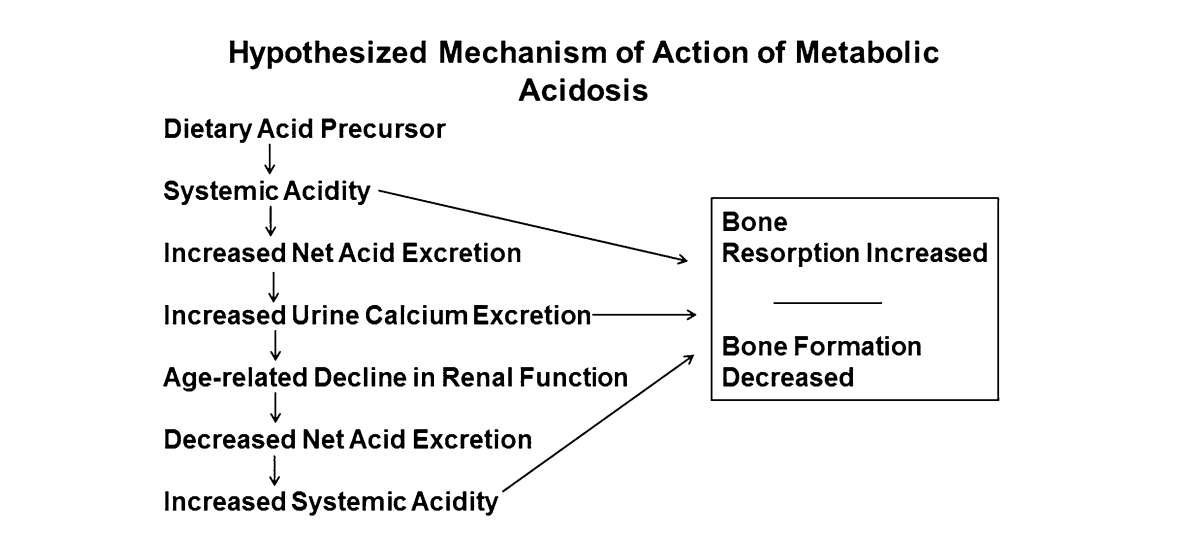
This figure demonstrates a hypothesized mechanism by which dietary acid precursors lead to increased systemic acidity and a subsequent rise in net acid excretion. This process escalates urine calcium excretion, which contributes to a gradual decline in renal function, especially with age. As renal function diminishes, the body’s ability to excrete acid is compromised, further elevating systemic acidity. This persistent acid load stimulates bone resorption while inhibiting bone formation, resulting in potential bone mineral loss over time.
Case reference 1
In this case, a 65-year-old male patient with Stage 4 Chronic Kidney Disease (CKD) presented with symptoms of systemic acidosis, including facial discoloration and fatigue, indicative of compromised kidney function and acid-base imbalance. Upon starting AIC therapy, the patient showed significant improvement within one month; his facial color returned to normal, and he experienced a notable increase in energy, suggesting enhanced pH regulation. AIC therapy supported systemic buffering by providing ionic calcium, reducing reliance on bone-derived calcium for acid neutralization, thereby protecting bone density. Over time, consistent AIC therapy helped stabilize the patient’s acid-base balance, alleviating strain on bone reserves and leading to reduced acidosis symptoms. This case illustrates the effectiveness of AIC therapy in aiding acid-base homeostasis for CKD patients, directly supporting pH regulation while preserving bone integrity under chronic acidotic stress.
Case reference 2
A 30-year-old female with a longstanding history of Crohn's disease presented with symptoms of chronic fatigue, low vitality, and overall malaise. After initiating AIC therapy in December 2016, notable improvements were observed in systemic energy levels and physical function within several weeks. The patient’s condition, marked by persistent inflammatory activity and acid-base imbalance associated with gastrointestinal inflammation, showed measurable signs of stability following AIC therapy. Given that Crohn's disease often impairs nutrient absorption and disrupts pH homeostasis, AIC therapy likely contributed to improved acid-base regulation and cellular support, addressing the underlying metabolic disturbances. This case illustrates AIC therapy's potential role in supporting acid-base balance and enhancing overall management in patients with chronic inflammatory conditions such as Crohn's disease.
Conclusion
AIC Therapy offers a promising approach to maintaining systemic acid-base balance and preserving bone health. By providing bioavailable calcium and stimulating endogenous calcitonin release, AIC therapy reduces the reliance on bone-derived calcium for pH buffering, thereby mitigating the risk of bone mineral depletion associated with chronic acidotic stress. Figure 1 illustrates how metabolic acidosis increases osteoclastic activity and suppresses osteoblastic function, leading to enhanced bone resorption and reduced bone formation. Figure 2 demonstrates how dietary acid precursors elevate systemic acidity, increasing net acid excretion and urine calcium loss, which, over time, diminishes renal function and exacerbates bone mineral loss. Case studies further underscore AIC therapy's potential in acid-base homeostasis and preserving bone integrity.
Bring calcium signaling into your practice.
Practitioners can request a consultation to discuss AIC therapy and how these mechanisms apply to specific cases.
Newsletter content is educational and contributed by participating healthcare practitioners. These statements have not been evaluated by the FDA and are not intended to diagnose, treat, cure, or prevent any disease.