Listen to this issue
This newsletter reveals how specific dairy patterns and corrected calcium signaling can curb midlife fat shift while strengthening bone.
Executive Summary
Moderate full-fat fermented dairy and cheese aligned with less long-term weight drift than low-fat choices. Estrogen decline steers adipose toward hypertrophic, inflamed growth, which can be countered by restoring precise Ca²⁺ signals and metabolic timing. Case results with AIC show rapid improvements in bone mechanics, suggesting clinically meaningful recalibration of calcium homeostasis.
Calcium Signals, Dairy Patterns, and Midlife Weight Control
Perimenopausal weight gain results from hormonal and brain changes, not just from increased calorie intake. As estradiol declines, the hypothalamus reads leptin and ghrelin signals less accurately. Satiety weakens, and reward-driven eating becomes easier. Lower estrogen input to POMC and NPY neurons reduces brown and beige fat thermogenesis. Mitochondria burn fewer fats because AMPK and PGC-1alpha activity fall. Resting energy expenditure narrows, so the same meals now store more energy.
Fat distribution shifts to the abdomen, and existing fat cells enlarge. The liver increases de novo lipogenesis via SREBP1c, while hormone-sensitive lipase activity drops. Fasting insulin rises, adiponectin falls, and adipose tissue turns more inflamed. NF-κB and JNK signaling increase TNF and IL-6, which in turn further impair insulin signaling. Vasomotor symptoms fragment sleep and disrupt circadian timing in the liver and muscle. Clock misalignment reduces nocturnal growth hormone and moves appetite later in the day. Chronic stress and repeated crash dieting slow T4 to T3 conversion and lower heat production. Microbiome shifts reduce GLP-1 and PYY signaling, resulting in a decrease in postprandial fullness. Practical care focuses on repairing appetite signals, insulin-sensitive fat remodeling, and restoring the circadian rhythm through nutrition, movement, light, sleep, and stress management protocols.
AIC helps reestablish CaSR signaling in adipose tissue and the gut, which steadies leptin and GLP-1 cues and supports endogenous calcitonin release. By buffering the secondary rise in PTH that follows lower estradiol, AIC reduces bone resorption noise and downstream calcitriol swings that promote hepatic lipogenesis while favoring HSL-regulated fat mobilization.
With AIC calcium availability, intracellular Ca²⁺ flux reactivates mitochondrial dehydrogenases and meal-coupled thermogenesis in muscle and brown fat, improving resting energy expenditure. AIC also supports calmer adipose inflammation and stronger insulin receptor signaling, shifting visceral storage toward oxidation and improving the perimenopausal weight trajectory.
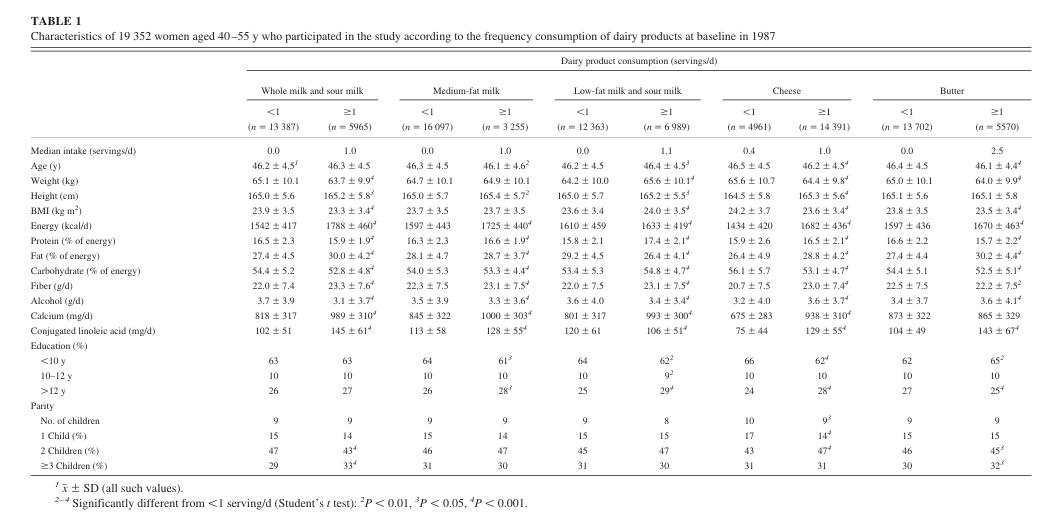
Women who consistently drank whole milk and sour milk in moderate amounts were less likely to gain weight over the years. Eating cheese regularly also appeared to protect against weight gain in this group of perimenopausal women. Medium-fat milk showed weaker results, with only small differences depending on intake changes. Low-fat milk and sour milk, however, did not help prevent weight gain and showed no clear benefit. Butter intake was largely neutral, offering no significant effect on whether women gained or maintained weight
Rosell M, Håkansson NN, Wolk A. Association between dairy food consumption and weight change over 9 y in 19,352 perimenopausal women. Am J Clin Nutr. 2006 Dec;84(6):1481-8. doi: 10.1093/ajcn/84.6.1481. PMID: 17158433.

This figure illustrates how estrogen influences the expansion of white adipose tissue. Adipose can grow by hypertrophy, where each adipocyte swells, or by hyperplasia, where adipocyte number increases. Hypertrophy is often accompanied by poorer vascularization, increased inflammation, and a tendency toward fibrosis. Hyperplasia supports tissue health by improving vascularization, promoting anti-inflammatory signals, and blocking fibrosis. Estrogen levels guide both the type and location of this expansion, and these levels can fall with certain drugs, medical procedures, or age. With normal estrogen, growth is mainly hyperplastic in subcutaneous fat. When estrogen is reduced, growth shifts toward metabolically unhealthy hypertrophic expansion in visceral fat.
Steiner BM, Berry DC. The Regulation of Adipose Tissue Health by Estrogens. Front Endocrinol (Lausanne). 2022 May 26;13:889923. doi: 10.3389/fendo.2022.889923. PMID: 35721736; PMCID: PMC9204494.
Five Common Clinical Misconceptions
- Misconception: Calcium status only matters for bones in perimenopause.
Clinical move: Address calcium as a signaling ion. Teach patients to stabilize circadian rhythm, as poor sleep disrupts Ca²⁺ oscillations in adipocytes and favors visceral fat gain.
- Misconception: Weight gain in perimenopause is purely hormonal (estrogen drop).
Clinical move: Integrate calcium with hormone balance. Encourage magnesium-rich foods and brief resistance exercise to normalize Ca²⁺–PTH–calcitonin balance, reducing adipocyte lipogenesis.
- Misconception: Low-fat dairy is the safest choice for preventing midlife weight gain.
Clinical move: Reframe within a whole-food context. Support moderate whole-milk or cheese intake, which in studies showed protection against ≥1 kg/year gain, likely through Ca²⁺-driven fat oxidation.
- Misconception: Perimenopausal adiposity is inevitable and cannot be shifted.
Clinical move: Target cellular calcium misdirection. Use breath training, mineral-rich hydration, and mitochondrial support (CoQ10, omega-3) to restore Ca²⁺ flow in muscle and brown adipose tissue, improving thermogenesis and energy use.
- Misconception: Once fat gain begins in perimenopause, cellular pathways cannot be rewired.
Clinical move: Demonstrate that AIC surprises by restoring intracellular Ca²⁺ signaling in mitochondria. This not only improves lipolysis but also boosts energy generation, shifting fat storage toward active energy use in muscle and brown fat.
Case References
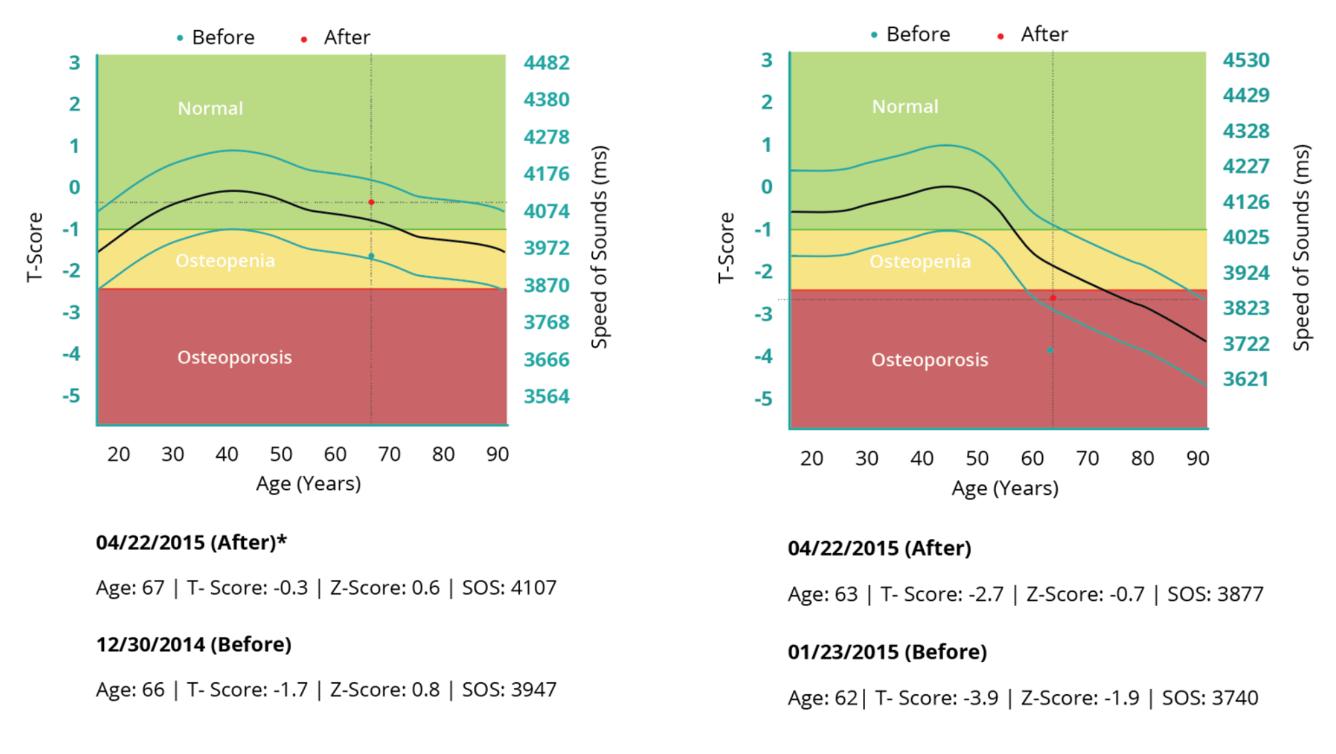
Case Reference 1 (Male, Age 66)
Before AIC, the patient’s bone status sat in the osteopenia band on quantitative ultrasound. After a short AIC course, the status moved into the normal band with a clear rise in speed-of-sound, pointing to stiffer and better-organized bone. Mechanistically, the improvement aligns with AIC by maintaining calcium ionic levels, increasing calcitonin tone, reducing PTH variability, and enhancing CaSR input in adipose and gut tissue, thereby stabilizing leptin and GLP-1 signals. Together, these effects quiet unnecessary resorption, support osteoblast mineralization, and reconnect bone recovery with the metabolic pathways discussed in this issue.
Case Reference 2 (Female, Age 62)
At entry, the patient’s bone status was classified as severe osteoporosis. After several weeks on AIC, the status improved to osteopenia, and the speed of sound increased, consistent with stronger bone architecture. In a low-estradiol context, AIC likely normalized intracellular Ca²⁺ flux, buffered PTH with endogenous calcitonin, and directed calcium back into the collagen matrix. The skeletal rebound is compatible with healthier adipocyte remodeling and steadier insulin signaling, yet the documented outcome here remains the bone acoustic shift.
Conclusion
Moderate intake of full-fat fermented dairy and regular cheese use tracked with less yearly weight drift, whereas low-fat options offered little advantage. As estrogen levels decline, white fat tends toward hypertrophic enlargement with inadequate vascular support and fibrosis; therefore, clinicians should favor strategies that promote healthier remodeling.
Ionic calcium stabilizes sleep and circadian cues, and pairs magnesium nutrition with brief resistance work to settle the Ca²⁺–PTH–calcitonin axis. Layer in breath practice, mineral-rich hydration, and mitochondrial cofactors to restore Ca²⁺ flow in muscle and brown fat for better thermogenesis.
AIC, by maintaining calcium in ionic form and reactivating intracellular signaling, has already translated into stiffer, better-organized bone in both a man with osteopenia and a woman moving out of severe osteoporosis. Taken together, track body composition and bone acoustics, encourage whole-food dairy within tolerance, correct daily rhythms, and when appropriate, use AIC inside a measured protocol to shift metabolism toward leaner, stronger tissue.
Bring calcium signaling into your practice.
Practitioners can request a consultation to discuss AIC therapy and how these mechanisms apply to specific cases.
Newsletter content is educational and contributed by participating healthcare practitioners. These statements have not been evaluated by the FDA and are not intended to diagnose, treat, cure, or prevent any disease.