( Part 1 of 3 )
A Series on Why Stronger Bone Leads to Healthier Life
This newsletter series explores three vital functions of bones that go far beyond their structural role. The first part examines how bones regulate the immune system through dynamic interactions with immune cells. The second part discusses the endocrine role of bones, focusing on osteocalcin’s regulation of energy metabolism and its connection to calcium homeostasis. The third part highlights bones' contribution to systemic pH balance and acid-base regulation.
Bone's Unique Role in Modulating Immunity
Beyond hematopoiesis, bone actively regulates immune dynamics through remodeling processes. Osteoclasts, originating from the myeloid lineage, release signaling molecules stored in the bone matrix, such as transforming growth factor-beta (TGF-β) and matrix metalloproteinases (MMP9), which influence immune cell activation and progenitor mobilization. This crosstalk ensures that immune cells are mobilized from the bone marrow and maintain functional readiness.
When osteoclast activity becomes excessive, it disrupts this balance, leading to compromised immune function. Excessive resorption can deplete essential regulatory factors, impacting immune cell maturation and migration.
AIC therapy addresses this imbalance by modulating osteoclast activity to prevent excessive resorption and ensure a controlled release of immune-regulatory factors. By regulating the RANKL/RANK signaling pathway, AIC maintains balanced bone remodeling, enhancing bone integrity and immune readiness.
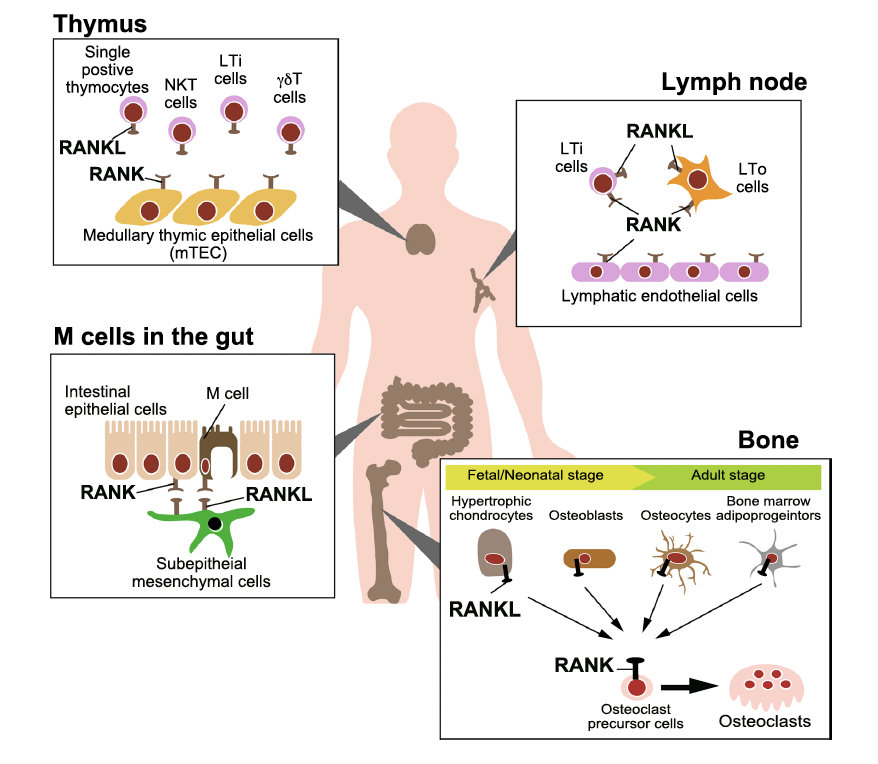
The figure illustrates how RANKL is pivotal in developing immune organs (bone marrow, thymus, lymph nodes, and gut-associated lymphoid tissues) and bone remodeling. It shows that RANKL sources differ by life stages, with hypertrophic chondrocytes and osteoblasts being prominent in fetal/neonatal stages, while osteocytes and bone marrow adipoprogenitors dominate in adults. RANKL’s interaction with RANK facilitates osteoclast differentiation, which is crucial for bone resorption and calcium release. In immune tissues, RANKL influences the maturation of specific immune cells, such as thymocytes in the thymus and LTi cells in lymph nodes. This highlights the integrated regulation of bone and immune functions, impacting both skeletal health and immune system development.
https://link.springer.com/article/10.1007/s00774-024-01539-x
Influencing Immune Modulation of Bone through Ionic Calcium Therapy
Osteoclasts facilitate bone resorption and play a role in immune regulation by breaking down the bone matrix and releasing factors, such as matrix MMP9, that help mobilize immune cells from the bone marrow to other body areas. When osteoclast activity becomes excessive, it disrupts the balance needed for proper immune function, leading to an inappropriate release of immune-regulatory factors and impairing the retention of immune progenitors in the bone marrow. Conventional osteoporosis treatments can inadvertently impair immune health. By eliminating osteoclasts, these therapies disrupt the delicate balance of bone remodeling, limiting the release of crucial immune-regulatory factors like TGF-β and MMP9. As a result, the mobilization, maturation, and migration of immune cells from the bone marrow are diminished. Over time, this can weaken the bone marrow’s ability to support immune progenitors, leaving patients more vulnerable to immune dysfunction
AIC therapy addresses this problem by reducing excessive osteoclast activity and restoring a balanced bone remodeling process. This modulation leads to a more controlled release of factors essential for maintaining immune cell readiness. Additionally, AIC therapy enhances the bone marrow environment's capacity to support the generation and differentiation of immune cells by increasing osteoblast activity, which contributes to a more stable environment for plasma cell maintenance through extracellular ATP production.
https://link.springer.com/article/10.1007/s00774-024-01539-x
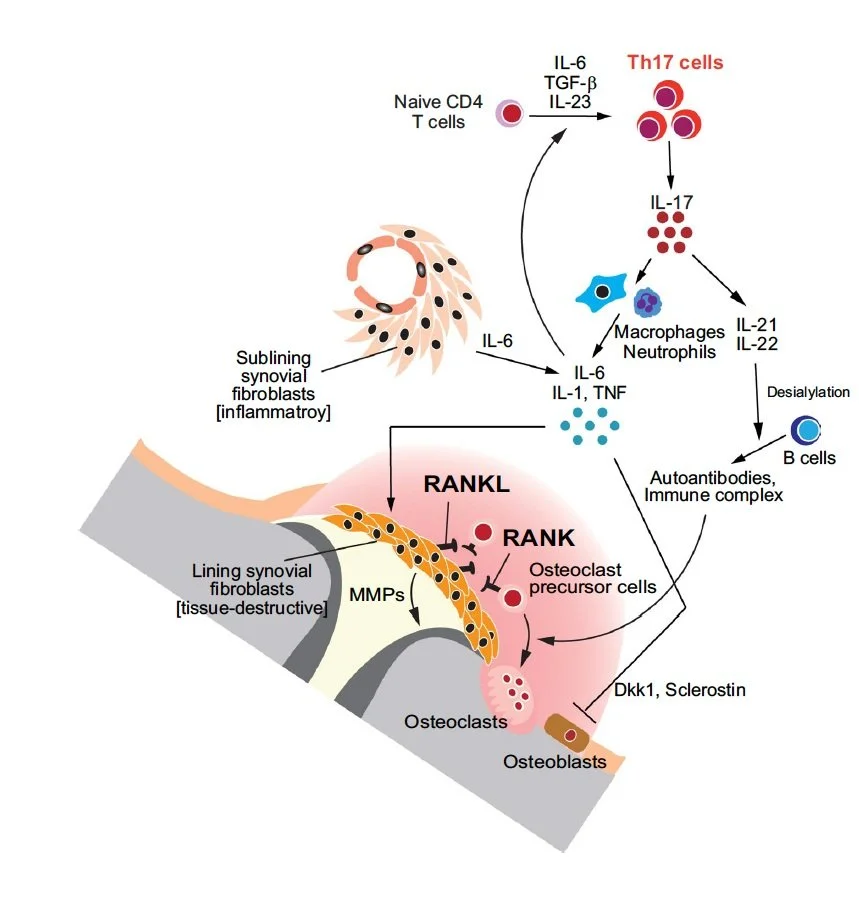
This figure demonstrates the complex mechanisms of bone destruction in rheumatoid arthritis (RA), emphasizing the interactions between immune cells, fibroblasts, and bone cells. Th17 cells produce IL-17, which stimulates synovial fibroblasts to express RANKL, a crucial factor for activating osteoclasts and promoting bone resorption. The release of pro-inflammatory cytokines such as TNF, IL-6, and IL-1 by Th17 cells further enhances RANKL expression, intensifying osteoclastogenesis.
Within RA-affected joints, synovial fibroblasts differentiate into two main types: inflammatory fibroblasts in the sublining layer and tissue-destructive fibroblasts in the lining layer, with the latter playing a direct role in bone damage through RANKL production. Immune complexes, especially desialylated forms, accelerate osteoclast differentiation via an IL-23 and Th17 cell-dependent pathway. Additionally, TNF stimulates the production of Wnt pathway inhibitors, including DKK1 and sclerostin, which suppress bone formation and exacerbate bone loss in RA.
Case reference 1
A 55-year-old patient with a 10-year history of rheumatoid arthritis presented with severe joint stiffness and pain unresponsive to standard treatments, including gold injections. The patient exhibited significant deformities in the fingers, disabling knee pain, and an inability to walk due to extreme tenderness in the toes, particularly the big toe. On February 8th, 2017, the patient was introduced to AIC therapy. Remarkably, after just two weeks of treatment, there was a dramatic reduction in pain, allowing the patient to walk normally with full weight bearing on the affected toe. The rapid and substantial improvement in symptoms demonstrates the potential efficacy of AIC therapy in managing long-standing rheumatoid arthritis cases.
Case reference 2
A 62-year-old female with a 10-year history of multiple sclerosis experienced worsening mobility and fatigue despite numerous treatments. After six months of acupuncture with limited results, she began AIC therapy upon her acupuncturist's recommendation. Remarkably, within a few weeks, she reported feeling more refreshed and experienced a rapid, substantial improvement in leg strength. This allowed her to walk without a walker, impressing family members who witnessed her newfound ability to take steps unaided. The significant and rapid improvement in symptoms demonstrates the potential efficacy of AIC therapy in managing long-standing multiple sclerosis cases.
Conclusion
Bone's unique role in immune regulation extends beyond hematopoiesis, involving active participation in immune cell mobilization and maturation through dynamic bone remodeling processes. AIC therapy specifically enhances osteoblast activity, promoting the release of extracellular ATP, which is essential for maintaining plasma cell populations in the bone marrow. This targeted action ensures a supportive environment for ongoing immune cell differentiation. By normalizing osteoclast activity, AIC therapy prevents excessive bone resorption, thereby ensuring the controlled release of immune-regulatory factors such as TGF-β and MMP9. This modulation helps maintain the proper mobilization and retention of immune progenitors in the bone marrow niche.
Clinical cases have shown that AIC therapy can lead to marked improvements in patients with conditions like chronic rheumatoid arthritis and multiple sclerosis, where conventional treatments had limited effects. These outcomes demonstrate AIC therapy's ability to target the underlying bone-immune crosstalk. Modulating RANKL/RANK signaling directly addresses the root causes of bone deterioration and immune dysfunction, offering a novel and mechanistically driven approach for managing autoimmune diseases and other conditions characterized by chronic inflammation and bone loss.
Bring calcium signaling into your practice.
Practitioners can request a consultation to discuss AIC therapy and how these mechanisms apply to specific cases.
Newsletter content is educational and contributed by participating healthcare practitioners. These statements have not been evaluated by the FDA and are not intended to diagnose, treat, cure, or prevent any disease.