( Part 2 of 3 )
This newsletter series explores three vital functions of bones that go far beyond their structural role. The second part discusses the endocrine role of bones, focusing on osteocalcin’s regulation of energy metabolism and its connection to calcium homeostasis. The third part highlights bones' contribution to systemic pH balance and acid-base regulation.
Osteocalcin’s Hidden Role in Metabolic Disorders
Bones are not just structural organs but also play an active endocrine role in regulating energy metabolism. Osteocalcin, a hormone secreted by osteoblasts, is crucial in this process. It stimulates insulin secretion from pancreatic β-cells and enhances insulin sensitivity in tissues such as muscle and liver. This action occurs through specific insulin-independent pathways, making osteocalcin particularly relevant in insulin-resistant states, such as type 2 diabetes.
Osteocalcin’s function is highly dependent on its decarboxylation, a process influenced by active ionic calcium. Disrupted calcium homeostasis lowers undercarboxylated osteocalcin (ucOC) levels, impairing the activation of the PI3K/Akt pathway in muscle cells, which is essential for glucose uptake. Similarly, osteocalcin enhances insulin signaling in the liver, reducing gluconeogenesis and increasing glycogen synthesis, lowering blood glucose levels.
AIC therapy, by triggering endogenous calcitonin, enhances the metabolic activity of osteocalcin, improves insulin sensitivity in peripheral tissues such as muscle and adipose tissue, and stimulates insulin secretion from pancreatic β-cells. This results in increased glucose uptake and thereby helping to regulate blood glucose levels and maintain overall metabolic balance.
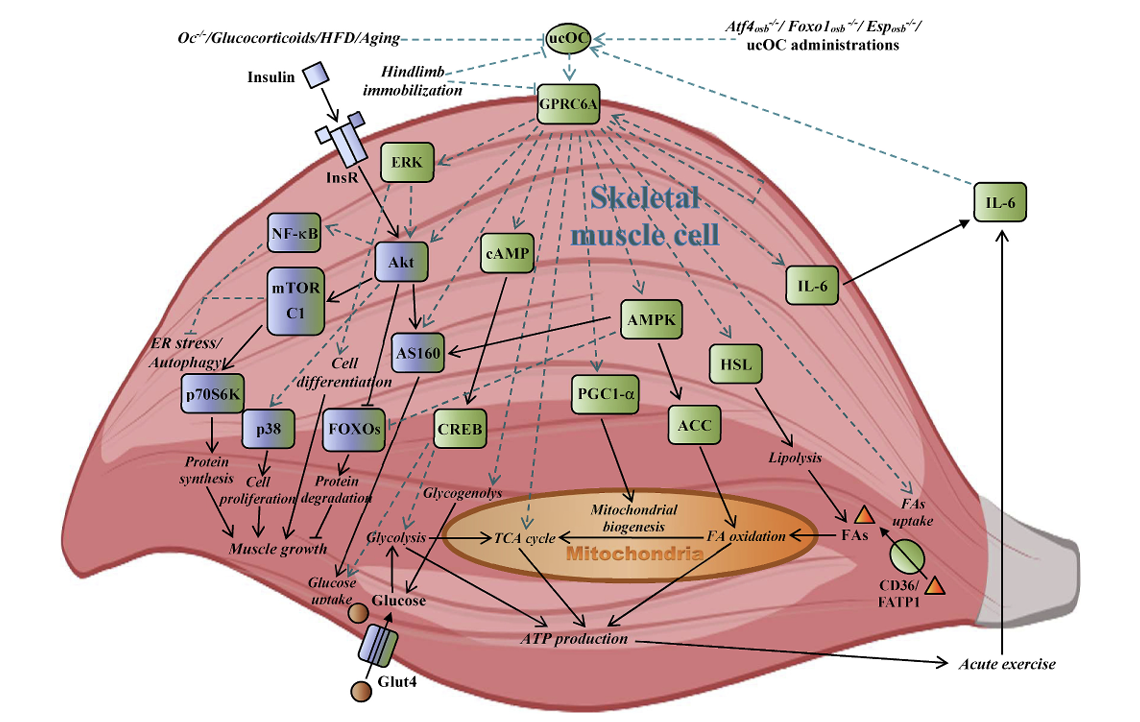
This figure illustrates how uncarboxylated osteocalcin (ucOC), produced by bones, regulates muscle energy metabolism via the GPRC6A receptor. ucOC enhances glucose uptake, both insulin-stimulated and non-insulin-stimulated, and supports glycogen storage through key signaling proteins like ERK, Akt, and AMPK. It also promotes fatty acid uptake and breakdown by upregulating transporters such as CD36 and increasing the activity of hormone-sensitive lipase (HSL). Furthermore, ucOC improves mitochondrial function and biogenesis, leading to enhanced ATP production through the TCA cycle and fatty acid oxidation. During exercise, ucOC levels rise, boosting ATP production to meet the increased energy demands of muscles. In conditions where ucOC is reduced, such as aging or glucocorticoid treatment, energy metabolism is impaired, highlighting its critical role in maintaining muscle function and energy balance.
https://www.sciencedirect.com/science/article/pii/S8756328224002278
Insulin Resistance in Osteoporosis
Insulin resistance plays a significant role in the development of postmenopausal osteoporosis, where bone resorption accelerates due to estrogen deficiency. The interaction between insulin and bone cells is critical. Osteocalcin, produced by osteoblasts, contributes to bone formation and helps regulate energy metabolism by improving insulin sensitivity in adipose and muscle tissues. When insulin signaling is impaired, osteocalcin production disrupts systemic insulin resistance and poor glucose regulation. Insulin also influences osteoclast activity, which is crucial for osteocalcin's decarboxylation and activation. Activated osteocalcin enhances insulin sensitivity, linking bone health to systemic glucose control. Recent studies confirm that bone turnover and skeletal integrity are affected negatively by diabetes and that diabetes is associated with a higher risk of fracture.
AIC Therapy can be especially beneficial for metabolic disturbances. In conditions where bone resorption is high and calcium homeostasis is impaired, AIC Therapy enhances the mineralization process by ensuring enough active ionic calcium sources, which is crucial for osteoblast function. Additionally, AIC Therapy can enhance osteocalcin activity, ensuring proper bone remodeling. Moreover, AIC Therapy mitigates the effects of insulin resistance by restoring calcium signaling, which is vital for metabolic processes tied to bone and muscle function.
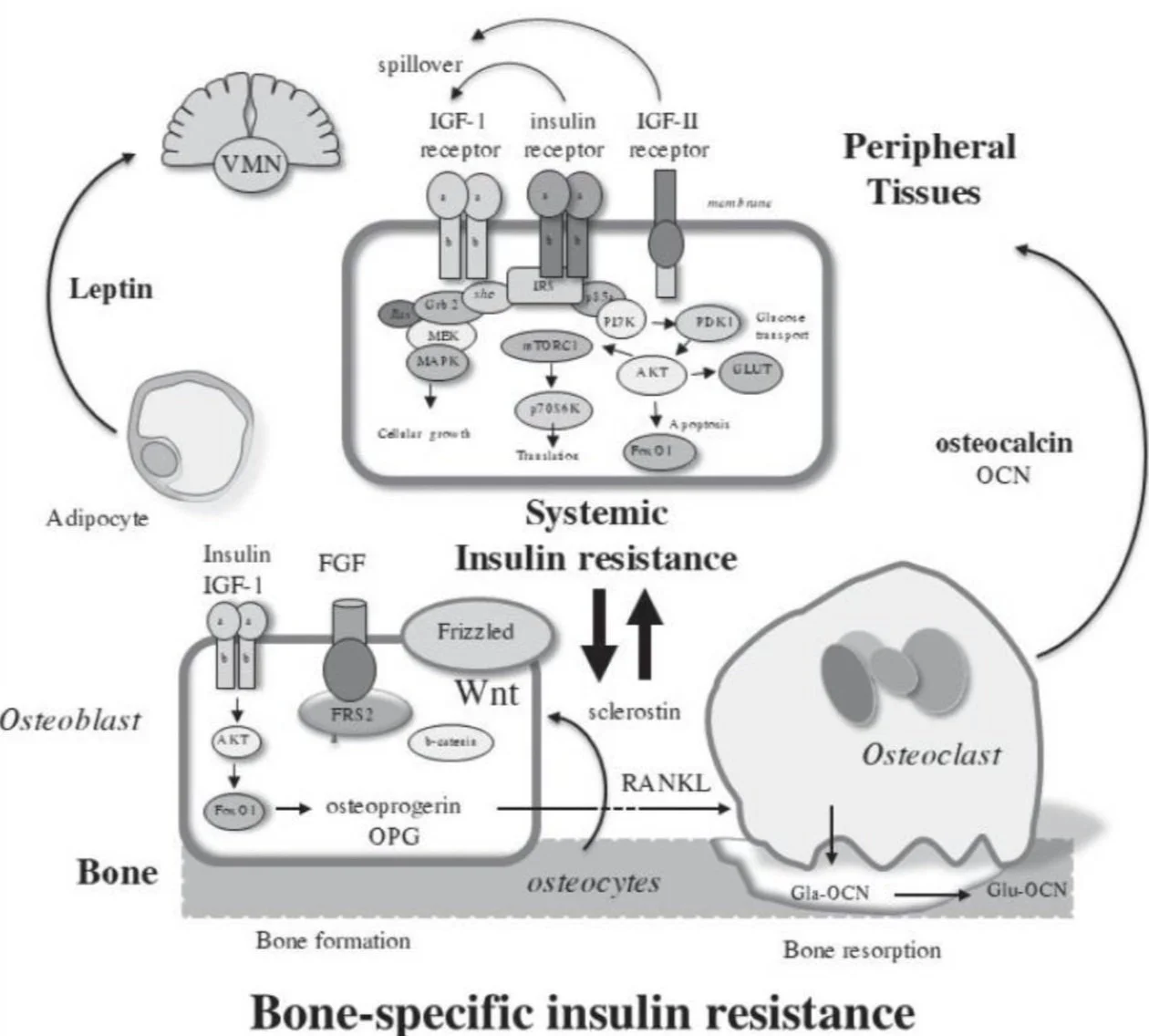
This figure illustrates the relationship between systemic insulin resistance (IR) and bone-specific insulin resistance. Insulin signaling in osteoblasts plays a critical role in bone remodeling, influencing osteoclast activity and osteocalcin (OCN) decarboxylation. In cases of insulin resistance, osteoblast function is impaired, leading to decreased bone formation and reduced OCN activation, which, in turn, contributes to systemic IR by diminishing insulin sensitivity in tissues like adipose and muscle. The figure highlights the feed-forward loop where impaired bone insulin signaling exacerbates metabolic dysregulation. Overall, it emphasizes the dual impact of insulin resistance on both bone health and systemic glucose homeostasis.
Case reference 1
Mr. C. Park, a 65-year-old male from Singapore, with Stage 4 Chronic Kidney Disease, gout, and diabetes, had tried multiple treatments without significant improvement. After a friend's recommendation, he began AIC therapy. Within a month, he noticed a remarkable improvement in his energy levels and a return to his normal complexion. When he stopped the therapy, his condition worsened again, prompting him to resume it. With continued use of AIC Therapy, he experienced rapid restoration of kidney function and sustained improvements in his overall health, including better metabolic and bone health.
Case reference 2
Mrs. Kwak, from New York, had struggled with persistently high blood sugar levels, despite being on medication, with fasting glucose readings between 160-230 mg/dL. After starting AIC Therapy to improve bone strength, she noticed a significant reduction in her fasting blood sugar within two weeks. Her levels dropped to 118-160 mg/dL, a decrease that no other treatments had achieved. Mrs. Kwak is thrilled by these unexpected improvements in her glucose control and is eager to continue the therapy to experience further benefits.
Conclusion
AIC therapy plays a pivotal role in activating osteocalcin and its metabolic functions. AIC Therapy ensures proper decarboxylation of osteocalcin, directly enhancing insulin sensitivity and glucose regulation in tissues such as muscle and liver. This contributes to improved metabolic outcomes, especially in insulin-resistant states like type 2 diabetes and osteoporosis.
Furthermore, AIC’s ability to restore calcium signaling in bone remodeling and systemic metabolic processes offers a targeted approach for addressing the dual challenges of insulin resistance and impaired bone health. As demonstrated in clinical cases, AIC therapy can significantly manage both metabolic disturbance and bone integrity, making it a valuable tool in managing complex conditions involving calcium imbalance and insulin resistance.
Bring calcium signaling into your practice.
Practitioners can request a consultation to discuss AIC therapy and how these mechanisms apply to specific cases.
Newsletter content is educational and contributed by participating healthcare practitioners. These statements have not been evaluated by the FDA and are not intended to diagnose, treat, cure, or prevent any disease.