This newsletter reveals how lifestyle, mitochondria, and calcium signaling intersect in everyday cardiometabolic practice.
Executive Summary
Lifestyle related cardiometabolic disease now appears less like isolated organ failure and more like a disturbance in energy flow, inflammation, and calcium distribution between bone and soft tissue. By connecting hepatic mitochondria, endoplasmic reticulum contact sites, and calcium signaling to everyday habits such as food timing, movement, sleep, and stress, clinicians can translate complex pathways into clear, trackable goals for patients. Within this framework, carefully designed mineral strategies that redirect calcium away from inflamed vessels and fascia and back toward bone can sit beside nutrition and botanicals as a quiet yet powerful lever in long term metabolic care.
Linking lifestyle to hepatic calcium signaling and metabolism
Today, lifestyle-related conditions such as metabolic syndrome, type 2 diabetes, and cardiovascular disease are increasingly viewed as disorders of energy, inflammation, and cellular signaling. They are no longer treated as simple, isolated organ problems. Recent meetings on lifestyle diseases and natural medicine consistently return to the same point: long-term results emerge when nutrition, movement, sleep, stress management, and targeted nutraceuticals are integrated into a unified, comprehensive plan. In everyday work, this means moving beyond symptom lists and rigid guidelines to ask how each lifestyle habit influences insulin signaling, nuclear factor kappa B (NF-κB) activity, mitochondrial function, and calcium trafficking within cells.
Take metabolic syndrome and non alcoholic fatty liver disease (NAFLD) as a starting point. In many people, years of consuming ultra-processed foods, sedentary routines, disrupted circadian rhythms, and low-grade inflammation can slowly blunt insulin receptor responses, block normal hepatic lipid export, and shift adipose tissue toward a more pro-inflammatory secretory pattern. By the time you see this picture, it will already be possible to intervene with structured food as medicine strategies that favor fiber-rich, phytonutrient-dense, low-glycemic meals, stabilizing postprandial glucose curves, and reducing inflammatory cytokine output. On top of that nutrition base, graded movement plans, sleep repair routines, and stress axis support using mindfulness, breathing practices, or botanical adaptogens can be prescribed as seriously as any medication, with clear targets such as glycated hemoglobin (HbA1c), triglycerides, C-reactive protein (CRP), and waist circumference.
Cardiometabolic disease also has a structural component, as chronic inflammation and oxidative stress gradually damage the endothelium, stiffen vessels, and promote soft tissue calcification, thereby increasing the risk of events long before standard laboratory tests fully reflect what is happening in the tissues. Natural tools that improve endothelial nitric oxide (NO) production, support mitochondria, rebalance the gut microbiome, and provide evidence-based phytochemicals, such as berberine, curcumin, or epigallocatechin gallate (EGCG), can help shift that trajectory when followed by appropriate biomarkers. Within this model, the real work is to build integrated care plans where lifestyle prescriptions and natural agents are explicitly tied to measurable molecular and clinical goals, and to adjust those plans visit by visit according to objective trends, not just symptom reports.
Within this integrated picture, AIC therapy focuses on one silent driver that underlies cardiometabolic disease, metabolic syndrome, and type 2 diabetes: the slow leakage of calcium from bone into inflamed soft tissues and vascular walls. When calcium accumulates in vessels and fascia, it increases stiffness, worsens microcirculatory flow, and can make it harder to stabilize blood pressure, glycemic control, and exercise tolerance, even when lifestyle measures are in place. AIC protocols are designed to support endogenous calcitonin dynamics, enhance calcium signaling at the cellular level, and gently favor the return of calcium to the bone while limiting new soft tissue deposits. In the setting of metabolic syndrome or type 2 diabetes, this provides an additional therapeutic lever, complementing nutrition and botanicals, particularly in individuals with early vascular stiffening, long-standing inflammation, or signs of poor bone quality. In practice, this means cardiometabolic care can target not only glucose and lipids but also the distribution and behavior of calcium itself, using AIC as a focused tool within a broader lifestyle centered plan.
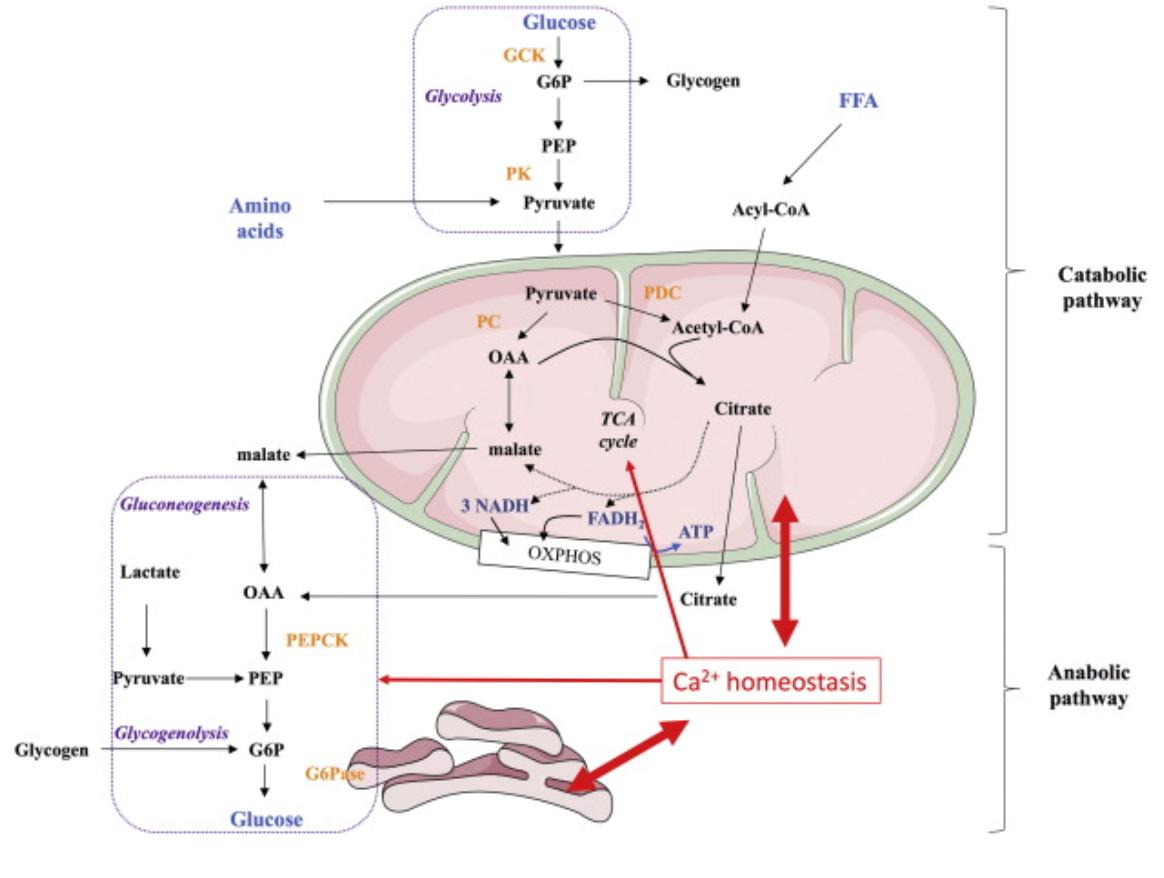
This figure illustrates that cellular homeostasis relies on the compartmentalization of metabolic processes within specific subcellular organelles, which keeps different pathways spatially separated. In hepatocytes, both the endoplasmic reticulum (ER) and mitochondria play specific roles in hepatic metabolism. This section focuses on their independent functions, as well as their contribution to calcium homeostasis, in controlling hepatic metabolism, particularly glucose metabolism.
Additionally, it examines how dysregulation of organelle and calcium (Ca2+) signaling contributes to hepatic metabolic diseases. Mitochondria play a key role in the final oxidation of substrates such as glucose, fatty acids, and amino acids, generating reduced coenzymes nicotinamide adenine dinucleotide in its reduced form (NADH) and flavin adenine dinucleotide in its reduced form (FADH2) through the tricarboxylic acid (TCA) cycle. These reduced coenzymes are then further oxidized through aerobic respiration, which drives the synthesis of adenosine triphosphate (ATP). The ER participates in the first step of gluconeogenesis because glucose 6-phosphatase (G6Pase) is located in the ER membrane. Both organelles also play a role in regulating Ca2+ homeostasis, which is crucial for controlling hepatic glucose production and linking their function to the development of hepatic metabolic diseases.
Rieusset J. Endoplasmic reticulum-mitochondria calcium signaling in hepatic metabolic diseases. Biochim Biophys Acta Mol Cell Res . 2017;1864(6):865-876. doi:10.1016/j.bbamcr.2017.01.001
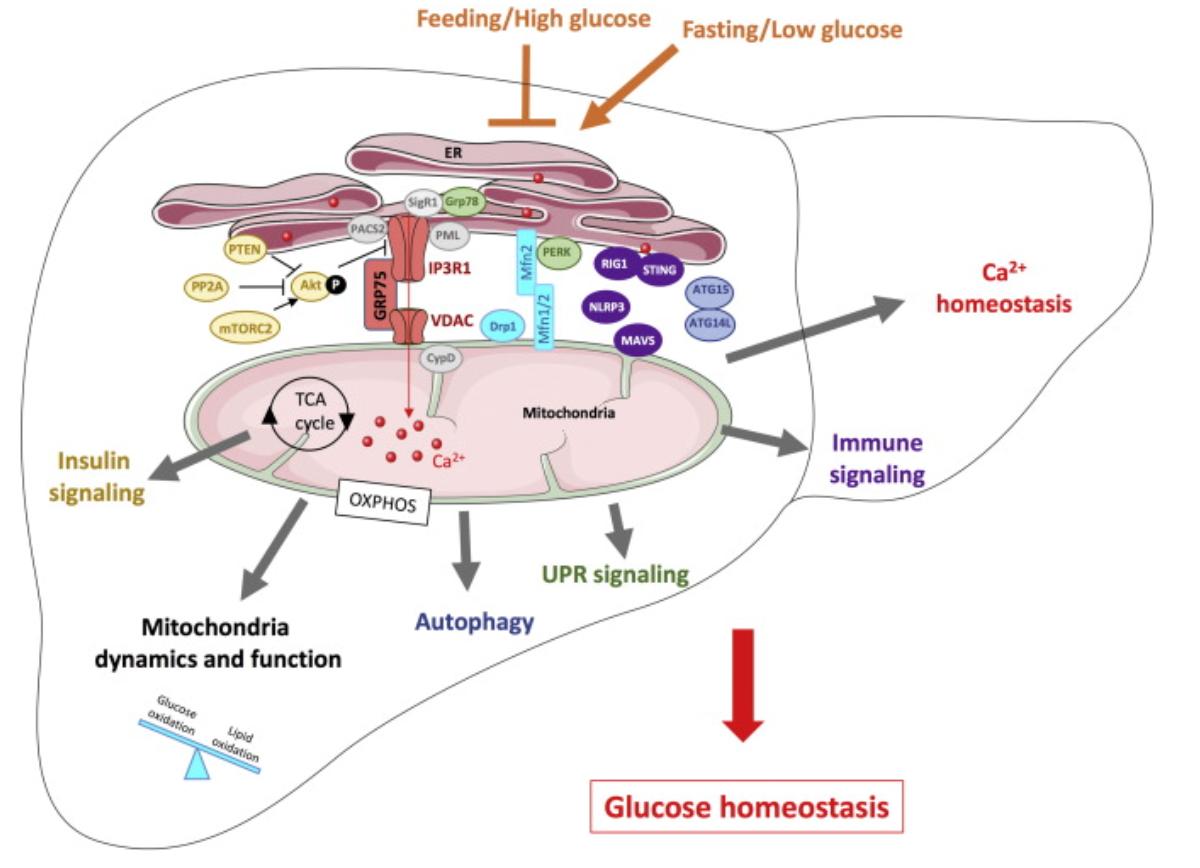
This figure illustrates how mitochondria-associated membranes in liver cells, isolated through subcellular fractionation and analyzed using proteomic methods, reveal key structural and signaling components at the contact sites between the endoplasmic reticulum and mitochondria. These organelles do not fuse; instead, protein bridges, such as the connection between the voltage-dependent anion channel in the outer mitochondrial membrane and the inositol 1,4,5-trisphosphate receptor in the endoplasmic reticulum, facilitated by the molecular chaperone glucose-regulated protein 75, allow calcium ions to move from the endoplasmic reticulum into the mitochondria.
Mitochondria-associated membranes are enriched in phospholipid-metabolizing enzymes, and the expanding list of proteins found there has uncovered new roles in several cellular signaling pathways. When communication at these contact points is chronically disturbed, particularly in hepatic metabolic disease, mitochondria-associated membranes shift from a hub of hepatic insulin signaling and nutrient sensing toward configurations associated with insulin resistance and fatty liver, at least in mouse models.
In this context, the figure illustrates endoplasmic reticulum-mitochondria contact sites as regulators of insulin signaling, glucose sensing, metabolic adaptation, autophagy, immune signaling, and calcium ion balance, with key proteins colored to match the downstream pathways they control.
Rieusset J. Endoplasmic reticulum-mitochondria calcium signaling in hepatic metabolic diseases. Biochim Biophys Acta Mol Cell Res . 2017;1864(6):865-876. doi:10.1016/j.bbamcr.2017.01.001
Patient Communication Myth
Myth 1. “If I talk about pathways, the patient will be confused.” Many of us assume that the moment we mention a pathway, the patient will switch off. In practice, a short, concrete link between their fatigue or pain and energy, inflammation, or calcium shifts usually makes the plan feel more logical and worth following.
Myth 2. “Patients only change when we scare them with complications.” Fear can motivate people for a few weeks, but it rarely supports sustained change in metabolic syndrome or fatty liver. What helps more is showing how small, defined steps can gradually improve HbA1c, CRP, or stiffness, so the patient sees progress instead of only threat.
Myth 3. “Lifestyle advice is obvious, so there is nothing new to say.” For most patients, phrases like “eat better and move more” have become background noise. What feels new is a clear plan that connects a fiber-rich dinner, evening walking, and sleep repair directly to insulin signaling, mitochondrial load, and the risk of vascular calcification.
Myth 4. “Talking about calcium or AIC is too technical for a routine visit.” If we limit ourselves to the distinction between “good” and “bad” calcium, we miss the opportunity to explain why the same patient can have stiff vessels and fragile bones. A single sentence, such as “Some of your calcium is leaving bone and settling in inflamed soft tissue, and AIC is one tool to help reverse that trend,” is often enough to open a useful conversation.
Myth 5. “Patients only care about pills and quick fixes, not integrated plans.” Many patients start by asking for a drug or a supplement, but they usually stay because we connect that product to food, movement, sleep, and stress in one coherent story. When we present AIC, nutrition, botanicals, and biomarkers as parts of one map, long-term cardiometabolic care feels more like a guided journey than a series of quick fixes.
Case Reference
One 61-year-old man from Yanbian, China, had lived with Meniere’s disease for almost ten years, with relentless tinnitus, spinning vertigo, and vomiting whenever the room began to turn. He had visited specialists in every nearby hospital and clinic and tried all available treatments, yet his condition kept deteriorating until he was afraid to get out of bed and depended on support to walk. After starting the AIC Therapy one winter night, he fell asleep and woke at 6 a.m. without spinning dizziness for the first time in years. In the days that followed, he could go outside and enjoy a morning stroll without a walker, something he had long believed was no longer possible. For him, restoring calcium balance and circulation did not just change a diagnosis; it gave him back a daily life that felt almost like a dream.
Conclusion
Throughout this newsletter, the same thread has run quietly underneath the clinical details, that lifestyle, metabolic syndrome, and cardiometabolic disease sit on a foundation of disturbed energy handling, chronic inflammation, and misdirected calcium rather than isolated organ failure.
We have looked at hepatic contact sites between endoplasmic reticulum and mitochondria, seen how calcium pulses there shape insulin sensitivity and glucose output, and linked those microscopic events back to food timing, movement, sleep, and stress in daily practice. The message for the clinic is straightforward: if we want durable change, lifestyle, nutraceuticals, and mineral strategies need to be integrated into a single plan that we can track over time with real biomarkers, not just symptom lists. That kind of plan invites us to examine our own habits as clinicians and to notice where we still treat glucose, lipids, blood pressure, and bone density as separate chapters rather than different reflections of the same calcium and energy story. It also reminds us that when we explain this logic in clear, concrete language, many patients do not switch off; they finally see why their daily choices matter and why we are asking them to change.
One older man with long-standing vertigo and fear of walking brought this science back to the level of a single life we can picture, because only when his mineral balance and calcium circulation were actively supported did his world stop spinning and his feet feel safe on the ground again. Moments like that raise a simple clinical question: among the people you see with metabolic risk, fatty liver, stiffness, tinnitus, or unexplained fatigue, how many have had their calcium story examined as carefully as their glucose, lipids, and imaging?
If even a few faces come to mind, they are the patients who may benefit most when we combine structured food plans, graded activity, sleep repair, stress work, botanicals, and targeted minerals into one coherent roadmap that they can follow week by week. For those patients, AIC therapy offers a focused way to support endogenous calcitonin dynamics, restore healthier calcium signaling, and gently encourage calcium to move out of inflamed soft tissues and back toward bone. Used alongside nutrition, movement, sleep, and stress interventions, AIC can turn the calcium story from a silent driver of cardiometabolic damage into a practical clinical lever that helps patients feel lighter, safer, and more at home in their own bodies.
Bring calcium signaling into your practice.
Practitioners can request a consultation to discuss AIC therapy and how these mechanisms apply to specific cases.
Newsletter content is educational and contributed by participating healthcare practitioners. These statements have not been evaluated by the FDA and are not intended to diagnose, treat, cure, or prevent any disease.