Listen to this issue
This newsletter reveals how disordered calcium flow inside the vessel wall drives stiffness and early mineral seeding, and how AIC may help shift tissue behavior toward repair.
Executive Summary
Early endothelial injury often reflects a calcium traffic problem rather than a simple cholesterol story. Calcium-linked signaling reduces nitric oxide, hardens smooth muscle responses, and initiates the formation of tiny minerals that precede plaque. By restoring calcium signaling and stimulating endogenous calcitonin, AIC Therapy offers a direct solution to arterial calcification, positioning it as a novel approach to resolving atherosclerosis in clinical practice.
Why calcium flow, not just lipids, sets vessel behavior
When calcium signaling inside the vessel wall becomes irregular, the earliest injury typically appears in the endothelium. Nitric oxide levels drop, the artery loses its smooth glide, and tone tilts toward stiffness. Oxidized lipids then push more calcium into stressed cells, causing the wall to react like a clenched fist. The surface becomes sticky, white cells linger, and the ground substance starts to feel gritty under the microscope. Tiny mineral seeds appear long before a visible plaque does. Patients feel it as breath that runs short on hills, or a pulse that hits the finger like a small hammer. Blood pressure numbers may look reasonable while pulse pressure quietly widens. What appears to be pure cholesterol on paper is, at the cellular level, a calcium traffic problem within living tissue.
Smooth muscle cells pivot from contraction and relaxation toward repair and patching. With persistent calcium overload, that patch hardens rather than heals. The artery loses its spring and transmits pressure straight to the microcirculation. Nerves alongside the vessel can become irritated, causing patients to report vague burning in the calf or a band of tightness across the chest when exposed to cold air. Mitochondria in the wall run out of clean fuel, fatigue sets in, and recovery efforts take longer than they should. This is why two people with the same LDL can live very different lives. One keeps calcium flowing back to the bone and stays supple. The other allows calcium to accumulate in soft tissue, causing it to age prematurely in the arteries.
AIC aims to reset calcium flow at the cellular level, nudge the body’s own calcitonin response, and favor calcium returning to the bone rather than accumulating in the vessel wall. In the clinic, this means pairing dosing away from meals with a program that reduces vascular irritation, then tracking simple endpoints that patients experience and doctors can measure, such as pulse pressure, walking distance, and recovery heart rate. If the wall softens and symptoms ease, you are witnessing calcium signaling return to a healthy pattern, which is the goal of treatment.
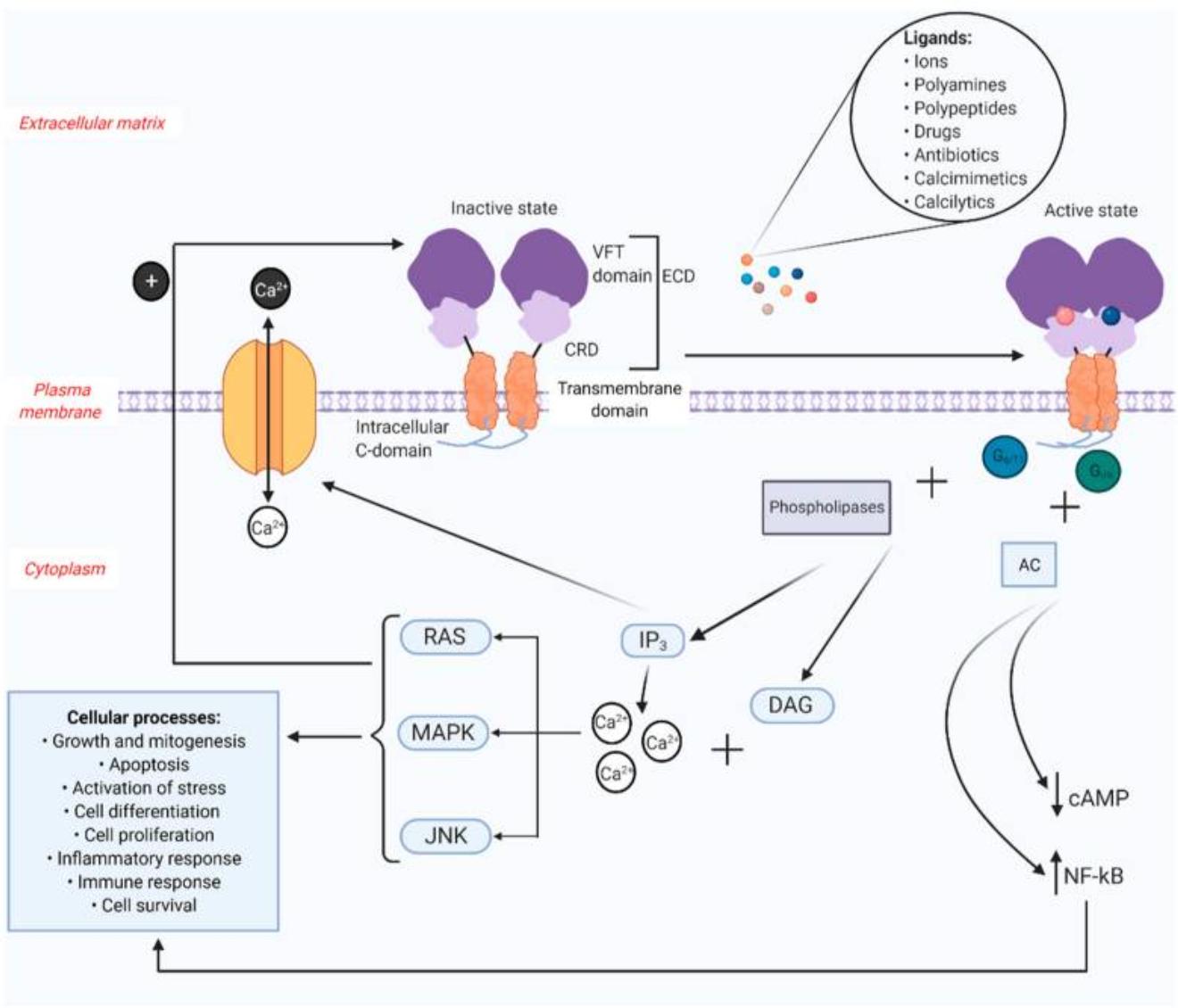
This figure illustrates the calcium-sensing receptor on vascular cells as a surface switch that converts external signals into changes in intracellular calcium and downstream inflammatory and growth programs. When ions, peptides, or certain drugs bind to it, the receptor assumes an active conformation that facilitates calcium entry from outside and release from internal stores. The calcium rise then energizes kinase and stress pathways that lower endothelial nitric oxide tone and push smooth muscle cells away from a purely contractile state toward repair, which hardens the wall. At the same time, the receptor weakens cellular relaxation signals and activates nuclear programs that favor inflammation, vesicle release, and early mineralization inside the vessel.
Clinically, this pattern presents as a wider pulse pressure, slow heart rate recovery after a short walk, cold-triggered chest tightness or calf stiffness, and loss of microvascular reserve, even when lipids appear normal. Taken together, the figure supports care that pairs lipid management with steps to normalize calcium handling, including correcting low magnesium levels, reducing high phosphate intake from processed foods, administering minerals away from meals, and tracking simple functional endpoints to confirm that the arterial wall is softening.
Sundararaman SS, van der Vorst EPC. Calcium-Sensing Receptor (CaSR), Its Impact on Inflammation and the Consequences on Cardiovascular Health. Int J Mol Sci . 2021;22(5):2478. Published 2021 Mar 1. doi:10.3390/ijms22052478
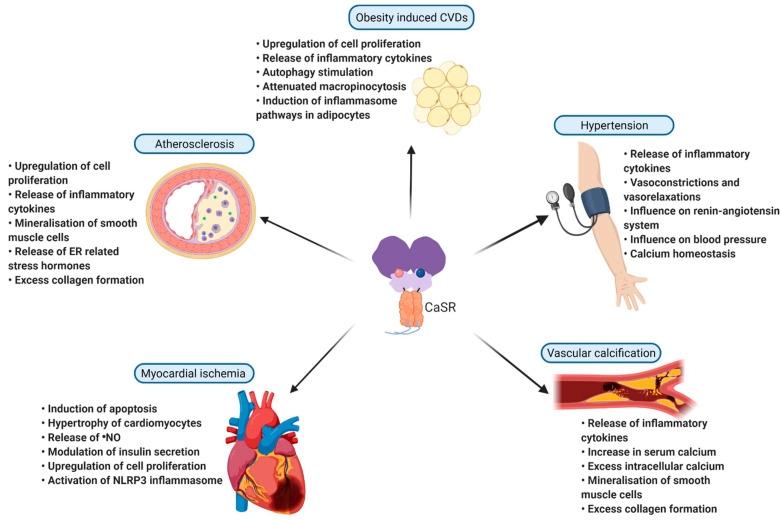
The figure illustrates the calcium-sensing receptor as a shared switch across cardiovascular disease, modulating factors that initiate and drive disease progression. It maps roles in myocardial ischemia, vascular calcification, hypertension, atherosclerosis, and obesity-related cardiovascular disease. Signaling downstream triggers endoplasmic reticulum stress, activating pathways that include NLRP3, and reducing nitric oxide availability. These shifts exacerbate injury in ischemia, harden and mineralize the vessel wall, and increase arterial pressure, while metabolic load worsens the pattern. Clinically, the message is to view calcium-sensing receptor activity as a unifying lever when stiffness, inflammation, and metabolic strain cluster in the same patient.
Sundararaman SS, van der Vorst EPC. Calcium-Sensing Receptor (CaSR), Its Impact on Inflammation and the Consequences on Cardiovascular Health. Int J Mol Sci . 2021;22(5):2478. Published 2021 Mar 1. doi:10.3390/ijms22052478
Five Common Clinical Misconceptions
Misconception 1: Atherosclerosis is mainly a cholesterol storage problem.
Clinical angle 1: In many patients, the early signal looks more like a calcium traffic issue inside the wall. Patterns such as widened pulse pressure, shorter six-minute walking distance, and slow one- to two-minute heart rate recovery often betray stiffness, despite tidy lipid panels.
Misconception 2: A normal serum calcium means calcium handling is normal.
Clinical angle 2: Serum calcium is tightly buffered, while misplacement happens in tissue. Morning calf hardness, low magnesium, mild phosphate excess, and low toe pressures in diabetes commonly sketch that picture.
Misconception 3: The coronary calcium score is a fixed label that cannot guide near-term care.
Clinical angle 3: Functional gains can precede any visible score shift. A falling pulse pressure, a longer walking distance, and a faster recovery heart rate usually indicate that the wall is softening, even before the next scan arrives.
Misconception 4: Once LDL levels are controlled, microvascular angina typically resolves on its own.
Clinical angle 4: Endothelial and smooth muscle calcium overactivity often persists, especially with cold exposure or stress. An exaggerated pressor response to a brief handgrip or cold stimulus aligns with this biology, and restoring nitric oxide tone with proper mineral balance tends to alleviate symptoms.
Case Reference
A Singaporean man with 19 years of gout had persistent foot pain despite many attempts, including costly insoles. After starting AIC, he felt markedly better within days and soon returned to full weight-bearing activity. Clinically, crystal-driven inflammation can disrupt calcium signaling in the vessel wall, promoting tissue stiffness, a crucial factor in atherosclerosis. By supporting more orderly calcium handling, AIC may alleviate the pressure of vascular stiffness while improving joint comfort.
Conclusion
Calcium handling within the vessel wall influences tone, recovery, and comfort long before a large plaque forms. When intracellular calcium levels rise, nitric oxide levels fall, the wall stiffens, and tiny mineral seeds initiate the calcification process. Patients experience this as a wider pulse pressure, shorter breath on hills, and slow heart rate recovery, despite having acceptable lipids. Re-establishing a steadier calcium rhythm helps soften tone and quiet inflammatory signaling, which can ease daily symptoms and reduce early calcification drift. In this context, AIC therapy is positioned to support physiologic calcium flow and healthier endothelial behavior. AIC therapy aims to normalize calcium flow and reduce cellular mineral seeding, potentially helping to reverse early atherosclerotic changes while enhancing day-to-day vascular function.
Bring calcium signaling into your practice.
Practitioners can request a consultation to discuss AIC therapy and how these mechanisms apply to specific cases.
Newsletter content is educational and contributed by participating healthcare practitioners. These statements have not been evaluated by the FDA and are not intended to diagnose, treat, cure, or prevent any disease.