(Part 4 of 4)
Series on Heart Disease
Part four explores the link between calcium imbalance and heart failure.
How to Break the Cycle of Calcium Mismanagement and Heart Failure
Calcium signaling is essential for the finely tuned contraction and relaxation of heart muscle cells, ensuring that each heartbeat occurs precisely. In cardiomyocytes, calcium enters the cell through voltage-dependent channels and binds to proteins that trigger contraction, while specialized pumps mediate its removal during relaxation. Disruptions in this process—whether from altered channel kinetics or inefficient sequestration—lead to a misbalance in intracellular calcium levels. This imbalance forces cells into a state of stress, activating enzyme pathways such as CaMKII that trigger adverse cellular remodeling and promote apoptosis.
Moreover, excess calcium accumulation within mitochondria hinders ATP production, reducing the energy available for critical cardiac functions. The sustained elevation of intracellular calcium also provokes inflammatory and fibrotic responses, gradually transforming the heart tissue into a stiffer, less compliant structure. Such molecular alterations diminish the heart’s capacity to adjust to hemodynamic demands, ultimately contributing to the onset of heart failure.
In the pediatric myocardium, however, the expression and maturation of calcium-handling proteins are still evolving, rendering young cardiomyocytes especially sensitive to even minor calcium imbalances. Recent mechanistic studies have demonstrated that abnormal activation of calcium channels—particularly TRP channels and ryanodine receptors—can disrupt the assembly of essential contractile proteins in developing hearts.
Furthermore, an altered interplay between calcium flux and growth factor signaling in young cardiac cells has been linked to impaired cellular differentiation and maladaptive remodeling, highlighting promising targets for early intervention.
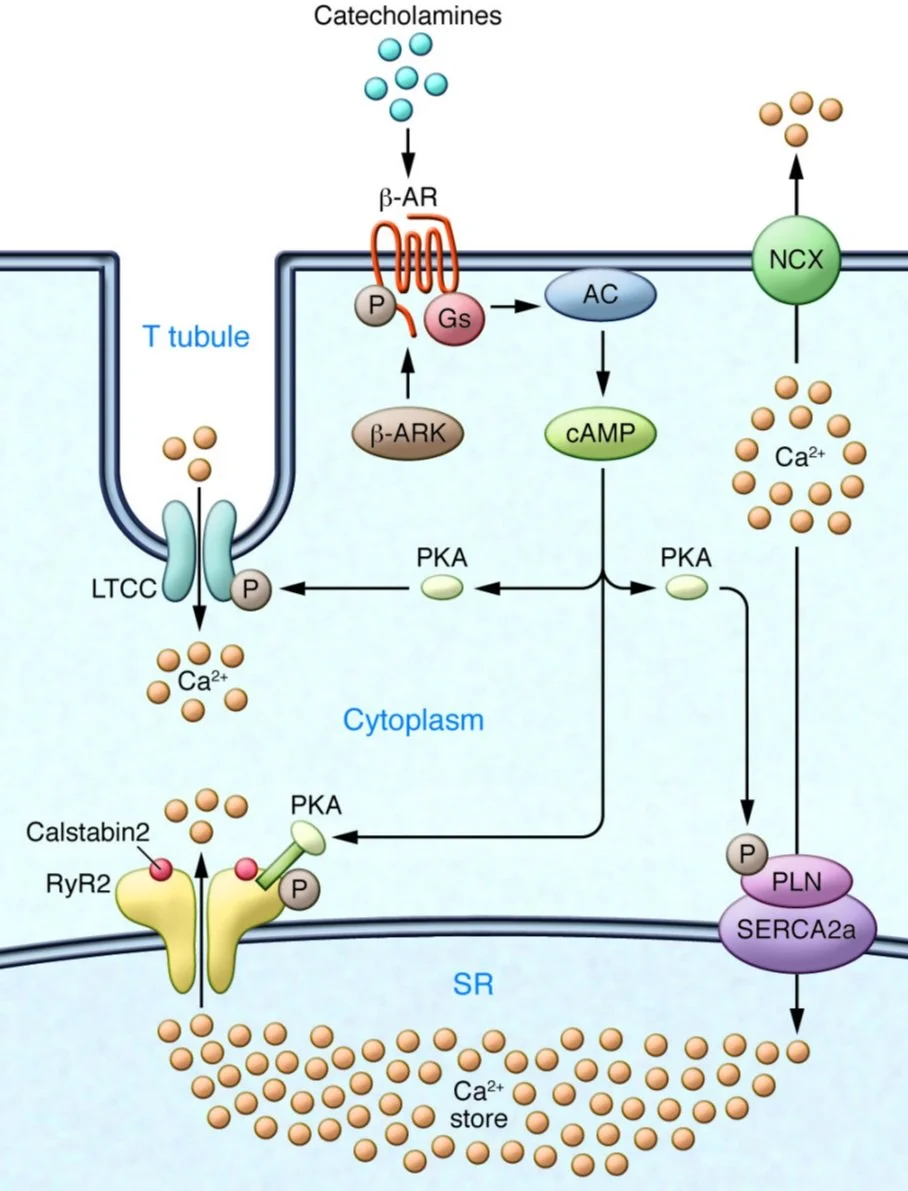
This figure explains how heart muscle cells contract and relax. It starts when an electrical signal activates L-type calcium channels in the cell membrane, allowing calcium to enter the cell. This calcium then triggers more calcium release from the sarcoplasmic reticulum through ryanodine receptors, rapidly increasing calcium levels for muscle contraction. The beta-adrenergic receptor pathway strengthens this process by increasing cyclic AMP, which activates protein kinase A. This enzyme modifies calcium channels, ryanodine receptors, and phospholamban, a protein that regulates calcium cycling. Relaxation occurs as calcium is pumped back into the sarcoplasmic reticulum by calcium ATPase, which is controlled by phospholamban, while extra calcium is removed through the sodium-calcium exchanger.
When Calcium Turns Against the Heart: A Path to Reversal
When calcium regulation fails, the heart doesn’t just struggle—it starts to break down at the molecular level. Misdirected calcium disrupts nuclear signaling, altering gene expression and weakening the heart’s ability to repair itself. As calcium accumulates where it doesn’t belong, intercellular communication deteriorates, increasing the risk of arrhythmias and conduction abnormalities. What should be a tightly controlled process turns erratic, pushing the heart into structural decline and functional exhaustion.
AIC therapy intervenes by restoring order to calcium dynamics. It clears intracellular calcium before it overwhelms mitochondria, protecting the heart’s energy supply. By regulating calcium flow and blocking stress-activated enzymes, AIC therapy interrupts the destructive cycle that drives heart failure. Instead of a heart locked in dysfunction, it regains the ability to adapt, recover, and sustain its workload as intended.
Hidden Realities of Heart Failure Worth Knowing
1. Heart Failure Is a Problem of the Heart Alone. False! It often starts outside the heart: vascular stiffness, metabolic dysfunction, and calcium mismanagement.
2. Osteoporosis and Heart Failure Have Nothing to Do With Each Other. False! Bone loss fuels heart failure by stiffening arteries and impairing circulation.
3. Calcification in the Heart Means Excess Calcium. False! It’s misplaced calcium, not excess—driven by faulty signaling and inflammation.
4. A Strong Heart Needs More Calcium. False! Too much intracellular calcium damages mitochondria and weakens the heart.
5. Dehydration Has Nothing to Do With Heart Failure. False! Low hydration thickens blood, strains the heart, and disrupts calcium balance.
Advanced Clinical Perspectives Through the Molecular Lens
Calcium overload in blood vessels lowers nitric oxide, reducing vasodilation and raising resistance.
Chronic stress disrupts calcium signaling, driving structural heart changes.
Calcium deposits in the sinoatrial node can disrupt heart rhythm and conduction.
Low osteocalcin impairs vascular health, affecting circulation in heart failure.
Excess calcium sparks increase oxidative stress, promoting cardiac remodeling.
Conclusion
We’ve been looking at heart failure the wrong way. It’s not just about a weak heart—it’s about calcium in the wrong place, doing the wrong job. Inside cardiomyocytes, misplaced calcium strangles mitochondria, cutting off their energy supply and forcing the heart into survival mode. Blood vessels stiffen as calcium hijacks nitric oxide signaling, raising resistance and starving the heart of oxygen. Even the sinoatrial node—the heart’s pacemaker—isn’t safe. Calcium buildup there scrambles conduction, pushing the heart toward arrhythmia.
AIC therapy isn’t about blocking calcium; it’s about putting it back where it belongs. By pulling excess calcium out of cells, restoring normal channel function, and shutting down the stress signals that fuel heart failure, AIC therapy stops the damage at its source. As calcium control returns, mitochondria wake up, oxidative stress fades, and the heart regains its ability to adapt. The link between bone loss and cardiac decline, the overlooked role of osteocalcin in vascular health, and the creeping progression of intracellular calcification aren’t just academic—they’re the key to breaking this cycle.
We need to rethink calcium’s role in heart disease—because what we’re doing now isn’t stopping it.
Bring calcium signaling into your practice.
Practitioners can request a consultation to discuss AIC therapy and how these mechanisms apply to specific cases.
Newsletter content is educational and contributed by participating healthcare practitioners. These statements have not been evaluated by the FDA and are not intended to diagnose, treat, cure, or prevent any disease.