(Part 3 of 4)
Series on Heart Disease
Part three explores how calcium dysregulation contributes to hypertension and stroke risk, and part four explores the link between calcium imbalance and heart failure.
The Role of Calcium Signaling in Preventing Stroke and Hypertension
Recent discoveries show that calcium influences the body far beyond simply controlling vascular contraction. It also plays a key role in smooth muscle cell growth and arterial remodeling. This fine-tuned balance is vital for maintaining healthy blood flow, but even slight disruptions in calcium’s cellular movement can set off a chain reaction of harmful effects. For instance, shifts in calcium channel activity have been closely linked to increased inflammation in blood vessels and the early development of arterial plaques. When calcium regulation falters, it can also weaken the integrity of endothelial cells, reducing nitric oxide levels and stiffening arteries. This stiffness not only raises blood pressure but also hastens the onset of coronary artery disease. Encouragingly, recent clinical trials highlight therapies that specifically target calcium signaling pathways, showing the potential to lower the risk of hypertension and stroke dramatically.
Meanwhile, novel compounds such as AIC (Antiorbital Ionic Calcium Carbonate) —which restores calcium signaling, removes cellular calcium deposits, and stimulates natural calcitonin production—are proving to be powerful new tools. Improving arterial flexibility and reducing the strain on the heart opens the door to more effective and innovative treatments. Studies also suggest calcium-binding proteins like calmodulin are key to future therapeutic breakthroughs. In short, tackling calcium dysregulation at its root could lead to better long-term outcomes and fresh approaches to preventing vascular complications.
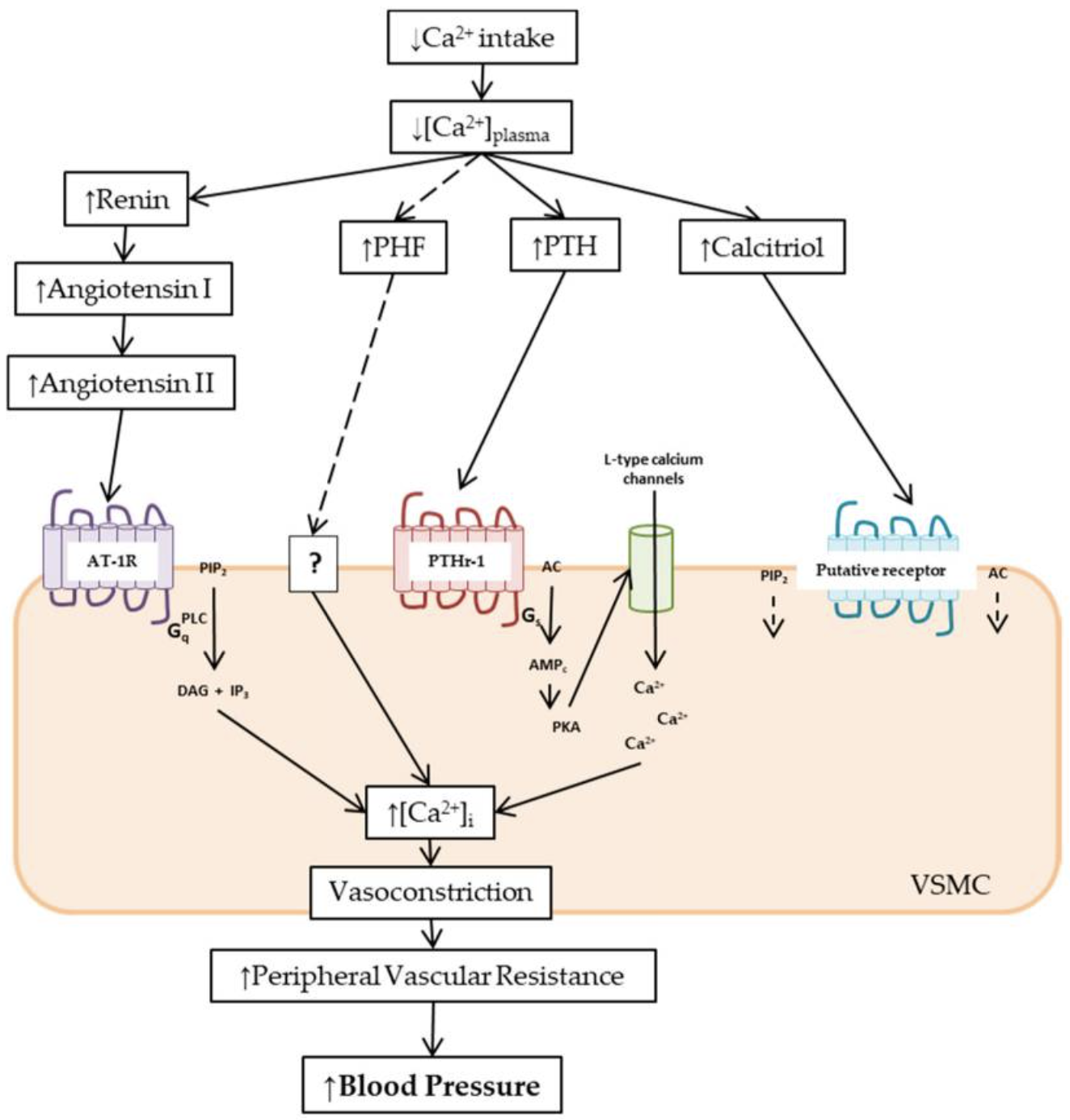
This figure explains how low calcium intake decreases plasma calcium concentration, leading to the release of parathyroid hormone (PTH) and parathyroid hypertensive factor (PHF), increased calcitriol synthesis, and activation of the renin-angiotensin-aldosterone system (RAAS). In vascular smooth muscle cells (VSMC), angiotensin II, parathyroid hormone (PTH), and calcitriol increase intracellular calcium concentration through specific signaling pathways. The rise in intracellular calcium causes vasoconstriction, raising peripheral vascular resistance and blood pressure. The mechanism of parathyroid hypertensive factor (PHF) remains unknown.
Clinical Perspective
Calcium's role extends beyond vascular contraction, influencing smooth muscle cell growth and arterial remodeling. Disruptions in calcium signaling can lead to inflammation, endothelial dysfunction, and arterial stiffness, ultimately increasing blood pressure and coronary artery disease risk. Recent clinical trials show that therapies targeting calcium-signaling pathways can effectively lower hypertension and stroke risk. AIC therapy, by restoring calcium homeostasis and stimulating calcitonin production, presents a novel approach to maintaining vascular health. Understanding these dynamics can enhance patient outcomes and preventive care strategies.
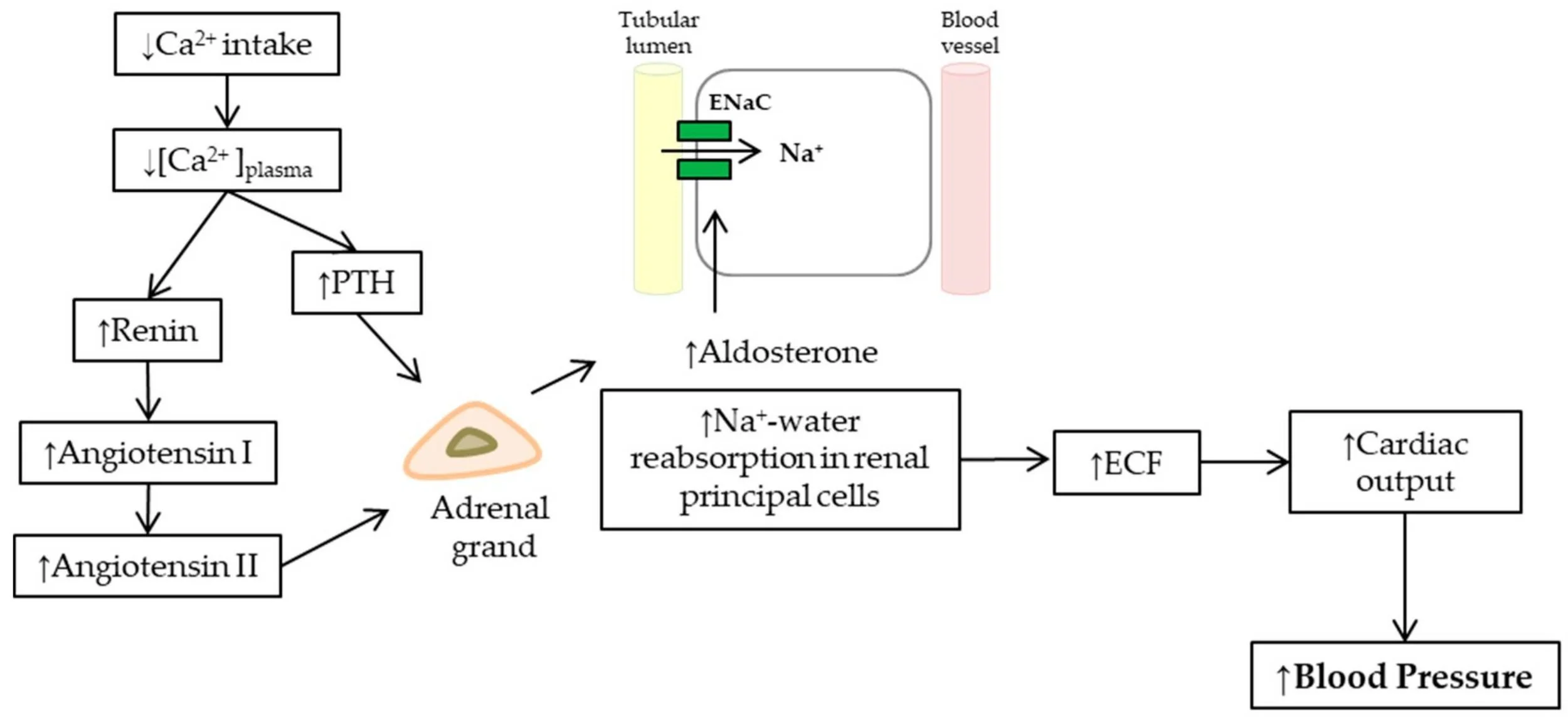
This figure demonstrates the relationship between low calcium intake and increased blood pressure. Low calcium intake decreases plasma calcium concentration, stimulating both PTH and the renin-angiotensin-aldosterone system (RAAS). As a result, aldosterone secretion increases, enhancing sodium and water reabsorption in the kidneys by upregulating epithelial sodium channels (ENaC). The subsequent rise in extracellular fluid volume raises cardiac output, leading to an increase in blood pressure.
Emerging Concepts in Practice
Calcium dysregulation is now recognized as essential in blood pressure elevation and stroke risk. Beyond simple mineral imbalance, calcium's influence on endothelial function and arterial flexibility is critical. AIC therapy offers a new perspective by restoring calcium signaling and preventing cellular calcium deposits, thereby reducing vascular resistance and hypertension. This approach challenges traditional views, suggesting that targeting calcium pathways may revolutionize cardiovascular disease management. Rethinking calcium’s role could lead to more effective, personalized stroke and hypertension prevention interventions.
Rethinking Patient Awareness: Calcium and Blood Pressure
Emotional swings and anxiety can be tied to calcium levels, which also influence blood pressure.
Muscle cramps and spasms might mean low calcium and unstable blood pressure.
Digestive issues can signal calcium imbalance, affecting blood pressure control.
Proper calcium helps muscles recover after exercise, keeping blood pressure steady.
Low energy and fatigue? It could be a calcium issue linked to blood pressure.
Conclusion
Disruptions in calcium regulation can significantly impact smooth muscle growth and alter arterial structure, increasing the risk of hypertension and stroke. These changes often lead to inflammation, impaired endothelial function, and stiffer arteries. AIC therapy restores calcium balance and improves vascular flexibility, reducing these cardiovascular risks. AIC therapy offers a direct approach to enhancing cardiovascular health by targeting the underlying dysregulation.
Bring calcium signaling into your practice.
Practitioners can request a consultation to discuss AIC therapy and how these mechanisms apply to specific cases.
Newsletter content is educational and contributed by participating healthcare practitioners. These statements have not been evaluated by the FDA and are not intended to diagnose, treat, cure, or prevent any disease.