(Part 1 of 4)
The Series on Heart Disease
Part one focuses on how ionic calcium regulates heartbeat rhythm, myocardial contraction, and overall cardiac performance. Part two explores how anxiety disrupts heart function through calcium imbalances and why addressing it is key to cardiovascular health. Part three probes into how calcium dysregulation contributes to hypertension and stroke risk. Part four focuses on the links between calcium imbalance and heart failure.
What Keeps the Heart Beating Strong and Steady
The heart isn’t just a pump—it’s a finely tuned system where calcium plays a leading role in every beat. For naturopathic doctors, understanding this balance opens doors to more effective, natural approaches to heart health. Calcium does much more than strengthen bones; in the heart, it controls muscle contractions, sets the rhythm, regulates blood flow, and even helps prevent long-term damage.
Calcium ions enter heart cells with each heartbeat, triggering a cascade that allows the heart to contract and pump blood efficiently. Specialized pacemaker cells rely on precise calcium currents to keep the rhythm steady, while enzymes and signaling molecules like calmodulin ensure the heart adapts to stress and energy demands. Even the blood vessels depend on calcium to regulate their tone, affecting blood pressure and circulation.
But too much or too little calcium can throw everything off. Disruptions in calcium signaling contribute to arrhythmias, hypertension, and even fibrotic changes that make the heart stiff and inefficient over time. These imbalances don’t just appear overnight—they build up gradually, offering a key opportunity for early intervention.
Addressing calcium homeostasis can help prevent these issues before they start. Supporting the body's ability to regulate calcium through nutrition, lifestyle, and targeted ionic calcium therapy (AIC) can make all the difference, keeping the heart strong, the rhythm steady, and the body thriving for years to come.
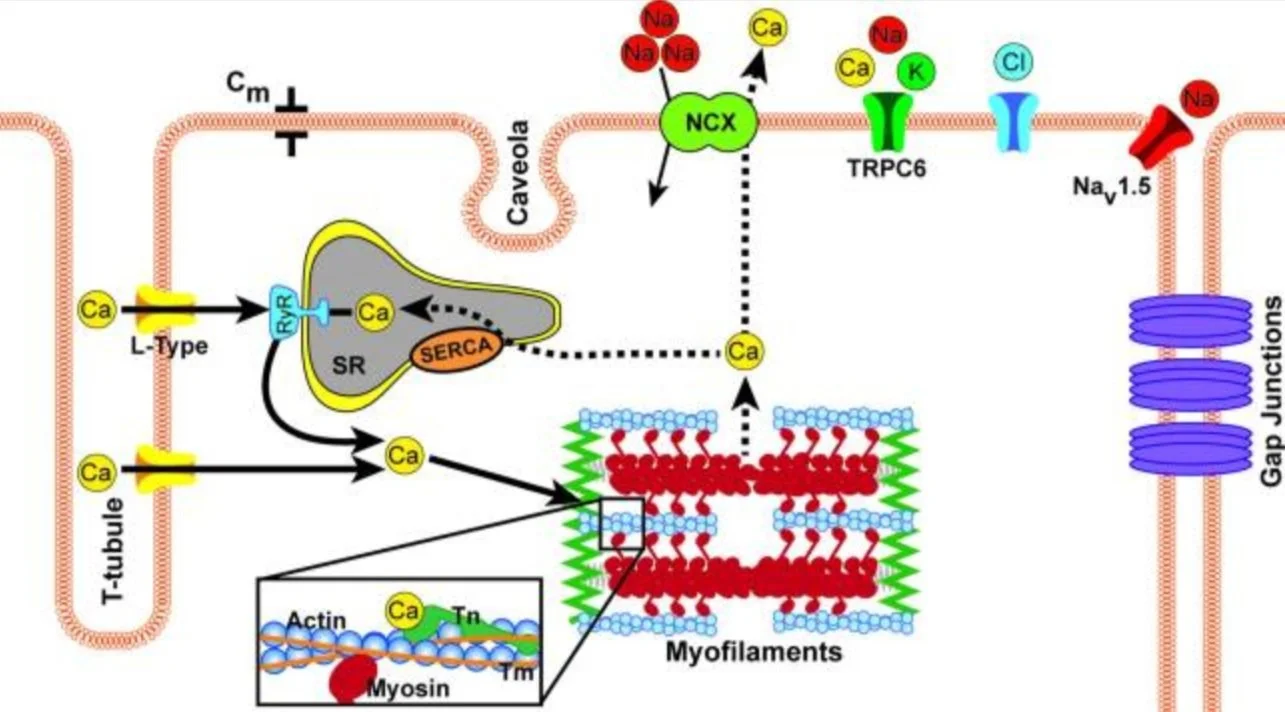
This figure shows how calcium drives heart muscle contraction, starting with sodium influx that depolarizes the membrane and opens L-type calcium channels. Calcium then enters the cell, triggering ryanodine receptors on the sarcoplasmic reticulum (SR) to release even more calcium, a process called calcium-induced calcium release. The free calcium binds to troponin-C, shifting tropomyosin and exposing actin for myosin binding, leading to contraction. Afterward, calcium is cleared either by being pumped out through the sodium-calcium exchanger (NCX) or taken back into the SR by the SERCA pump. These calcium movements control contraction and influence electrical signaling and overall heart function.
https://pmc.ncbi.nlm.nih.gov/articles/PMC4023651/
When Calcium Balance is Lost, the Heart Begins to Struggle
Calcium isn’t usually the first thing that comes to mind when we think about heart health. But this mineral does far more than strengthen bones—it plays a critical role in keeping the heart functioning properly. The problem is that when calcium isn't where it should be or when its balance is off, it can become a silent driver of heart disease. Many issues, from chronic fatigue and circulation problems to stiff arteries and heart failure, can be traced back to calcium imbalances that build up over time.
One of the biggest culprits is mitochondrial calcium overload. The heart relies on mitochondria to produce energy, and calcium plays a key role in regulating that process. But when too much calcium floods the mitochondria, it creates oxidative stress and disrupts ATP production. Over time, this weakens the heart muscle, making it harder for the heart to pump efficiently. At the same time, excess calcium triggers chronic inflammation, activating NF-κB and other inflammatory pathways that damage blood vessels. This can speed up the development of atherosclerosis, leading to hardened arteries and reduced blood flow.
Calcium imbalances also affect blood vessel flexibility. The endothelium, which lines the inside of blood vessels, depends on calcium to produce nitric oxide—a key molecule that keeps arteries relaxed and blood pressure stable. When calcium regulation is off, nitric oxide production drops, leading to stiff, narrow arteries that increase strain on the heart. Inside the heart muscle itself, the sarcoplasmic reticulum (SR) controls calcium storage and release, but in heart failure, it becomes dysfunctional. This weakens contractions and prolongs relaxation, reducing the heart’s ability to pump efficiently.
Another overlooked issue is calcium-driven fibrosis, in which too much calcium activity overactivates fibroblasts, leading to excess collagen buildup. This stiffens the heart muscle, making it harder for the chambers to fill properly. Over time, this contributes to heart failure with preserved ejection fraction (HFpEF), a condition in which the heart pumps normally but still struggles to meet the body's needs.
This is where AIC therapy comes in. By stimulating calcitonin production, AIC helps regulate calcium distribution, preventing the toxic buildup that leads to mitochondrial stress, vascular calcification, and fibrotic remodeling. Instead of calcium accumulating where it shouldn’t, AIC helps restore a natural balance, keeping the heart stronger, the blood vessels more flexible, and the body more resilient against heart disease.
Case Reference
A 59-year-old male with worsening mitral valve prolapse experienced severe heart dysfunction, struggling with daily activities and unable to climb stairs or engage in physical exercise. His cardiologist warned that his condition was critical, leaving him with little hope for recovery. After starting AIC Therapy, he quickly noticed a surge in energy. Within three months, he was able to walk on a treadmill, and just two months later, he progressed to jogging—something he hadn’t done in years. Remarkably, he remains completely symptom-free with no cardiac issues. This case highlights the potential role of AIC Therapy in supporting cardiac function and calcium regulation in heart valve disorders.
What Not to Overlook in Calcium’s Role in Heart Function
1. Subtle Arrhythmias Without Structural Issues
Calcium channel imbalances can disrupt pacemaker cell function, leading to rhythm irregularities even in a structurally normal heart.
2. Sluggish Heart Relaxation Despite Normal Pumping
If calcium reuptake by the sarcoplasmic reticulum (SR) is inefficient, the heart may take longer to relax, increasing cardiac strain over time.
3. Chronic Fatigue with No Clear Circulatory Cause
Mitochondrial calcium overload can disrupt ATP production, draining cellular energy even when oxygen delivery is intact.
4. Stubborn Hypertension Unresponsive to Treatment
Impaired calcium regulation in blood vessels can weaken nitric oxide signaling, stiffen arteries, and drive persistent high blood pressure.
Conclusion
Calcium is the silent regulator of heart rhythm, circulation, and long-term cardiovascular health. When its balance is off, the signs can be subtle yet significant: unexplained fatigue that lingers despite good circulation, stubborn hypertension that resists treatment, or a heart that struggles to relax even when pumping normally. These hidden imbalances build up over time, leading to arterial stiffness, energy depletion, and rhythm disruptions that often go unnoticed until they become serious.
AIC actively restores balance by preventing toxic buildup, restoring calcium signaling, and keeping the heart and blood vessels functioning smoothly. A 59-year-old man with severe mitral valve prolapse, once unable to climb stairs, regained full cardiac function within months after addressing his calcium dysregulation. His transformation is a testament to the power of correcting calcium imbalances before they spiral into chronic disease. Restoring the body’s ability to regulate calcium properly, AIC helps protect heart function, sustain energy levels, and support long-term cardiovascular resilience.
Bring calcium signaling into your practice.
Practitioners can request a consultation to discuss AIC therapy and how these mechanisms apply to specific cases.
Newsletter content is educational and contributed by participating healthcare practitioners. These statements have not been evaluated by the FDA and are not intended to diagnose, treat, cure, or prevent any disease.