Part 4 of 4 (Series on Oncology)
Introduction
In cancer cells, calcium signaling is a critical regulator of metabolic processes that support cell survival. It specifically enhances the activity of TCA cycle enzymes, such as isocitrate dehydrogenase and oxoglutarate dehydrogenase, which are vital for producing the metabolic intermediates required for rapid proliferation. Beyond its metabolic support, calcium is essential for maintaining mitochondrial membrane potential and preventing apoptosis. Additionally, calcium is crucial in activating calmodulin-dependent kinases, directly influencing key signaling pathways governing cell cycle progression and resistance to apoptosis.
AIC Therapy can induce apoptosis by activating caspases and modulating these calcium-dependent pathways. This disruption of calcium homeostasis also increases cancer cells' susceptibility to oxidative stress, mainly through regulating reactive oxygen species (ROS) production within the mitochondria. The ability of AIC Therapy to influence these critical mechanisms shows its potential as a therapeutic agent, targeting cancer cells' metabolic and survival pathways.
Cancer cells often exhibit overactive calcium channels, which play a crucial role in their uncontrolled proliferation, survival, migration, invasion, and metastasis by regulating the cell cycle, avoiding apoptosis, and enhancing cytoskeletal dynamics and cell adhesion. When these overactive channels are overstimulated, such as through increased calcium influx, it can lead to mitochondrial dysfunction and apoptosis. AIC Therapy interacts with these channels, leading to excessive calcium influx in cancer cells. In contrast, normal cells, which do not exhibit these overactive channels, are not subjected to calcium overload. Instead, AIC Therapy restores calcium homeostasis in normal cells without inducing cell death.
Targeting Metabolism and Cell Survival
Calcium plays a crucial role in the metabolism and survival of cancer cells, particularly by enhancing the activity of key enzymes in the tricarboxylic acid (TCA) cycle and maintaining mitochondrial membrane potential. Because calcium activates calmodulin-dependent kinases essential for cancer cell survival, altering calcium signaling can disrupt cancer cell viability. Therefore, restoring calcium signaling within cancer cells by AIC Therapy can induce apoptosis by activating caspases and increase their susceptibility to oxidative stress by regulating reactive oxygen species (ROS) production.
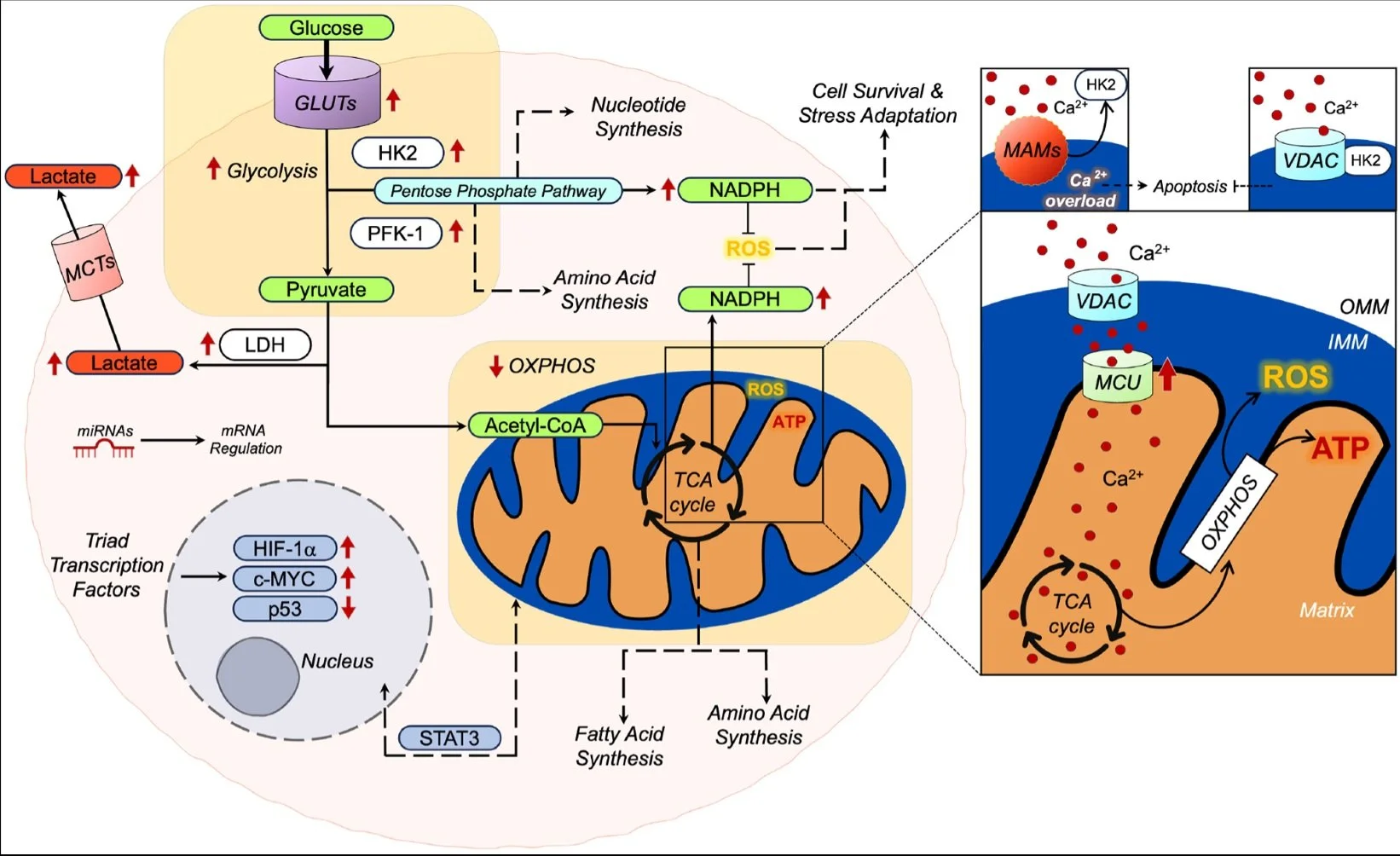
This figure shows the critical role of calcium in the metabolic reprogramming of cancer cells. Calcium influx into the mitochondria regulates key enzymes within the TCA cycle, supporting ATP production and overall cellular metabolism essential for tumor survival and proliferation. The mitochondria-associated membranes serve as crucial sites where calcium dynamics are tightly controlled, with proteins like hexokinase 2 binding to voltage-dependent anion channels to prevent pro-apoptotic factor release. Disruption of this calcium homeostasis, such as through calcium overload, can lead to mitochondrial dysfunction and induce apoptosis. This intricate regulation of calcium within the mitochondria represents a potential therapeutic target for disrupting cancer cell survival mechanisms.
Inducing Apoptosis through Mitochondrial Dysfunction
Calcium’s precise regulation within cancer cells is pivotal in sustaining their metabolic functions and preventing apoptosis. Also, the tight regulation of calcium across mitochondrial and endoplasmic reticulum membranes plays a crucial role in supporting tumor growth and survival. Disrupting this balance could make cancer cells more vulnerable to treatments, mainly by inducing apoptosis through mitochondrial dysfunction. AIC Therapy leverages these insights, offering a promising approach to cancer treatment by targeting these critical calcium-dependent pathways.
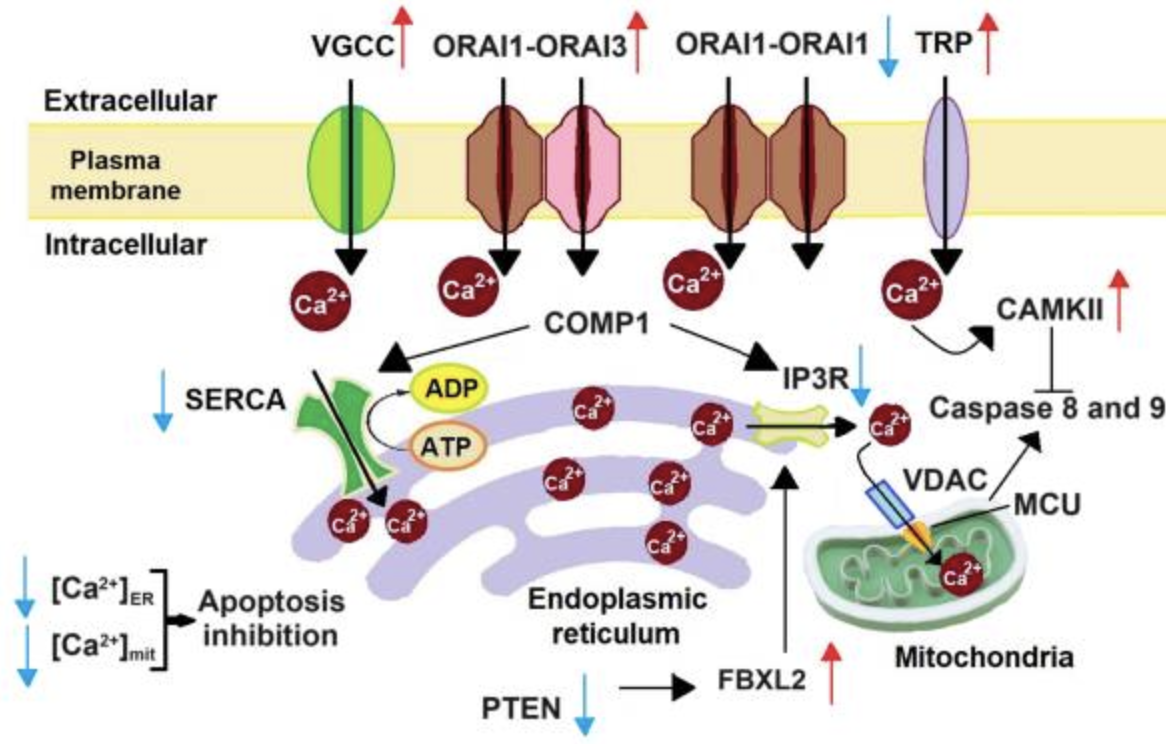
This figure shows how calcium signaling contributes to the inhibition of apoptosis in cancer cells. Increased calcium influx through upregulated channels on the plasma membrane activates key pathways that inhibit the action of pro-apoptotic proteins, particularly caspases 8 and 9. Additionally, the downregulation of specific channels and transporters within the endoplasmic reticulum and mitochondria results in decreased internal calcium levels, further preventing apoptosis. The overall effect is the survival and continued proliferation of cancer cells due to the suppression of programmed cell death mechanisms.
Clinical Case 1
A 53-year-old woman presented with a diagnosis of intraductal carcinoma, stage 3a, which was estrogen receptor (ER) and progesterone receptor (PR) negative but HER2 positive. A contrast-enhanced CT scan revealed a 4.1 cm mass in the lower outer quadrant of the right breast, along with the involvement of four axillary lymph nodes. The patient was treated with dietary modification and AIC Therapy, taken three times a day for two weeks before surgery. After this treatment, a lumpectomy and axillary clearance were performed, and biopsy results showed that the tumor size had reduced to 1.3 cm with no lymph node involvement. As a result, the cancer was downstaged to stage 1a, indicating a significant reduction in the severity of the disease.
Clinical Case 2
A 42-year-old woman, Para 3, presented with a six-month history of irregular menstrual bleeding and intermenstrual spotting. She had been consuming animal-derived placenta for a year before the onset of symptoms and had no other underlying medical conditions. Blood tests revealed a slightly elevated ESR and a CA-125 level of 56, while a pelvic ultrasound identified a clear, simple ovarian cyst measuring 4x3 cm on the right ovary. The patient refused surgery and was treated with AIC, taken three times a day for two months. After AIC Therapy, her CA-125 level normalized, the ovarian cyst completely resolved, and her menstrual cycles returned to normal.
Conclusion
AIC Therapy effectively targets and disrupts the critical calcium-dependent pathways that cancer cells rely on for survival and proliferation. Clinical results confirm its practical benefits in treating cancer, including significant tumor reduction and the resolution of cancer-related symptoms. By modulating calcium dynamics within cancer cells, AIC Therapy provides a precise and targeted approach to treating cancer and improving patient outcomes.
Bring calcium signaling into your practice.
Practitioners can request a consultation to discuss AIC therapy and how these mechanisms apply to specific cases.
Newsletter content is educational and contributed by participating healthcare practitioners. These statements have not been evaluated by the FDA and are not intended to diagnose, treat, cure, or prevent any disease.