Part 1 of 4
( Series of Neurodegenerative Diseases )
How Does AIC Therapy Effectively Prevent Neurodegenerative Diseases?
This is the first part of our four-part series on how AIC Therapy can help prevent and manage neurodegenerative diseases. In this series, we look at how ionic calcium (AIC) therapy works on the cellular level to protect neurons, improve brain function, and support nerve repair for neurodegenerative diseases.
In Part 2, we will examine how AIC Therapy targets the underlying mechanisms of Alzheimer’s and dementia, offering new ways to protect brain function. Part 3 will focus on Parkinson's, highlighting how AIC Therapy can help manage symptoms and slow disease progression. Finally, Part 4 will cover ALS, discussing how AIC Therapy supports motor neuron health, protects neurons, and improves muscle function. Each part will provide deeper insights into the potential of AIC Therapy in managing these neurodegenerative diseases.
Introduction
Calcium is a secondary messenger that regulates the activity of essential proteins, including CaMKII, GAP-43, Oncomodulin, Caldendrin, Calneurons, and NCS-1. Disruptions in intracellular calcium levels can cause either overactivation or insufficient activation of these proteins. Such disruptions can trigger neuronal cell death. As a result, calcium plays a central role in neurodegenerative diseases. Calcium imbalance directly impacts the function of these proteins, leading to increased cellular damage and neuronal death.
AIC Therapy prevents the over-phosphorylation of CaMKII, preserving synaptic plasticity and supporting the normal function of GAP-43, which promotes neuronal regeneration. Additionally, it regulates calcium-mediated signaling in proteins like Oncomodulin and NCS-1, enhancing neuronal cell survival. AIC Therapy normalizes intracellular calcium, preventing excessive and insufficient protein activation. These mechanisms reduce neuronal damage and death in neurodegenerative diseases, thereby maintaining neuronal function. Consequently, AIC Therapy significantly halts disease progression and dramatically reduces neuronal cell loss.
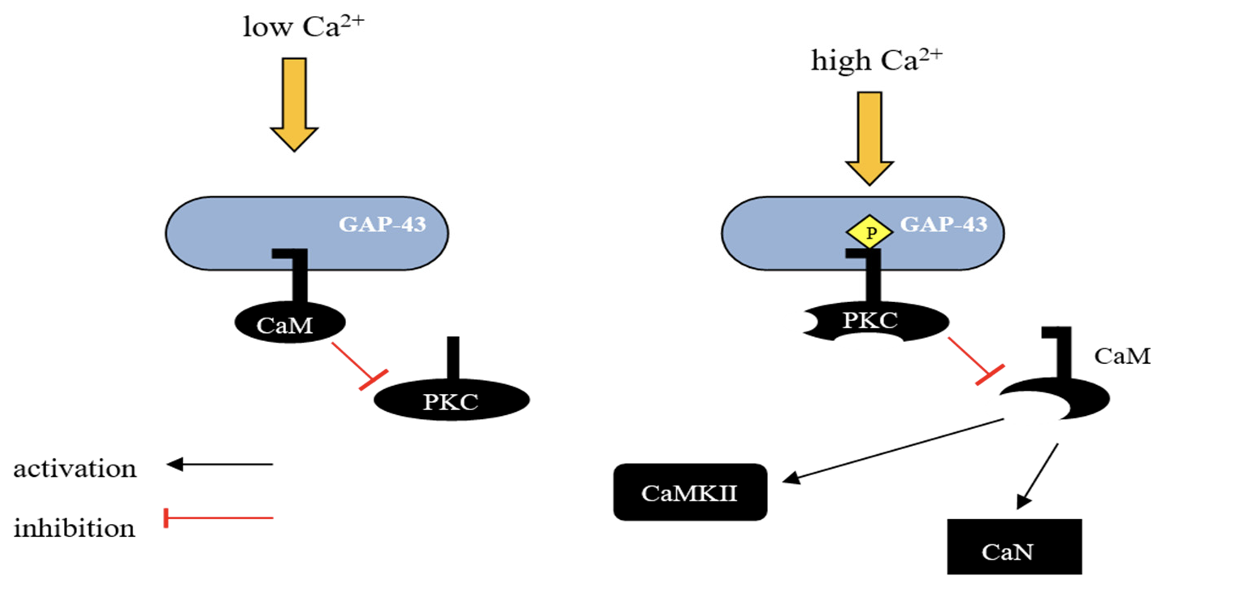
This figure illustrates that GAP-43 activity is regulated by its interaction with calmodulin (CaM), a process influenced by intracellular calcium levels. GAP-43 binds to CaM in low calcium conditions, preventing its phosphorylation by protein kinase C (PKC) and keeping GAP-43 inactive. When calcium levels rise and PKC is activated, GAP-43 is phosphorylated, releasing CaM and allowing GAP-43 to remain active. This mechanism enables GAP-43 to stay active despite fluctuations in calcium levels, which is crucial for neuronal function and plays a role in neurodegeneration.
Calcium Dysregulation and Neuronal Damage in Neurodegenerative Diseases
Calcium dysregulation, particularly excessive or prolonged calcium influx, can overwhelm mitochondria, opening the mitochondrial permeability transition pore (mPTP) and disrupting the mitochondrial membrane potential. This disruption impairs ATP production, causing cellular energy failure, oxidative stress, further calcium homeostasis loss, and ultimately, neuronal damage. Dysregulated calcium signaling can also disrupt critical processes like axonal growth, neurotransmission, and gene transcription, impairing neuron repair and function. These disruptions are associated with neurodegenerative diseases such as Alzheimer's and Parkinson's, where calcium imbalance plays a key role in disease progression.
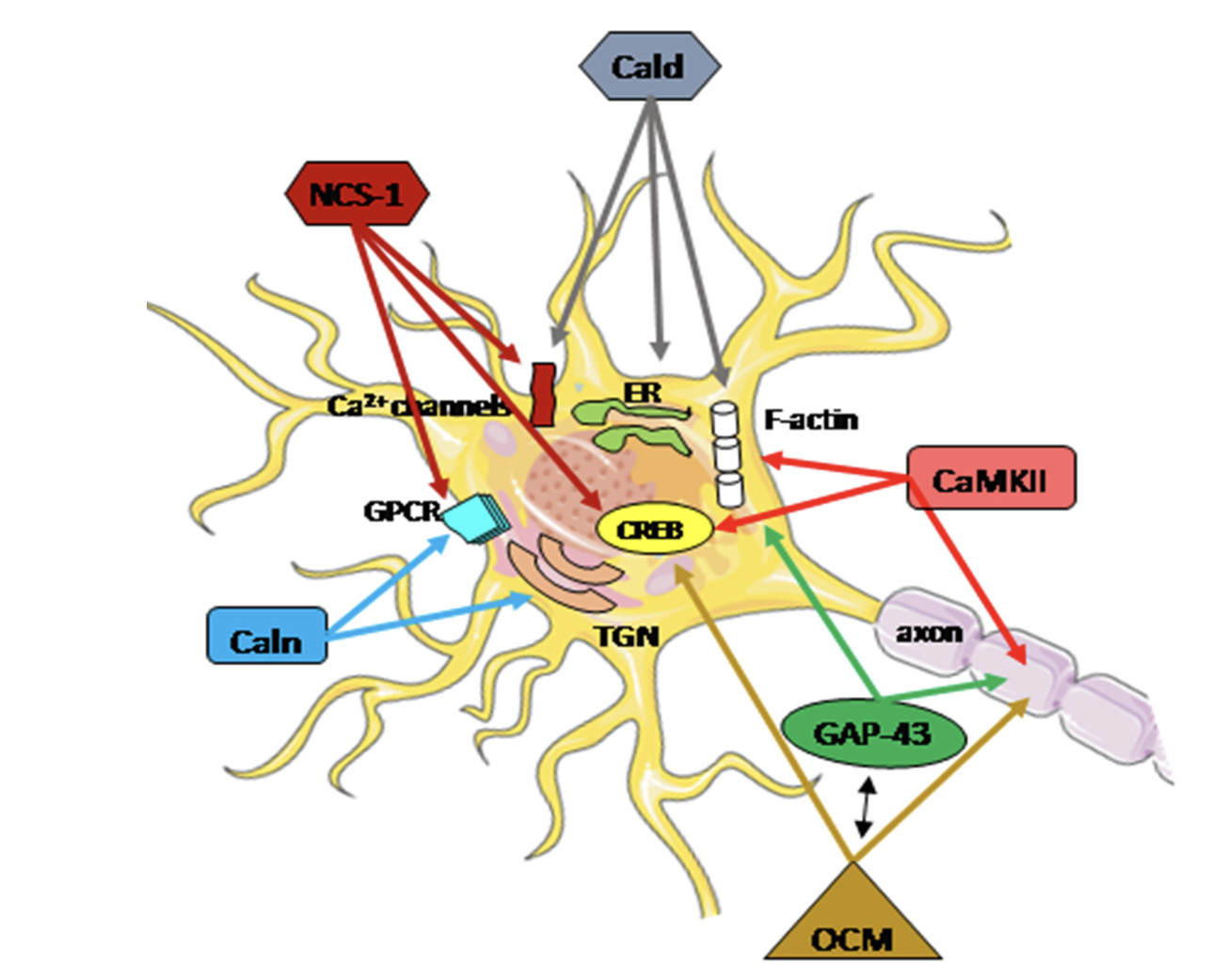
This figure illustrates how calcium-associated proteins contribute to neuronal repair. Calcium signals are crucial for several neuronal functions, including neurotransmitter release, axonal growth, and gene transcription. Proteins such as CaMKII and GAP-43 play a role in axon regeneration by interacting with molecules like F-actin, essential for maintaining neuron structure. Oncomodulin (OCM) promotes axon regeneration via the CaMKII pathway, while Caldendrin and Neuronal Calcium Sensor-1 (NCS-1) regulate calcium levels to support neuron growth and repair. The function of these proteins relies on calcium levels and their interactions with other cellular components.
Clinical Case 1
Mr. TT, a 74-year-old male diagnosed with early-stage dementia in June 2017, started AIC therapy in June 2019. Before starting treatment, he experienced significant cognitive decline, including difficulty remembering conversations and names and even finding his way home. By March 2020, after nine months of AIC therapy, his cognitive functions improved, with fewer memory lapses and better orientation. Additionally, by May 2020, Mr. TT showed physical improvements, including a 10 cm reduction in waistline and improved knee function, which allowed him to cancel scheduled knee surgery. Over time, his physical activity increased significantly; by July 2021, he could walk more than 10 km without stopping. By September 2021, he walked 40 km weekly, reflecting continued cognitive and physical improvements with ongoing AIC therapy.
Clinical Case 2
Mr. AK, an 83-year-old male diagnosed with dementia, experienced significant anxiety and confusion, frequently calling his 60-year-old son during work hours and questioning why he was left alone. These behaviors reflected a sense of abandonment and led to frequent tantrums. In July 2019, Mr. AK started AIC Therapy. By December 2019, the frequency of calls to his son had noticeably decreased, indicating an improvement in his anxiety levels. By June 2020, Mr. AK demonstrated further cognitive improvement, as he understood that his son was at work and became comfortable staying home alone. He even began engaging in activities, suggesting that AIC therapy significantly impacted his cognitive function and overall well-being.
Conclusion
AIC Therapy enhances neuronal repair and preserves cognitive and physical functions in patients with dementia by modulating calcium-associated proteins like GAP-43 and CaMKII. By increasing intracellular calcium levels, AIC Therapy facilitates the activation of protein kinase C (PKC), which leads to the phosphorylation of GAP-43. This phosphorylation releases calmodulin, keeping GAP-43 in an active state crucial for neuron growth and repair. Additionally, AIC Therapy influences the CaMKII pathway, vital for axonal regeneration and synaptic plasticity, supporting the restoration of neuronal function.
AIC Therapy effectively promotes neuronal repair and preserves cognitive and physical functions in dementia patients. Clinical cases consistently demonstrate significant improvements in memory, orientation, and overall well-being, providing strong evidence that restoring calcium signaling through AIC Therapy dramatically decelerates disease progression and substantially enhances the quality of life for individuals with neurodegenerative conditions.
Bring calcium signaling into your practice.
Practitioners can request a consultation to discuss AIC therapy and how these mechanisms apply to specific cases.
Newsletter content is educational and contributed by participating healthcare practitioners. These statements have not been evaluated by the FDA and are not intended to diagnose, treat, cure, or prevent any disease.