Part 4 of 4
( Series on Neurodegenerative Diseases )
Calcium Imbalance in ALS and the Therapeutic Potential of AIC Therapy
Part 4 will cover ALS, discussing how AIC Therapy supports motor neuron health, protects neurons, and improves muscle functions.
Introduction
In amyotrophic lateral sclerosis (ALS), calcium dyshomeostasis significantly contributes to motor neuron degeneration, primarily due to dysfunctional calcium-storing organelles such as the endoplasmic reticulum (ER), mitochondria, and lysosomes. Lysosomal calcium dysfunction disrupts calcium homeostasis and promotes neurodegeneration. Excessive calcium influx through overactive voltage-gated channels and altered glutamate receptors further leads to protein misfolding and aggregation. The interaction between the ER and lysosomes, mediated by calcium signaling at specialized membrane contact sites, is crucial for maintaining cellular homeostasis; disruption of this interaction is linked to ALS pathology.
AIC Therapy normalizes calcium homeostasis by stabilizing calcium influx and efflux across cellular membranes, including voltage-gated calcium channels. This regulation prevents abnormal protein misfolding and aggregation, reducing neuronal damage. Additionally, AIC Therapy enhances calcium signaling between the ER and lysosomes, maintaining cellular communication and mitigating ALS progression.
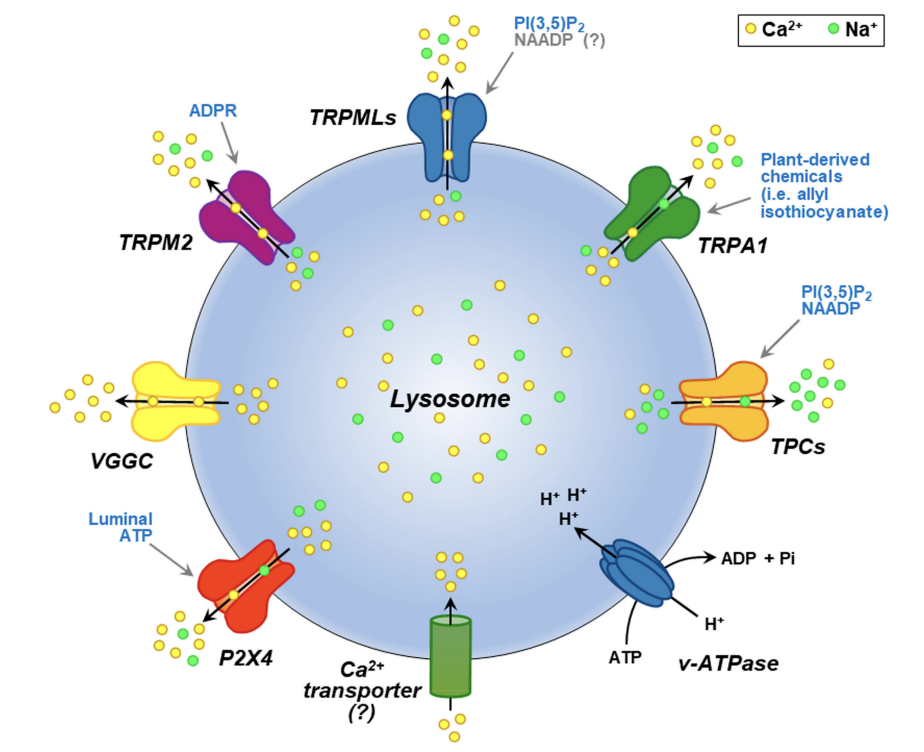
This figure illustrates the various channels and pumps located on the lysosomal membrane that are responsible for transporting calcium (Ca²⁺) and sodium (Na⁺) ions, playing a crucial role in cellular signaling and homeostasis. Calcium release from lysosomes is mediated by several channels, including those that respond to specific signals such as lipid molecules (e.g., PI(3,5)P₂) and nucleotides (e.g., NAADP), as well as plant-derived chemicals. The lysosomal membrane also features channels that regulate both calcium and sodium ion movement, which are vital for maintaining ion balance and proper lysosomal function. Additionally, a proton pump known as V-type ATPase actively pumps protons (H⁺) into the lysosome, creating an acidic environment essential for the lysosome's degradation and recycling functions. Together, these channels and pumps coordinate to regulate ion flow, ensuring lysosomal health and supporting overall cellular function.
Targetting Calcium Homeostasis for Cellular Health in ALS treatment
Lysosomal calcium dysregulation affects several critical processes in ALS, including autophagy, essential for clearing damaged proteins and organelles. Dysfunction in the lysosomal calcium channel TRPML1 leads to decreased autophagic flux and a buildup of neurotoxic substances, ultimately triggering motor neuron death. Aberrant calcium handling within lysosomes also disrupts their interaction with the ER, causing ER stress and contributing further to the neurodegenerative cascade in ALS.
AIC Therapy increases the availability of calcium ions within lysosomes, improving the function of TRPML1 channels, which is crucial for maintaining lysosomal health and effective cellular signaling. By stabilizing lysosomal calcium levels, AIC Therapy promotes the fusion of autophagosomes with lysosomes, enhancing autophagic activity that clears toxic protein aggregates and damaged organelles. Additionally, AIC Therapy normalizes calcium levels in the ER, reducing stress, supporting proper protein folding, and maintaining overall cellular function, vital for neuron survival in ALS.
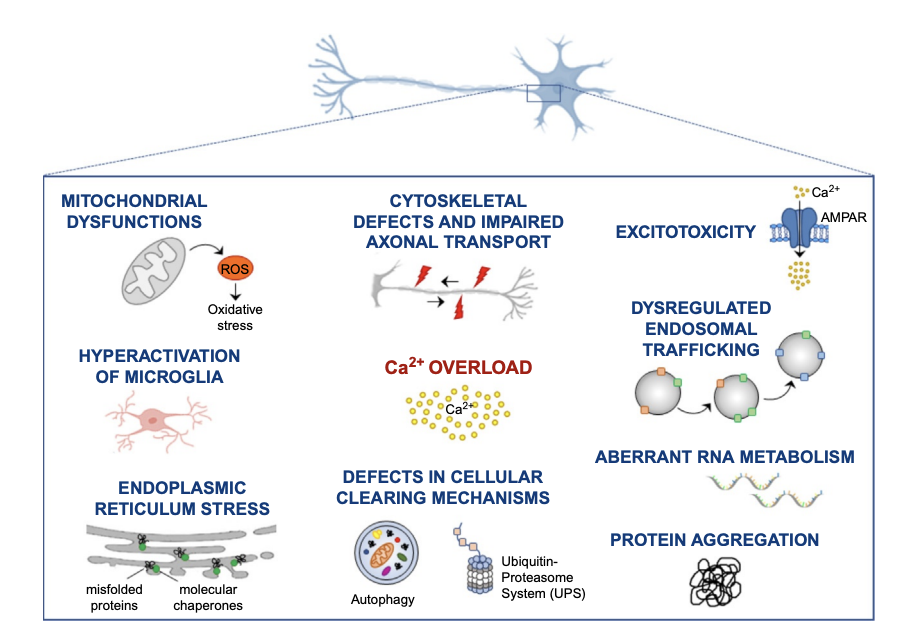
This figure illustrates various molecular mechanisms involved in ALS, with calcium overload playing a central role. Calcium dysfunction contributes to excitotoxicity through calcium channels, leading to mitochondrial damage and oxidative stress. It also affects cellular clearing mechanisms, such as autophagy, and is linked to cytoskeletal defects, impaired axonal transport, and protein aggregation, all of which drive ALS progression.
Case Reflection 1
A 53-year-old male with ALS experienced difficulty swallowing due to neck muscle weakness. After beginning AIC Therapy, he reported a significant improvement in swallowing function, which allowed him to eat more comfortably. This suggests that AIC Therapy has a beneficial effect on muscle function in patients with ALS-related weakness.
Case Reflection 2
A 19-year-old male, recently diagnosed with early-stage ALS, presented with initial symptoms such as muscle twitching and weakness. After two months of AIC therapy, the patient experienced a noticeable disappearance of these early symptoms. This case indicates that AIC Therapy plays a role in mitigating early disease symptoms.
Case Reflection 3
A 65-year-old male in the late stages of ALS had lost the ability to independently perform basic daily tasks, including going to the toilet. Within 3-4 days of starting AIC Therapy, the patient regained enough motor function to go to the toilet independently. This rapid improvement highlights the potential for AIC Therapy to support motor function even in advanced ALS.
All these case reflections provide valuable insights into the possible benefits of AIC calcium for ALS patients at various stages of the disease. From improving muscle function in early-stage ALS to restoring basic motor abilities in late-stage patients, AIC calcium shows promise as a therapeutic tool in managing ALS symptoms.
Conclusion
AIC Therapy addresses the key factors contributing to ALS progression, particularly calcium dysregulation. By stabilizing calcium levels across critical organelles like the ER, mitochondria, and lysosomes, AIC can reduce neuronal stress and damage and slow disease progression. These effects on cellular function and the observed improvements in patient case reflections suggest that AIC plays a beneficial role in ALS management.
Bring calcium signaling into your practice.
Practitioners can request a consultation to discuss AIC therapy and how these mechanisms apply to specific cases.
Newsletter content is educational and contributed by participating healthcare practitioners. These statements have not been evaluated by the FDA and are not intended to diagnose, treat, cure, or prevent any disease.