Part 2 of 4
( Series on Neurodegenerative Diseases )
Correcting Calcium Dysregulation as a Strategy Against Alzheimer's and Dementia
This is Part 2 of our four-part series. We will examine how AIC Therapy targets the underlying mechanisms of Alzheimer’s and dementia, offering new ways to protect brain function. Part 3 will focus on Parkinson's, highlighting how AIC Therapy can help manage symptoms and slow disease progression. Finally, Part 4 will cover ALS, discussing how AIC Ionic Calcium Therapy supports motor neuron health, protects neurons, and improves muscle function.
Introduction
Calcium (Ca2+) dysregulation is central to the pathogenesis of Alzheimer's disease (AD), disrupting critical neuronal functions such as synaptic plasticity and neurotransmission. In AD, mutations in presenilin proteins (PS1 and PS2) cause excessive calcium release from the endoplasmic reticulum (ER) through IP3R and RyR calcium channels, leading to mitochondrial overload. This overload impairs ATP production, increases reactive oxygen species (ROS), and triggers neuronal apoptosis, contributing to cognitive decline.
Calcium dyshomeostasis also affects amyloid precursor protein (APP) processing, promoting the overproduction of amyloid-beta (Aβ) peptides that aggregate into toxic plaques, which further disrupt calcium homeostasis by forming calcium-permeable channels in neuronal membranes. Elevated intracellular calcium levels activate kinases such as CaMKII and GSK3β, leading to tau protein phosphorylation and the formation of neurofibrillary tangles, which, together with Aβ plaques, impair neural communication and accelerate neurodegeneration.
Additionally, this calcium imbalance impairs the lysosomal-autophagic pathway, preventing the degradation of damaged proteins and reducing the efficiency of calcium-dependent processes essential for neuronal survival and repair.
Given the multifaceted role of calcium dysregulation in AD, AIC Ionic Calcium Therapy offers an innovative approach by normalizing intracellular calcium levels, preserving mitochondrial function, reducing oxidative stress, and preventing neuronal apoptosis. By restoring calcium homeostasis, AIC therapy mitigates amyloid-beta overproduction, prevents plaque formation, inhibits tau protein phosphorylation, and supports lysosomal-autophagic function, thereby addressing the key disturbances contributing to the progression of Alzheimer's disease.
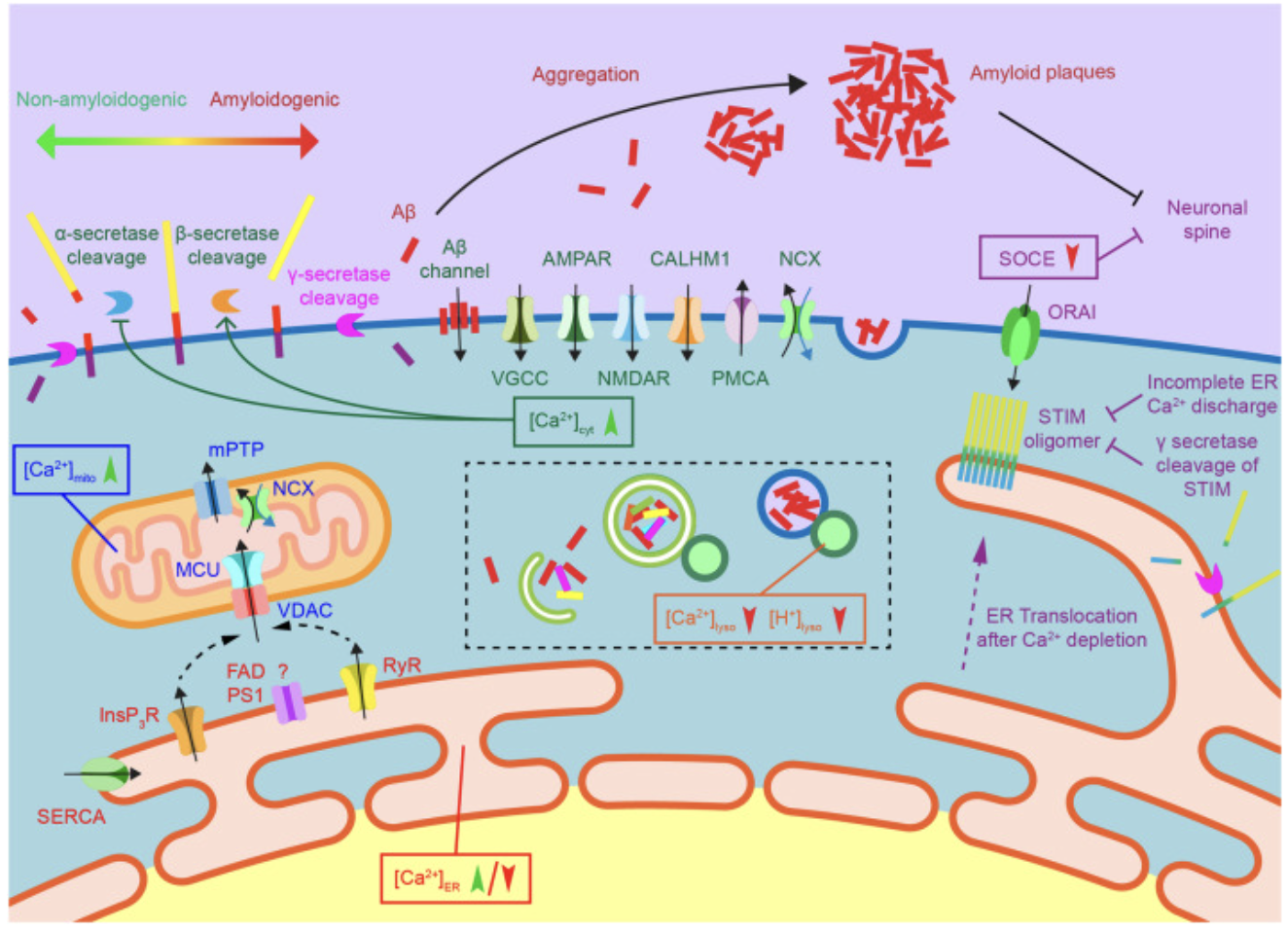
This figure illustrates how calcium dysregulation contributes to the pathology of Alzheimer's disease (AD). In AD, calcium release from the endoplasmic reticulum (ER) through InsP3R and RyR channels is exaggerated due to increased expression or sensitization by mutant presenilin (PS) proteins. Additionally, enhanced ER calcium levels may occur because of upregulated SERCA pump activity. When ER calcium stores are depleted, a compensatory pathway called store-operated calcium entry (SOCE) is activated. However, in AD, SOCE is impaired due to reduced levels of STIM proteins or their increased cleavage by γ-secretase, resulting in insufficient activation of the Orai channel for calcium entry.
https://www.sciencedirect.com/science/article/pii/S0167488918302088?via%3Dihub
Excessive calcium release from the ER leads to mitochondrial calcium overload, suppressing ATP production, increasing reactive oxygen species (ROS) generation, and promoting apoptosis. Calcium homeostasis in lysosomes, essential for degrading amyloid-beta (Aβ), is also disrupted, causing autophagy deficits and increased lysosomal pH. Aβ oligomers further exacerbate calcium imbalance by forming permeable pores in the plasma membrane and activating various calcium channels, leading to an abnormal influx of extracellular calcium. These disruptions in calcium signaling result in neuronal apoptosis, impaired synaptic plasticity, defective neurotransmission, and neurodegeneration, which are hallmarks of AD.
Mechanisms of Calcium Disruption in Alzheimer's Disease
Calcium dyshomeostasis disrupts multiple neuronal processes in Alzheimer's disease, leading to a cascade of neurotoxic effects. Excessive calcium influx through receptors such as NMDA and AMPA causes excitotoxicity, damaging synaptic plasticity and function. Mitochondrial calcium overload reduces ATP production and elevates ROS, further promoting neuronal apoptosis and accelerating neurodegeneration. The dysregulated calcium signaling also enhances the production of Aβ peptides, which aggregate into plaques, exacerbating calcium imbalance and contributing to further neuronal dysfunction. Moreover, abnormal calcium levels activate kinases like CaMKII and GSK3β, driving tau protein phosphorylation and the formation of neurofibrillary tangles while also impairing the lysosomal-autophagic pathway and accumulating damaged proteins.
AIC therapy counteracts calcium dyshomeostasis in Alzheimer's disease by restoring the function of the mitochondrial calcium uniporter (MCU) and inositol 1,4,5-trisphosphate (IP3) receptors. It prevents calcium overload, stabilizes calcium transport, and reduces oxidative stress to ensure proper calcium sequestration and release, thereby protecting against excitotoxicity, mitochondrial dysfunction, amyloid-beta aggregation, tau phosphorylation, and impaired autophagic processes.
https://www.sciencedirect.com/science/article/pii/S0167488918302088?via%3Dihub
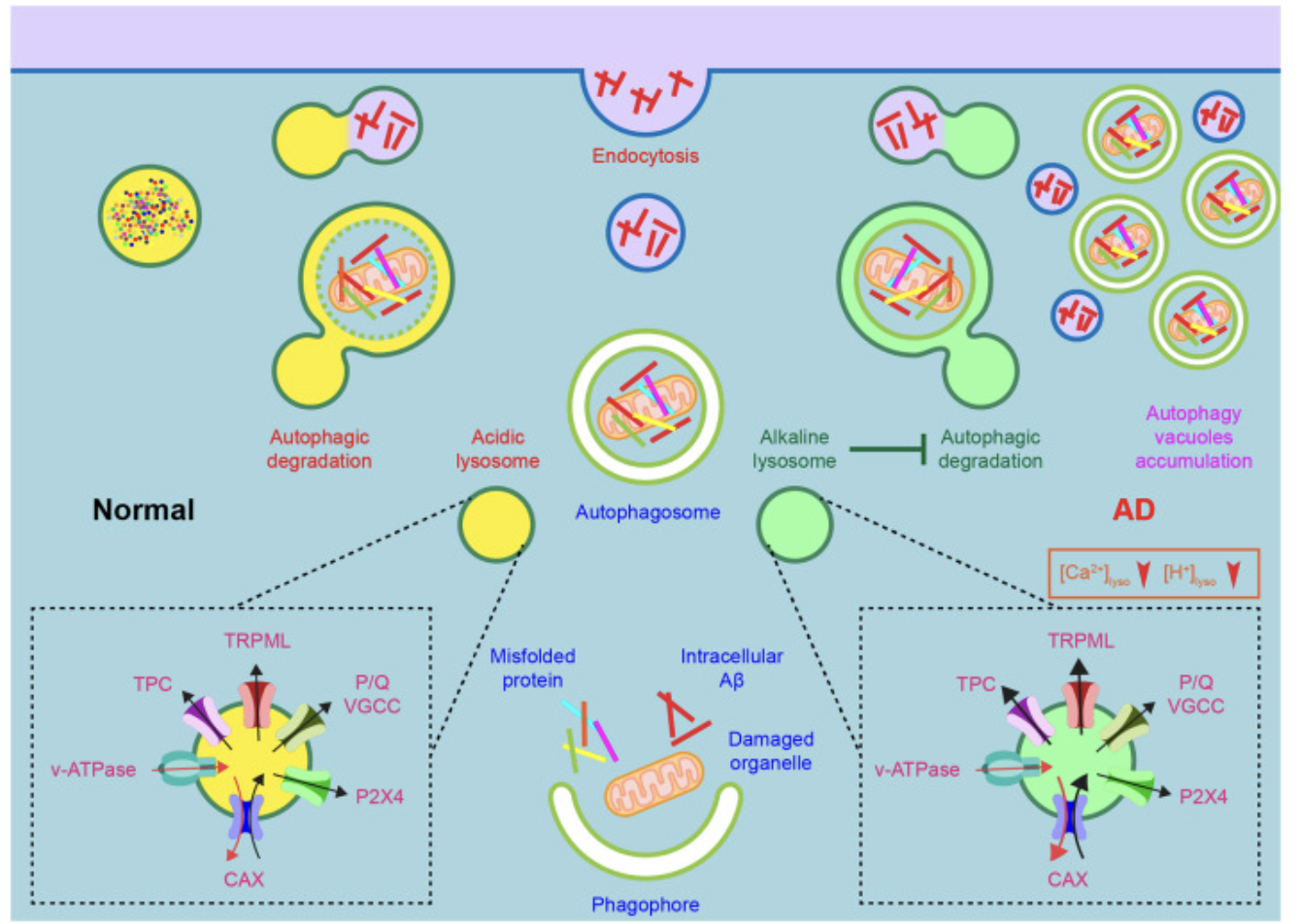
This figure explains how calcium dysregulation affects lysosomal function in Alzheimer's disease (AD). Lysosomal pH is typically maintained by a balance between acidification, via the uptake of H+ by V-ATPase, and alkalization, through the extrusion of H+ in exchange for Ca2+ via CAX, and the release of Ca2+ through channels like TRPML, TPC, P2X4, or VGCC. When enough Ca2+ fills the lysosome, CAX activity stops, maintaining the acidic environment necessary for protein degradation.
In AD, excessive lysosomal Ca2+ release activates CAX, causing continuous extrusion of H+ and leading to lysosomal alkalization. This disrupted pH impairs the degradation process essential for breaking down protein aggregates, causing defects in autophagosome-lysosome fusion. As a result, autophagy vacuoles and intracellular amyloid-beta (Aβ) accumulate, contributing to AD pathology. This calcium-driven lysosomal dysfunction plays a significant role in neurodegeneration associated with the disease.
Case Reflection 1: Alzheimer's Disease
An 85-year-old male from the USA diagnosed with Alzheimer’s disease experienced noticeable early symptoms, including frequent veering to one side and recurrent falls due to balance loss. After starting AIC Therapy therapy, his balance improved significantly within two months, and the early symptoms of Alzheimer’s gradually disappeared. This observation suggests a potential benefit of AIC Therapyin managing symptoms associated with Alzheimer's, particularly those related to balance and coordination.
Case Reflection 2: Dementia
An elderly female patient from Manila, diagnosed with dementia, had been unable to recognize her family members for the past three years due to severe memory loss. Significant improvements were observed over five months after starting AIC Therapy therapy. Gradually, she regained her memory and began recognizing her family members again. This positive change highlights the potential of AIC Therapy therapy in improving cognitive functions and memory recall in patients suffering from dementia, offering hope for a better quality of life through targeted intervention.
Conclusion
Calcium dysregulation plays a crucial role in the progression of Alzheimer's disease and dementia, contributing to harmful effects like excitotoxicity, mitochondrial dysfunction, and the accumulation of amyloid-beta plaques and tau tangles. The cases presented illustrate how AIC Therapy, by stabilizing calcium levels, can improve symptoms such as balance, coordination, and memory in affected patients. AIC Therapy reduces neuronal damage and supports cognitive function by targeting these underlying disturbances. These findings suggest that AIC Therapy could be an effective strategy for managing neurodegenerative diseases. It offers a promising approach to addressing fundamental mechanisms such as calcium dyshomeostasis, amyloid-beta aggregation, and tau protein phosphorylation.
Bring calcium signaling into your practice.
Practitioners can request a consultation to discuss AIC therapy and how these mechanisms apply to specific cases.
Newsletter content is educational and contributed by participating healthcare practitioners. These statements have not been evaluated by the FDA and are not intended to diagnose, treat, cure, or prevent any disease.