Part 3 of 4
( Series on Neurodegenerative Diseases )
Restoring Calcium Signaling for Innovative Parkinson's Disease Therapy
Part 3 will focus on Parkinson's, highlighting how AIC Therapy can help manage disease progression. Finally, Part 4 will cover ALS, discussing how AIC Therapy supports motor neuron health, protects neurons, and improves muscle function.
Introduction
Calcium imbalance plays a key role in the development of Parkinson's disease (PD), primarily by affecting dopaminergic neurons in the substantia nigra, the brain region most impacted in PD. One of the main mechanisms involves excessive calcium entry into these neurons through L-type (Cav1.3) and T-type (Cav3) calcium channels, which are especially active during the neurons' rhythmic pacemaking activity. This uncontrolled calcium influx leads to mitochondrial overload, causing a collapse in mitochondrial membrane potential and increased production of reactive oxygen species (ROS). Elevated intracellular calcium levels also promote the misfolding and aggregation of α-synuclein, a protein associated with PD, which is further exacerbated by the activation of calpain proteases. Together, these processes generate toxic forms of α-synuclein that impair neuron function and contribute to neuronal death.
AIC Therapy stabilizes IP3Rs and RyRs to ensure controlled calcium release from the ER to mitochondria, maintaining balanced calcium levels and reducing oxidative stress. AIC Therapy decreases calcium influx into dopaminergic neurons, preventing mitochondrial overload and ROS production while stimulating endogenous calcitonin secretion to direct excess calcium back into bone storage.
![Figure 1 This figure illustrates the toxic effects of elevated calcium levels ([Ca2+]) in substantia nigra dopaminergic (SN DAergic) neurons. The activation of](/assets/insights/parkinsons-disease-fig1.png)
This figure illustrates the toxic effects of elevated calcium levels ([Ca2+]) in substantia nigra dopaminergic (SN DAergic) neurons. The activation of Cav1 Ca2+ channels during pacemaking activity, combined with the release of Ca2+ through ryanodine receptors (RyRs), leads to increased cytosolic calcium concentrations. These elevated calcium levels promote the aggregation of α-synuclein (αSYN) either directly or through the activation of calpains, which are calcium-activated proteases. The activated calpains can cause further damage to several intracellular proteins.
In addition, increased calcium levels and calpain activity can disrupt the normal function of tyrosine hydroxylase, an enzyme critical for dopamine (DA) synthesis, leading to dysregulated dopamine production. The oxidation of dopamine under these conditions further promotes the aggregation of α-synuclein, compounding the toxic effects on the neurons.
Breaking the Cycle of Calcium Overload in Parkinson's Disease
Disrupted calcium signaling between the endoplasmic reticulum (ER) and mitochondria at the mitochondria-associated membranes (MAMs) reduces mitochondrial calcium uptake, increasing oxidative stress and worsening mitochondrial dysfunction. This mitochondrial damage is closely linked to problems with calcium regulation, mainly through the sodium/calcium exchanger (NCLX) dysfunction, which removes excess calcium from the mitochondria. When the NCLX does not function properly, as seen in PD, the mitochondria cannot effectively remove the accumulating calcium, resulting in a buildup that opens the mitochondrial permeability transition pore. This event disrupts the mitochondria's ability to produce energy, causing a decline in ATP levels and the release of factors that lead to cell death. The high calcium levels also promote further ROS production, which damages mitochondrial components, including proteins, membranes, and DNA. The resulting cycle of calcium overload, reduced calcium removal, and increased oxidative stress creates a toxic environment that accelerates neuron degeneration and the progression of Parkinson's disease.
AIC Therapy enhances the function of NCLX by maintaining mitochondrial membrane potential through the balanced regulation of calcium levels, which prevents the pathological opening of the mitochondrial permeability transition pore (mPTP). This protection helps maintain the membrane potential and promotes the efficient removal of excess calcium from mitochondria, preventing overload and reducing the risk of mPTP opening. By balancing intracellular calcium levels, AIC Therapy also prevents calpain overactivation. It reduces α-synuclein aggregation, as less calcium is available to bind and promote protein clumping, thereby mitigating its effects on Parkinson's disease.
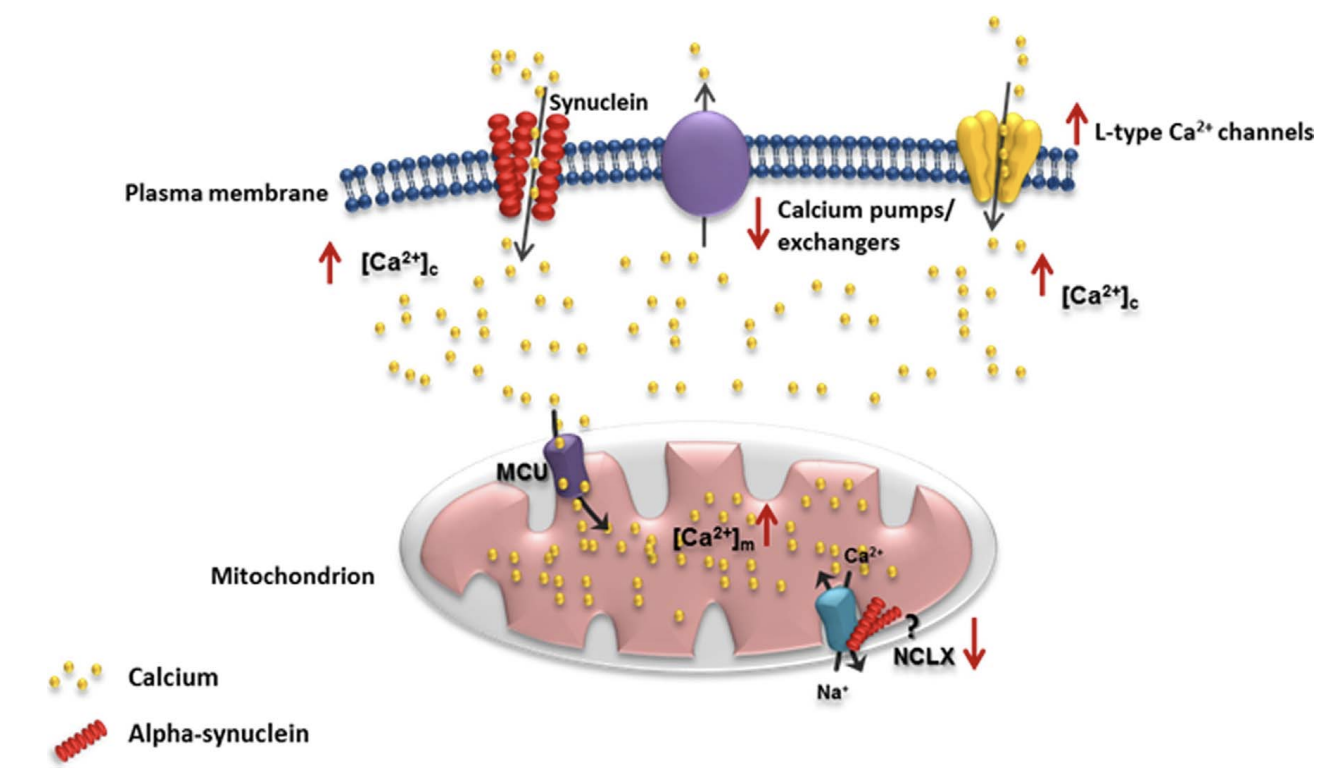
This figure illustrates the mechanisms leading to calcium dysregulation in Parkinson's disease. It shows that alpha-synuclein can form pores in the plasma membrane, causing an increase in calcium influx into the cell. The figure also highlights how the inhibition of calcium pumps and exchangers and sustained activation of L-type calcium channels contribute to elevated intracellular calcium levels. These increased levels result in excessive calcium uptake by the mitochondria, which can impair their function. The figure suggests that alpha-synuclein may play a role in these processes, including its possible influence on mitochondrial calcium regulation.
Case Reflection:
A 75-year-old male patient with Parkinson's disease, secondary to severe work-related stress, began taking AIC in October 2017. Initially, the patient did not anticipate significant outcomes. However, after receiving positive comments from others regarding noticeable improvements in his condition, he adhered to a regimen of AIC, taking it twice daily throughout November. The patient reported that his tremors had almost disappeared and noted a marked enhancement in his overall quality of life. He subsequently shared his positive experience with AIC, expressing a renewed sense of well-being and improved daily functioning.
Mechanistic Insights and Clinical Relevance of AIC Therapy in Parkinson’s Disease:
The patient's case illustrates the impact of AIC therapy on Parkinson's disease symptoms, aligning with its targeted action on calcium dysregulation. AIC specifically reduces excessive calcium influx into dopaminergic neurons, stabilizing the interaction between the endoplasmic reticulum and mitochondria to prevent mitochondrial overload and oxidative stress. Enhancing the sodium/calcium exchanger (NCLX) function, AIC ensures efficient calcium clearance, preserving mitochondrial energy production and preventing neuron death. Furthermore, AIC normalizes intracellular calcium levels, thereby preventing the activation of calpain and alpha-synuclein aggregation. These effects directly correlate with the patient's reported improvements, such as the near disappearance of tremors and enhanced quality of life, highlighting AIC's potential to modify disease progression by correcting the underlying calcium imbalance in Parkinson's.
These findings underscore the potential of AIC therapy not only for symptomatic relief but also for addressing the fundamental mechanisms driving Parkinson's disease, setting the stage for broader clinical application.
Conclusion
AIC therapy demonstrates significant potential in managing Parkinson's disease by addressing the core issue of calcium dysregulation in dopaminergic neurons, as supported by both mechanistic insights and clinical observations. The therapy effectively reduces calcium influx, prevents mitochondrial overload, and minimizes oxidative stress, thereby protecting neuronal function and slowing disease progression. The patient case highlights a marked reduction in symptoms, such as tremors, and an overall improvement in quality of life, aligning with AIC’s mechanism of action observed in scientific studies. Figures presented further illustrate how Calcium influences critical pathways involved in Parkinson's pathology, including regulating calcium homeostasis and reducing alpha-synuclein aggregation. Collectively, these findings suggest that AIC therapy offers a promising approach for both symptom management and disease progression in Parkinson's disease.
Bring calcium signaling into your practice.
Practitioners can request a consultation to discuss AIC therapy and how these mechanisms apply to specific cases.
Newsletter content is educational and contributed by participating healthcare practitioners. These statements have not been evaluated by the FDA and are not intended to diagnose, treat, cure, or prevent any disease.