This week's issue is different. Instead of one disease, it introduces a new book: Calcium Exposed, by Dr. Server Bozdogan, MD, PhD, written from more than two decades in practice. Its starting point is calcium itself. Calcium is the body's timing signal. Cells use it every second to coordinate when to repair, when to rest, and when to release energy. When that signal is clear, bones stay strong, vessels stay flexible, and movement feels light.
When that signal fades, calcium tends to show up where we least want it. It appears in joints, in cartilage, and along artery walls. The book treats this as one simple lens, not a single mechanism, since these changes have different roots. What a person feels is familiar: stiffness, low energy, a sense of slowing down. From here, the book's central argument emerges: direction matters more than dose. This is about misplaced calcium, not about recommending calcium supplementation. Adding more to a signal that is already misdirected often makes the problem worse.

Calcium Exposed, by Dr. Server Bozdogan, MD, PhD. Available now on Amazon
If you would like to read it:
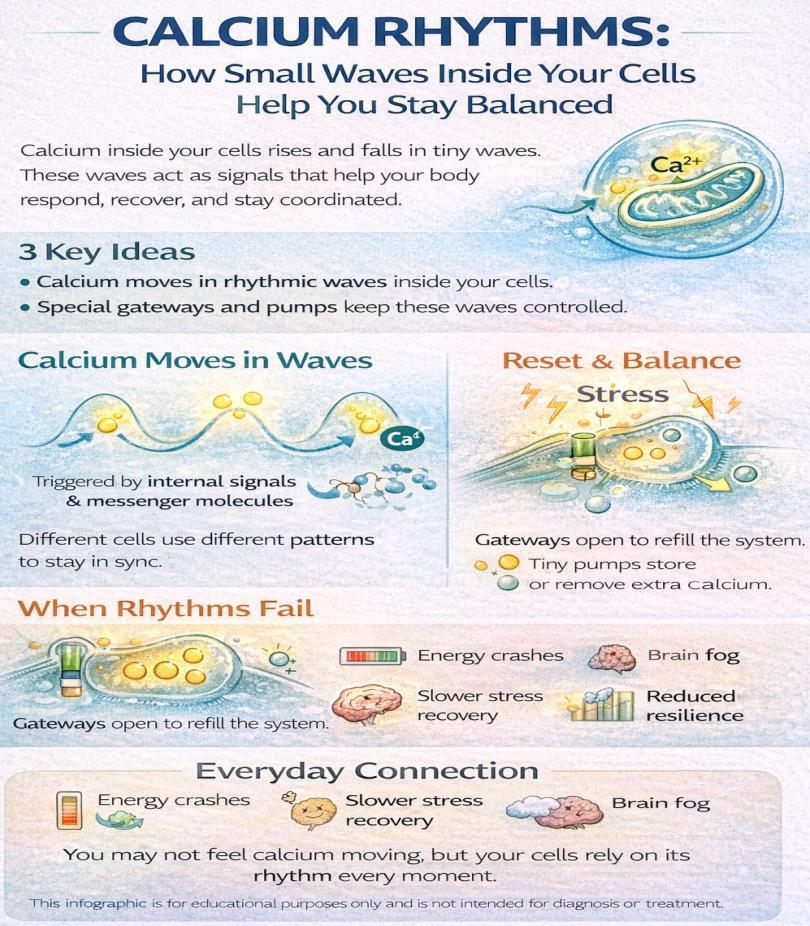
This figure shows how calcium levels rise and fall inside your cells in tiny waves. These waves act as signals that help the body respond, recover, and stay coordinated. Special gateways and pumps keep the waves under control, with gateways opening to refill the system and pumps removing excess calcium. Different cells use different patterns to stay in tune, set off by internal signals and messenger molecules. When this rhythm fails, you may experience energy crashes, brain fog, slower stress recovery, and reduced resilience, even though calcium itself moves without you noticing.
P. Lee, S. Bozdogan, (compiled from Advanced Calcium Research Institute website) Calcium & Bone Health Institute, Calcium Advanced Calcium Research Institute, Mersin, 2023.
Bring calcium signaling into your practice.
Practitioners can request a consultation to discuss AIC therapy and how these mechanisms apply to specific cases.
Newsletter content is educational and contributed by participating healthcare practitioners. These statements have not been evaluated by the FDA and are not intended to diagnose, treat, cure, or prevent any disease.